Get all your news in one place.
100's of premium titles.
One app.
Start reading
Bangkok Post
Bangkok Post
National

Slimming down the state

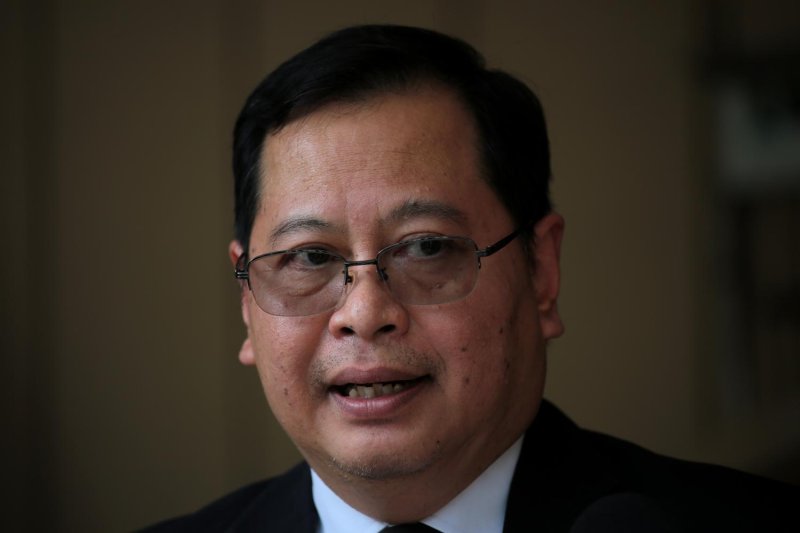
Deputy Prime Minister Pakorn Nilprapunt has said that reducing the civil service workforce while maintaining the same personnel budget would lead to higher average salaries and welfare benefits for those who remain.

The government is attempting what many administrations before it have promised but ultimately failed to achieve: shrinking the country's sprawling bureaucracy.

The latest civil service reform package, now undergoing public consultation before heading to the cabinet later this month, is arguably one of the most ambitious attempts in decades to restructure the state workforce.

It combines an early retirement scheme, a freeze on recruitment and the gradual elimination of redundant positions, while promising to redirect the savings towards better pay and benefits for the remaining civil servants.

On paper, the proposal appears straightforward. In reality, it is a high-stakes political gamble.

Governments across the political spectrum have long acknowledged that the public sector is expensive to maintain. Yet meaningful reform has consistently proved elusive, largely because the bureaucracy is not merely an administrative apparatus but also a powerful political constituency with deep institutional influence.

The current administration is betting that fiscal realities have become too severe to ignore.

The timing is hardly coincidental. The House of Representatives recently approved the Fiscal Year 2027 budget bill in principle, once again highlighting the country’s deepening fiscal difficulties. Thailand has operated under deficit budgets for years as economic growth has remained modest while spending obligations continue to expand.

Personnel costs have long been among the government’s biggest financial burdens.

Combined with healthcare benefits and pension obligations, spending on public employees now accounts for more than 70% of the government’s recurring expenditure. That leaves increasingly little room for productive investment in infrastructure, education, innovation and social welfare without further increasing public debt.

The country’s demographic transition further compounds the problem. An ageing population means pension liabilities and healthcare costs will continue to rise, while the number of taxpayers supporting the system is expected to decline over the coming decades.

Against this backdrop, officials argue that maintaining the status quo is no longer financially sustainable.

Deputy Prime Minister for Legal Affairs Pakorn Nilprapunt has outlined an extensive restructuring plan.

The government intends to ask the cabinet to cap the total number of civil servants, military personnel and police officers, whose combined workforce exceeds three million. Rather than resorting to mass lay-offs, it proposes reducing the workforce gradually through attrition.

Vacant positions created through retirement or resignation would be abolished if agencies determine they are no longer necessary, while essential posts would be retained. The Office of the Public Sector Development Commission is reviewing which positions should remain.

At the same time, the government is consulting the public on an early retirement programme for civil servants. The consultation, which ran from July 22 to Aug 5, attracted more than 8,000 comments within its first three days, indicating considerable public interest. Officials stress that the scheme will remain voluntary.

Details covering eligibility, lump-sum compensation and pension arrangements are still being finalised by several agencies, including the Office of the Civil Service Commission, the Budget Bureau and the Comptroller General’s Department.

Unlike previous reform efforts, which focused primarily on cutting expenditure, the current proposal seeks to reshape incentives.

Mr Pakorn argues that if the government succeeds in reducing the workforce from more than three million to around two million while maintaining the same personnel budget, average salaries and welfare benefits could rise substantially for those who remain.

The government hopes higher compensation will help attract and retain better-qualified professionals while making public service more competitive with the private sector.

The proposal reflects a broader management philosophy adopted by many large organisations worldwide: leaner workforces can often deliver higher productivity, better pay and more efficient decision-making.

Whether such a model can be successfully transplanted into Thailand’s highly hierarchical civil service, however, remains uncertain.

Civil service reform has long been regarded as one of the most politically difficult policy areas, according to a political observer.

Nearly every administration has acknowledged overlapping responsibilities, excessive layers of administration and outdated organisational structures. Yet reform has repeatedly stalled.

Several factors explain why.

Civil servants constitute one of the country’s largest and most organised workforces. Any proposal perceived as threatening job security or career advancement is bound to encounter resistance. Military and police organisations, which together account for a significant share of government personnel, add another layer of political complexity.

Moreover, governments operate within short electoral cycles, while bureaucratic restructuring typically imposes political costs immediately but delivers financial benefits only years later.

That creates little incentive for politicians to pursue controversial reforms. Even if the cabinet approves the proposal, implementation will be the real test.

Reducing headcount through attrition appears politically safer than compulsory lay-offs, but the process is inherently slow.

It also requires careful workforce planning.

If vacancies are eliminated indiscriminately, essential public services could deteriorate, particularly in healthcare, education, local administration and law enforcement.

Conversely, if agencies classify too many positions as essential, the projected savings may never materialise. Another major challenge is financing the transition.

Early retirement programmes require substantial upfront funding for compensation packages. Although the government expects long-term savings, the initial costs will place additional pressure on public finances.

Officials therefore face a delicate balancing act between offering attractive incentives and maintaining fiscal discipline.

The proposed downsizing also depends heavily on modernising government operations. Simply reducing staff without redesigning administrative processes risks leaving fewer employees to carry out the same outdated procedures.

The government has repeatedly emphasised the greater use of digital technology, automation and integrated public services as part of broader public sector reform.

International experience suggests workforce reductions are most successful when accompanied by administrative simplification, digital transformation and performance-based management.

Otherwise, downsizing alone may simply shift workloads rather than improve efficiency.

The political significance of the initiative extends well beyond personnel management.

If successful, it would represent one of Thailand’s most significant administrative reforms in decades, potentially easing long-term fiscal pressures while improving the efficiency of public services.

Failure, however, would reinforce a familiar pattern in Thai governance: ambitious reform plans overwhelmed by institutional resistance and political compromise. For the government, the stakes are exceptionally high.

The proposal is not simply about reducing the size of the bureaucracy. It is an attempt to redefine the relationship between the state, its workforce and the taxpayers who ultimately finance it.

Whether Thailand can finally break the cycle of ever-expanding public expenditure without undermining essential public services may prove to be one of the defining policy tests of this administration.

Deputy Prime Minister Phiphat Ratchakitprakarn has played a pivotal role in expanding Bhumjaithai’s support across the South, where it won 31 House seats in the last election

Phiphat’s clout under scrutiny

Deputy Prime Minister and Transport Minister Phiphat Ratchakitprakarn is widely regarded as one of the Bhumjaithai Party’s most influential politicians. Yet a series of recent developments has fuelled speculation about the extent of his influence within the party leadership.

Prime Minister Anutin Charnvirakul has repeatedly dismissed rumours of friction among the party’s three key figures — himself, party patriarch Newin Chidchob and Mr Phiphat.

He also posted a photograph of the three men on Facebook, a move widely interpreted as an attempt to quash growing speculation over tensions within the ruling party.

When asked whether the meeting was intended to clear the air, the prime minister laughed off the suggestion, saying the trio had worked together for many years and that their relationship was not a matter for public scrutiny.

“Do you live in my house? If not, then don’t ask. This is a family matter,” Mr Anutin was quoted as saying.

Much of the attention has centred on Mr Phiphat, who is credited with the party’s electoral success in the South in the Feb 8 general election.

He played a pivotal role in expanding the party’s support across the region, helping it secure 31 House seats and cementing his position as one of its key power brokers.

Following the election, he was appointed first deputy prime minister and transport minister.

However, several flagship projects under his supervision, including the Eastern Economic Corridor (EEC), were later transferred to the prime minister’s oversight, prompting questions about whether his influence within the party was waning.

In June, the cabinet acknowledged two orders removing Mr Phiphat from supervision of the Eastern Economic Corridor Office (EECO) and as chairman of the EEC Policy Committee. Under the new arrangement, the prime minister assumed responsibility for all EEC-related matters.

Although the move prompted questions about Mr Phiphat’s standing, the government insisted it was driven by administrative rather than political considerations. It argued that the EEC requires coordination across multiple agencies, making direct oversight by the prime minister more appropriate.

Some political observers say Mr Phiphat appears to have limited influence over appointments despite his senior cabinet position. They noted that key posts, including ministerial secretaries and advisers, were filled by figures favoured by Mr Newin rather than by Mr Phiphat.

The recent local administration recruitment examination scandal has further reinforced that perception.

Several officials regarded as close to Mr Phiphat, including one of his aides and a number of deputy provincial governors in the South, were transferred or removed during investigations into the alleged examination fraud.

No prominent figures linked to other factions, however, were implicated, leading some supporters to believe that only Mr Phiphat’s camp was bearing the brunt of the fallout.

The developments have reportedly left many southern politicians uneasy about the way Mr Phiphat and his political network have been treated.

Mr Newin’s recent visit to Pattani, where Buriram United played a friendly against Pattani FC, also attracted political attention.

Officially, the visit centred on football. Politically, however, it coincided with growing questions about Mr Phiphat’s standing within the party leadership.

Some observers believe the trip gave Mr Newin an opportunity to assess the party’s political network in the South and reinforce ties with local politicians.

They also saw it as a reminder that ultimate authority within the party rests with Mr Newin, and that influential southern political families should bear that in mind when weighing their future alliances.

Political observers say further electoral gains in the South would strengthen Mr Phiphat’s bargaining power over cabinet positions, political appointments and internal party affairs after the next election.

However, sources close to the party dismissed suggestions that Mr Newin was trying to sideline one of Bhumjaithai’s most valuable political assets. They said Mr Newin understood there was little to gain from weakening Mr Phiphat, who remains central to the party’s electoral strategy in the South.

With an extensive network of MPs, local politicians and business supporters, Mr Phiphat continues to wield considerable influence in the region, making any attempt to erode his clout both difficult and politically costly.

For his part, Mr Phiphat has given no public indication that he feels under pressure. He has also repeatedly insisted that his relationship with both Mr Anutin and Mr Newin remains strong.

Sign up to read this article
Read news from 100's of titles, curated specifically for you.
Already a member? Sign in here
Related Stories
Top stories on inkl right now
One subscription that gives you access to news from hundreds of sites
Already a member? Sign in here
Our Picks
Fourteen days free
Download the app
One app. One membership.
100+ trusted global sources.