
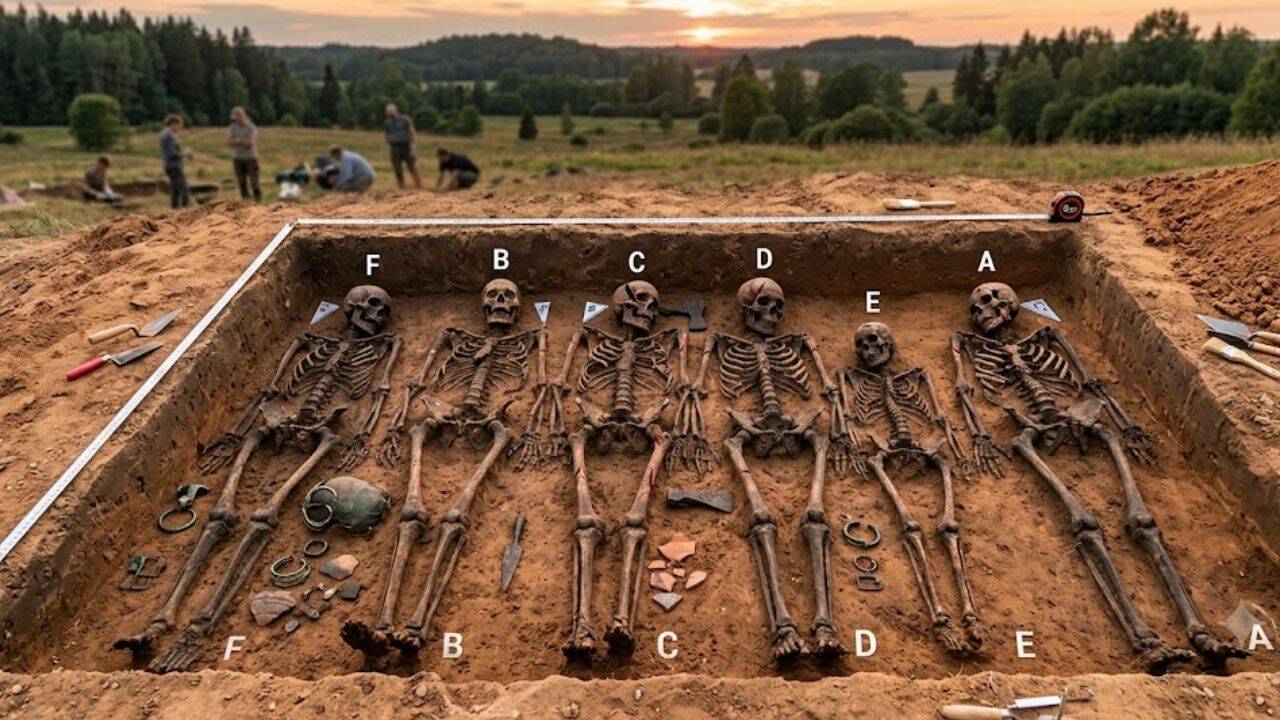
A rare ninth-century grave in Latvia has revealed clues about violence, family ties and life during the Viking Age. Six people were buried at the Čunkāni-Dreņģeri cemetery in the Zemgale region, an unusual arrangement for a Semigallian burial ground where people were generally laid to rest alone. Sharp-force injuries found on the remains of three adult men suggest that they died violently. Ancient DNA has revealed close family links among some of those buried there. Two were father and son, while a third shared a more distant family connection with them. According to the research article published in the Journal of Archaeological Science titled ‘ A multiple burial from the Viking Age in Semigallia, Latvia ’ found that, two others had no biological connection to the rest of the group. The genetic evidence also places the six individuals closer to local Baltic populations than to Scandinavian groups. This reveals that the people buried in the grave were part of the local community rather than a predominantly Scandinavian group. The discovery is significant because multiple burials from this period are uncommon in Semigallia. The combination of violent injuries, family relationships, and local ancestry provides researchers with several pieces of evidence for understanding who these people were and how they may have died.
Get breaking news anytime, anywhere. Download the TOI app now!













