
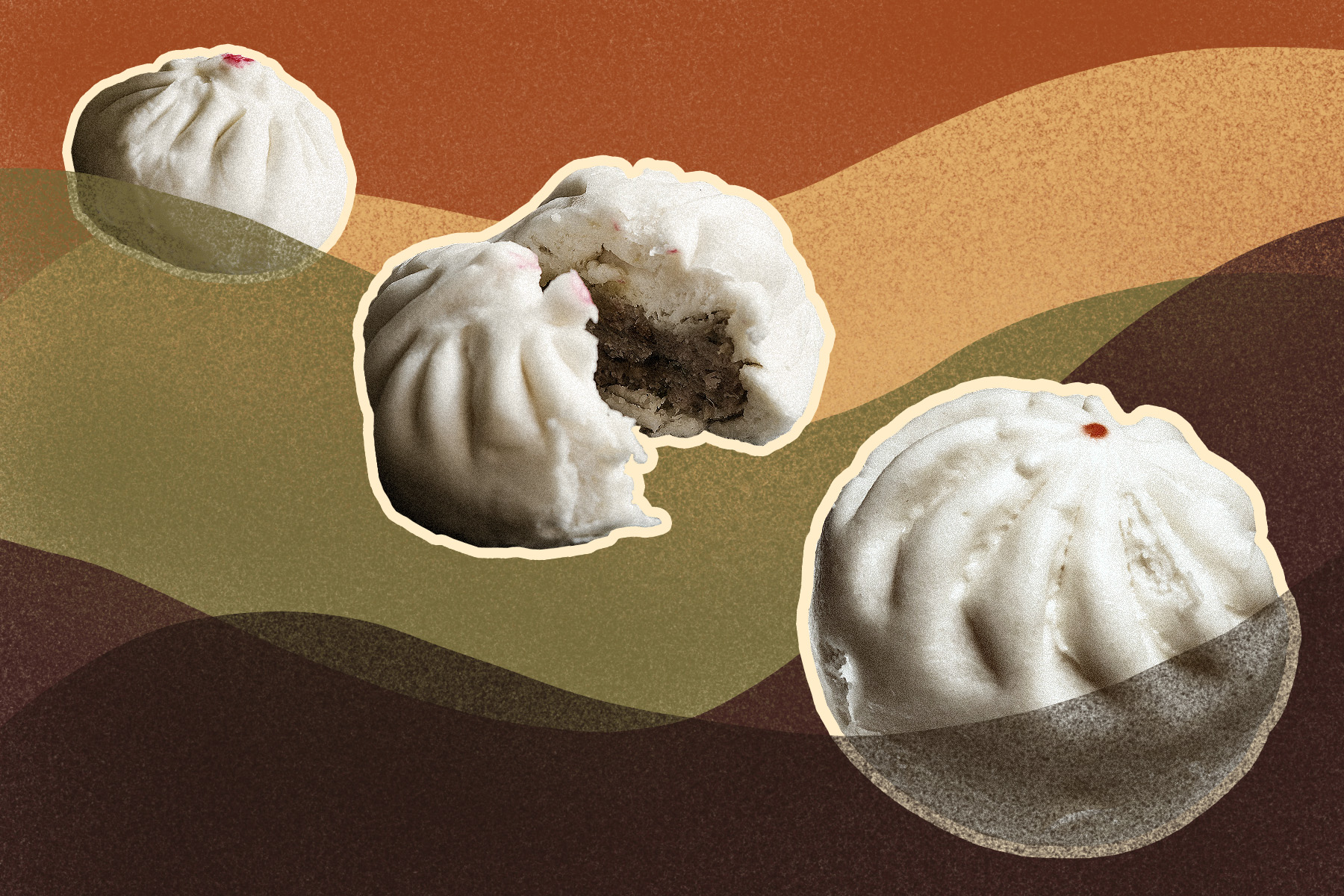
When chef Angela Dimayuga published Filipinx: Heritage Recipes from the Diaspora, in late 2021, her recipe for siopao was accompanied by a story from her childhood. Having grown up in a family of six children, she wrote about how she and her older siblings would sneak in through the back door of a fortune cookie factory in San Francisco’s Chinatown to watch the assembly line while her mom waited at the bakery to pick up baozi—“what we call siopao,” Dimayuga wrote. “We’d buy a dozen with fortunes and another dozen discards, broken cookies left flat and unfolded, just to eat alongside our [buns].”
Most Filipinos, both in the Philippines and abroad, have memories of eating siopao as children. “I went through a phase as a kid where I only ate the filling,” wrote one food blogger, whose page I scoured for siopao-making tips. But ask even the most avid, non-Filipino restaurant goer and food enthusiast in my city, Toronto, or places like New York, Chicago, or Boston, and it’s likely they’ve never even heard the name—pronounced shoh-pao.