There are now countless versions of the modern-day plague on our collective attention span.
It's almost an accepted fact that we're all being held hostage to Big Tech, and there's seemingly nothing any of us can do about it.
But we can still look up from our phones every now and again, at which point the question must still be asked, for the umpteenth time: why aren't we all reading more books?
Just last week, the winner of Australia's most prestigious literary award, the Miles Franklin, was announced.
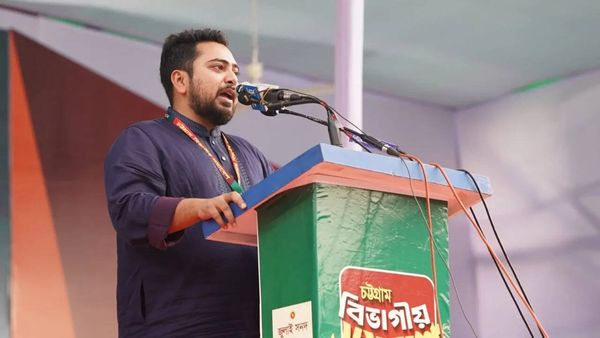
Omar Musa, the novelist, poet and rapper who hails from Queanbeyan, a town next to Canberra, spoke candidly about how hard it was to be a writer, and how long it took to write Fierceland, his prize-winning second novel.
"It's hard work, you're broke most of the time, full of self-doubt and impostor syndrome, as well as exciting breakthroughs and adventures along the way," he said, following the announcement.
He's been a creative soul from the beginning, recording hip-hop records, writing a play and two novels, and staging solo exhibitions of his woodcut prints.
Why are so many of us reading so much less than we used to, and what's more, complaining about the fact so openly?
But when it comes to putting a novel out, after six years of writing and rewriting, why would he bother if he thought it wouldn't connect with anyone?
Why would anyone?
Musa was adamant that we need books, stories and art more than we ever have.
"We need literature and art that pushes the boundaries and creates new vocabularies more than ever, because ultimately, sharing stories is a humanising process, in a world that is so often keen to dehumanise and demonise people," he said last week.
So, again, why are so many of us reading so much less than we used to, and what's more, complaining about the fact so openly?
What would Stella Miles Franklin herself make of our modern-day conundrum?
The writer and feminist was adamant, in both word and deed, that education, writing and connection was her ticket out of the life that was expected of her - one she didn't want to lead.
Her first and most famous book, My Brilliant Career, was what latter-day critics would describe as a "thinly veiled autobiography", the story of a headstrong rural girl who chooses a career over marriage.
Franklin went on to publish about a dozen novels, never married, and made a bequest for her estate to establish an annual literary award.
Her name and legacy are still celebrated, but she'd no doubt be appalled that actually reading the books that are longlisted, shortlisted and ultimately named winners is increasingly considered a niche activity enjoyed only by the privileged few.
The privilege though, in today's world, would seem to be the blessing of a robust attention span, an ability to shut out the constant clamour of the surface-level dross of modern life lived online.
Of course, plenty of us still read; book clubs abound, the publishing industry shows no signs of disappearing, and even the world of online influencers includes a thriving literary subculture.
Will there be a tipping point?
All authors seek to connect - again, why else would a novelist put themselves through what, by all accounts, is a long and painful process - so where and why has the link been severed? Perhaps the tipping point is here, and now: Omar Musa, the winner of the Miles Franklin, is adamant that books and stories help to humanise us.
Let's prove him right, and get reading.