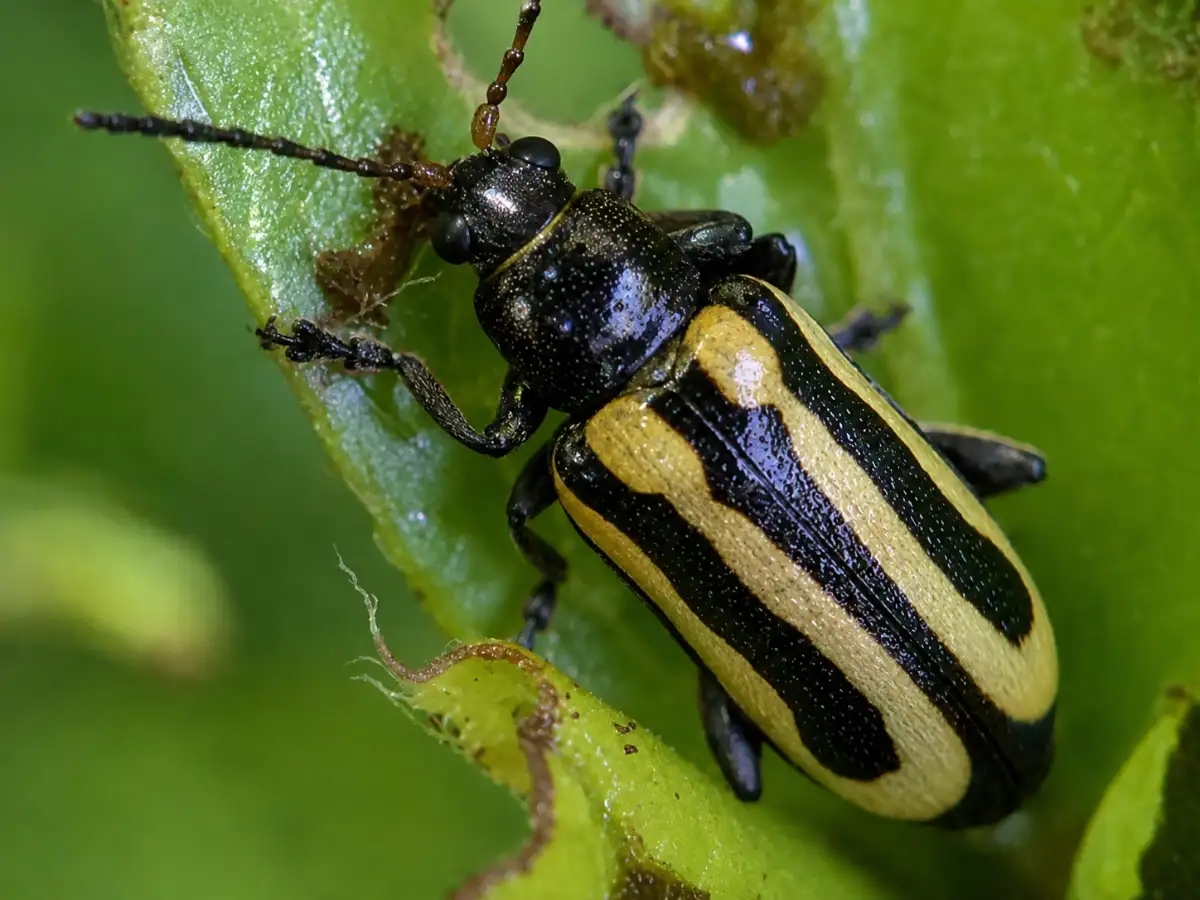
A tiny black-and-yellow beetle is doing a job most machines can't do. It devours an invasive weed so aggressively that entire mats turn brown and die within months. This insect, the alligatorweed flea beetle, was the first bug ever studied specifically to control an aquatic weed, according to a profile published by the University of Florida’s Institute of Food and Agricultural Sciences (UF/IFAS). It’s what Florida has relied on since 1965.
The weed that would not stop spreading

Alligatorweed is not native to the United States. This species was introduced from South America and gradually colonized the rivers, canals, and lakes in the southeastern states since the beginning of the 20th century, as UF/IFAS reports. It grows rapidly, can form dense floating mats, and fragments easily; a single small stem fragment can establish a new population elsewhere. According to the CABI Compendium, this weed is among the worst invaders because it thrives in both aquatic and terrestrial habitats. Dense mats impede boat traffic, plug drainage systems, shade out native vegetation, and block sunlight from reaching submerged plants and fish.
Enter a beetle smaller than your fingernail
The alligatorweed flea beetle, scientifically named Agasicles hygrophila, is about 5 to 7 millimeters in length. The same profile shows that it was approved for release in the US in 1963 but did not establish on Florida's alligatorweed until 1965. The first successful Florida release was along the Ortega River near Jacksonville, Florida, from beetles collected from Ezeiza Lagoon near Buenos Aires, Argentina. The bulk of the beetles released at later Florida sites were direct descendants of that original batch.