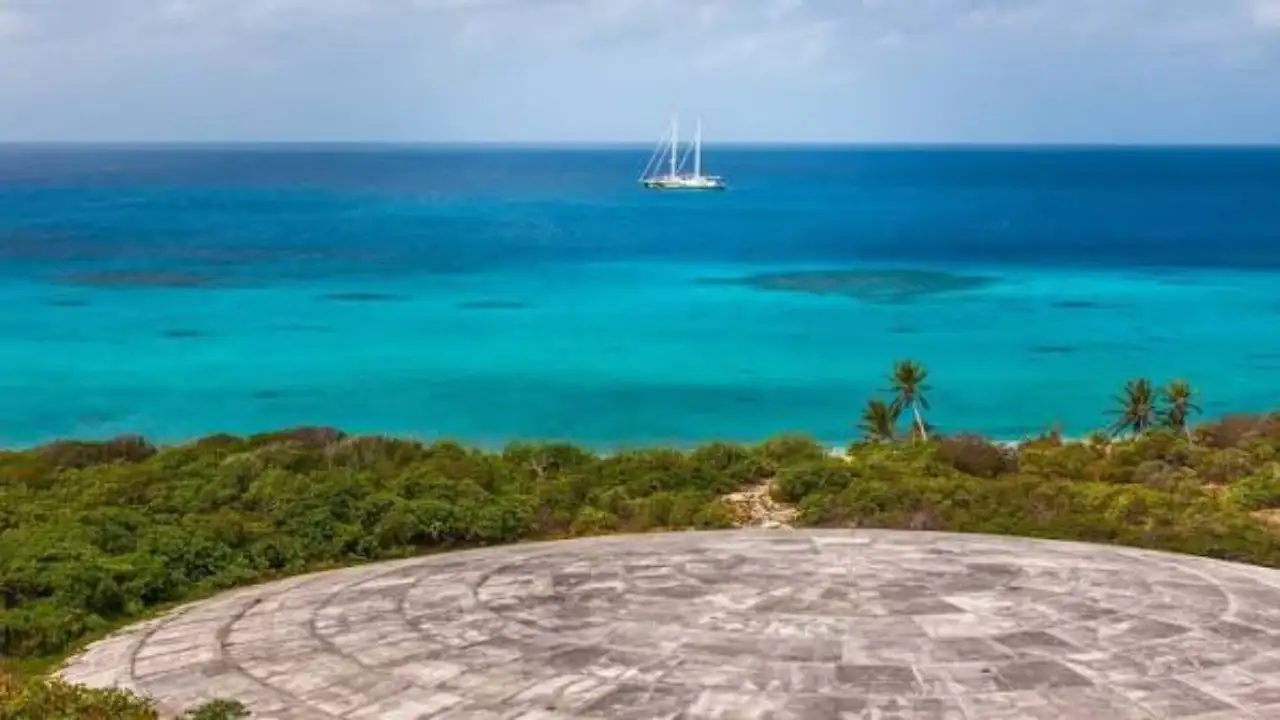
For decades, the most important movement around Runit Dome has been almost invisible. Water has been passing through the porous coral island and beneath a concrete structure holding radioactive soil and debris from the Marshall Islands’ nuclear testing era. The dome was never built as a sealed underground vault. Its waste sits in an unlined bomb crater, and today rising seas and stronger coastal flooding are adding a new pressure to an old problem.
Runit Dome in the Marshall Islands is facing a problem that cannot be seen from above. Groundwater has been moving beneath the site for decades, while about 85,000 cubic meters of radioactive waste remain buried inside the old nuclear test crater. Now, rising Pacific sea levels are adding new pressure to the aging structure. The concern is not simply whether the concrete dome will crack. Scientists are watching how tides, groundwater and seawater movement could affect radioactive contamination beneath and around Runit Dome.