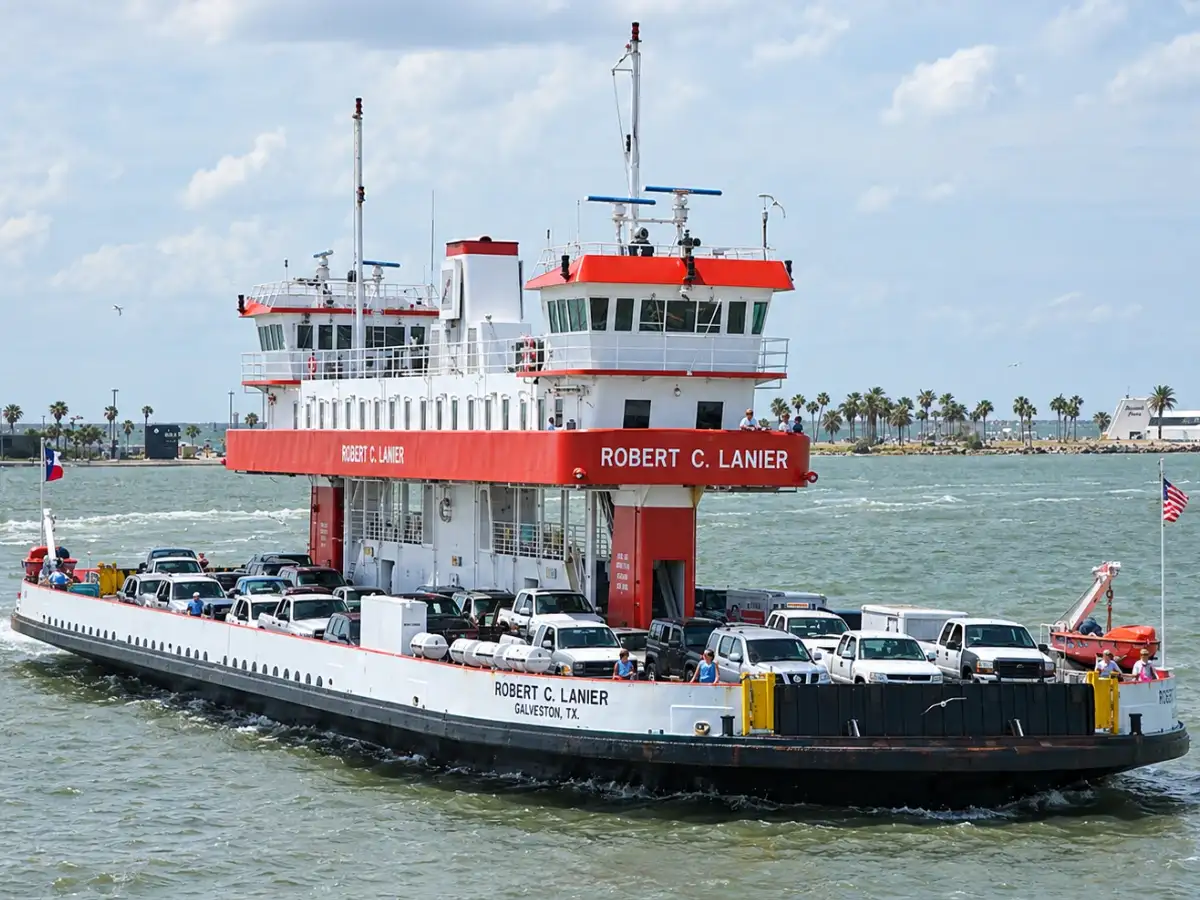
Most people crossing Galveston Bay don’t need to reach for their wallet, and that is no accident. The Galveston-Port Bolivar ferry has been toll-free since 1950 and now operates around the clock, ferrying drivers and walk-on passengers across a strip of Galveston Bay that would take hours to drive around, according to the Texas Department of Transportation. The ferry is not a side attraction. It’s an official stretch of State Highway 87, so the boat is a piece of Texas road itself. For people living or working on the Gulf Coast, this stretch of highway has played an important role in everyday life for nearly a century.
A free ride that almost wasn’t free

The agency's own history of the route dates the service to April 12, 1930, before even Texas ran the boats. A private company began running two ferries, the Galveston and the Jefferson, between the island and the peninsula that year, making six round trips a day, but only in daylight hours. In a period of just a little over two and a half years, ownership passed from that company to Galveston County and from the County to the State of Texas. For the next twenty years, riders paid a small toll to cross. This ended in 1950, according to TxDOT records, when the crossing was made free for good, a policy that has been continued for over 70 years.
Why the ferry still beats the road
Geography is what makes the ferry route necessary. Galveston Bay lies in between the island and the peninsula, and there is no bridge joining the two. This is explained by the calculation done by a staff of the Texas Legislative Budget Board. According to their findings, the ferry crossing takes about 18 minutes, versus about two hours and 20 minutes to drive the 144 miles around the bay. The same report notes that TxDOT was allocated almost 96.2 million dollars from the State Highway Fund for the budget year 2018-19, which is meant for the operation of the two ferry systems of Galveston-Port Bolivar and Port Aransas.