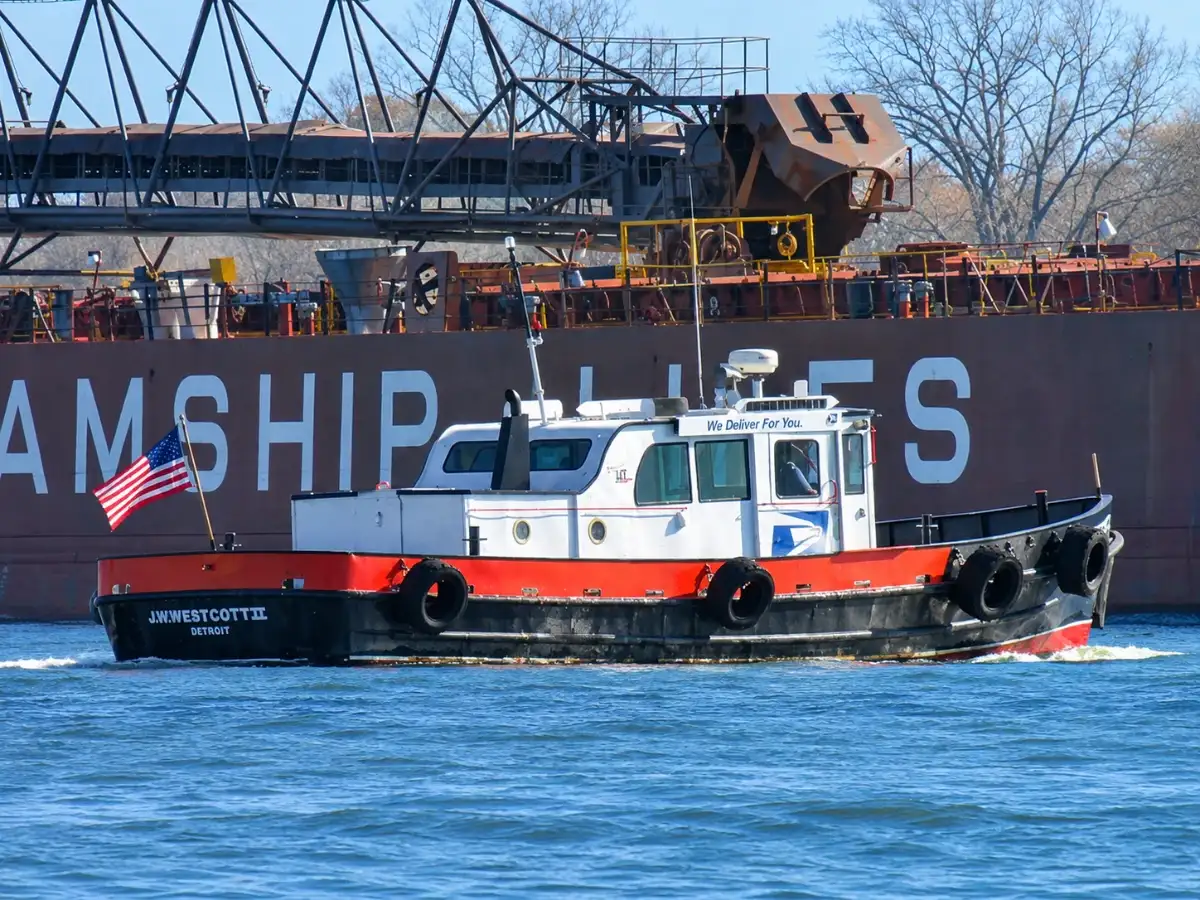
Most post offices stand still. This one doesn't. On the Detroit River, a little boat named the J.W. Westcott II chases after giant freighters, pulls up next to them while both are moving, and passes mail up in a bucket with a rope. In June 2024, the United States Postal Service marked 150 years of this unusual service with an official celebration in Detroit, calling the boat itself the world's first non-military floating ZIP code.
The rowboat that became a family business

The story begins in 1874 when a young captain, John Ward Westcott, established a rowboat on the Detroit River to deliver messages to passing ships. Westcott grew up in a family of boaters. The Atlas Obscura feature on the company says his parents were the first couple married on a steamer on the Great Lakes, and Westcott himself became the youngest captain on freshwater in 1869. And just five years later he started taking messages to ships. Before ship-to-shore radio, crews had to figure out which dock they were headed to next.
That small service turned into a company. The business that Westcott founded became an officially recognized US Postal Service mailboat in 1948, and this relationship continues to this day for 76 years, based on the information provided by the USPS. Currently, this company is owned by Jim Hogan, who is the great-grandson of Westcott and the fourth generation of his family to manage the company. The boat that does the daily work, the J.W. Westcott II, was built in 1949 and still bears that unusual floating ZIP code, 48222.
Why this river needed its own post office
The Detroit River is not just an ordinary stretch of water. It acts as a border between the United States and Canada and has had commercial shipping since the 1820s. A scientific report by the U.S. Geological Survey says it's one of the busiest navigation centers in the country, which helps explain why it was worth creating a mail service built specifically for passing ships. But one reason these ships can't just pull over and collect their mail, according to that same report, is that engineers have spent decades deepening and widening its channels to keep large freighters moving safely.