Get all your news in one place.
100's of premium titles.
One app.
Start reading
Bangkok Post
Bangkok Post
National

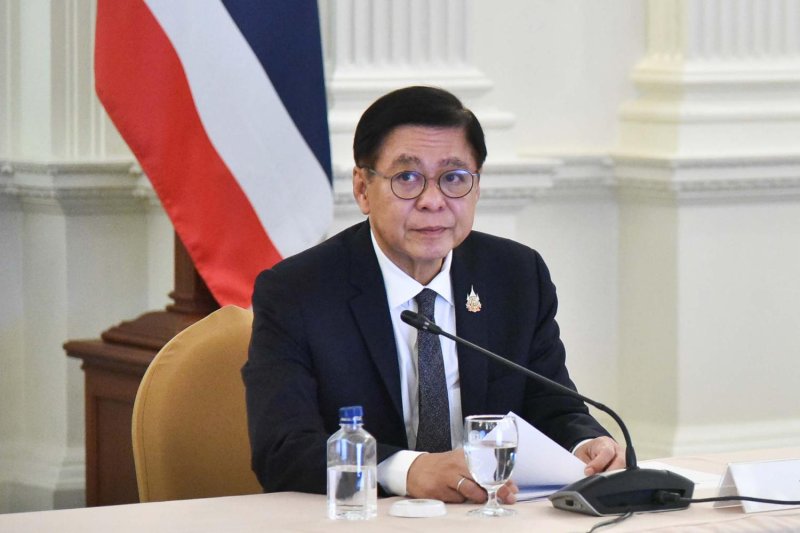
Sihasak maps out vision at OECD meet

Sihasak: More top jobs needed

Foreign Affairs Minister Sihasak Phuangketkeow said competitiveness in the modern era is determined not merely by investment incentives but increasingly by workforce skills, innovation, regulatory quality, ease of doing business and policy stability.

He made the remarks while outlining Thailand's vision at the Organisation for Economic Co-operation and Development (OECD) Ministerial Council Meeting (MCM) 2026 in Paris on Wednesday.
Speaking on the first day under the theme "Getting Industrial Policies Right for Open Markets, Growth and Prosperity", Mr Sihasak, also a deputy prime minister, said industrial policy has been an integral part of Thailand's development trajectory since the 1960s.

Through targeted incentives, strong foreign direct investment (FDI) strategies, and domestic supply chain development, Thailand transformed itself from an agriculture-based economy into a regional manufacturing hub, particularly in the automotive, electronics, and petrochemical sectors.

However, Mr Sihasak noted the conditions underpinning that success have changed. Countries must now create quality jobs, strengthen economic resilience, and advance sustainability alongside economic growth.

Mr Sihasak said industrial policy should shift from supporting specific sectors to facilitating economy-wide transformation.

This requires investment in human capital through skills development and lifelong learning, greater support for innovation ecosystems, digital infrastructure and green technologies, as well as deeper regional economic integration as supply chains, technology, energy and investment become increasingly cross-border in nature.

These priorities are central to Thailand's ongoing efforts to accelerate reform, enhance competitiveness, and build future resilience.

In this context, OECD membership is significant for Thailand. He stressed that accession is not an end goal but part of a broader economic transformation process.

Membership would help align the nation's policies with international best practices, improve policy coherence, and strengthen institutions.

Thailand's engagement with the OECD, he noted, predates its accession process through participation in OECD programmes, committees and instruments.

The kingdom believes it can contribute valuable practical experience as an upper-middle-income economy, enriching OECD discussions and strengthening engagement with emerging economies.

Mr Sihasak concluded that the key question is how industrial policy can help societies navigate major economic transitions while ensuring growth remains competitive and sustainable.

He also held talks with representatives from countries including Bulgaria and Japan, as well as with OECD Secretary-General Mathias Cormann.

Sign up to read this article
Read news from 100's of titles, curated specifically for you.
Already a member? Sign in here
Related Stories
Top stories on inkl right now
One subscription that gives you access to news from hundreds of sites
Already a member? Sign in here
Our Picks
Fourteen days free
Download the app
One app. One membership.
100+ trusted global sources.