
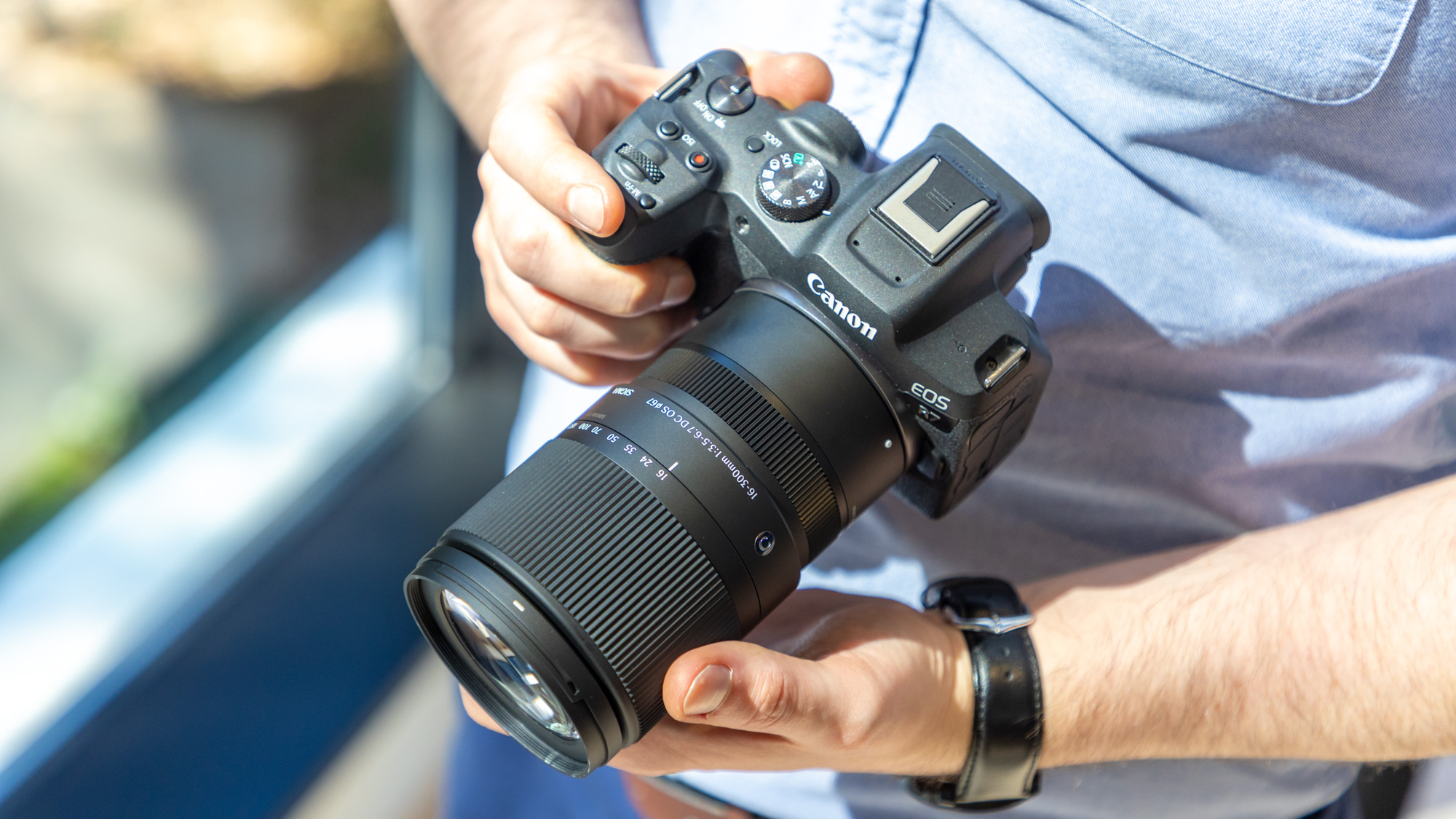
I feel there’s been a reversal of fortunes. Back when DSLRs were the order of the day, Tamron often seemed to lead the way in superzoom territory, launching lenses with ever greater ‘world-first’ and ‘world-best’ zoom ranges. They included the Tamron 16-300mm f/3.5-6.3 Di II VC PZD Macro and the Tamron 18-400mm f/3.5-6.3 Di II VC HLD, although I always felt that the latter was a bit hefty to qualify as a ‘travel lens’. At around the same time, the mightiest Sigma superzoom was the Sigma 18-300mm f/3.5-6.3 DC Macro OS HSM | C, which lacked the wide-angle extremity of the Tamron 16-300mm. Even so, the Sigma was a neat and fairly compact lens, although I didn’t like the way its focus ring rotated during autofocus, which impaired its handling. Fast forward to mirrorless, and Tamron released the Tamron 18-300mm f/3.5-6.3 Di III-A VC VXD for APS-C format Fujifilm X and Sony E cameras back in 2021.
Now it’s Sigma’s turn to rule the superzoom realm, this new 16-300mm having the biggest zoom range of any APS-C format lens for mirrorless cameras to date. It’s also available in a relatively wide variety of mount options, including Canon RF, Fujifilm X, L-mount, Sony E (but sadly no Nikon Z DX version on the horizon). The Sigma is definitely a contender for being one of the best travel lenses on the market today, and an ideal match for some of the best mirrorless cameras.








-copy-29e15046.jpeg?w=600)




