
Get all your news in one place.
100’s of premium titles.
One app.
Start reading
Homes & Gardens
Homes & Gardens
Sophia Pouget de St Victor

Should you choose your paint color or your furniture first? Trust me, there is a right order if you want a cohesive scheme

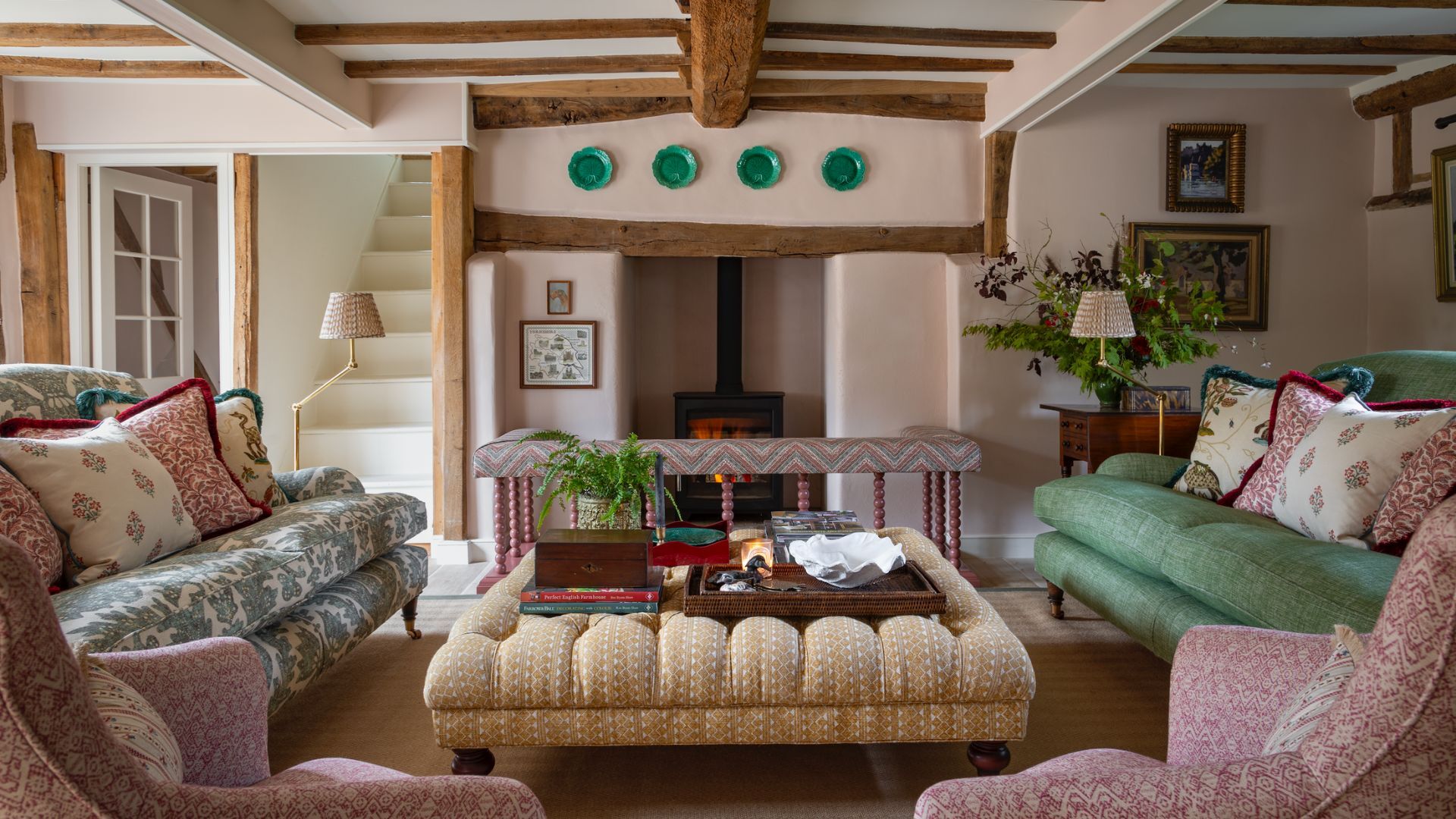
A country living room with a wood burning stove, two sofas opposite one another and two pink patterned armchairs in the foreground. In the middle of the room is a large yellow upholstered ottoman with a tray on top filled with books and plants. .

When approaching a renovation project, or even just refreshing a room, it can be hard to know where to start and where to end. What is the necessary order of proceedings? From conception to production, imagining, planning, and sourcing, it can become somewhat overwhelming. The biggest, earliest question homeowners find themselves inevitably asking is: What should I choose first, the paint color or the furniture?

Part of the process of creating a scheme includes flicking through magazines, scouring the web, and rummaging through antique markets for furniture ideas that you can envision in your space. It can also be tempting (and fun) to start with room color ideas, and then source the furniture to work with your winning color, but after speaking with several interior designers, the memo is clear: identify the key pieces of furniture for a space, and the paint color that best suits will surely follow.

Here, we look into why you should select your furnishings before you even consider paint swatches.

(Image credit: Interiors by Lisa Guest Interiors)

Abigail Ahern, a veritable interiors trend setter and interior designer, explains why your paint ideas should not be the first consideration when you are designing a room.

'It's one of the most common decorating conundrums I get asked, furnishings before paint or the other way round,' she notes. 'I would recommend selecting the big pieces of furniture first, which allows you to then create a cohesive scheme,' she explains.

'Aesthetic consistency, I like to call it, as you can then harmoniously tie in your furnishings to your paint color, it gives you way more flexibility. It's a fiendishly difficult task to do it the other way round,' she notes.

(Image credit: Nicola Harding interior design / Luke Edward-Hall for The Lacquer Company)

'It might sound counterintuitive as a paint color will totally dictate the tone and atmosphere in the room, but it will restrict you,' adds Abigail.

'You kind of need to let paint play the supporting role, so it's far wiser to start with the more permanent features like rugs, tables, and sofas,' she explains. 'Your scheme will thank you for it as it opens up a far wider range of options when it comes to layering in textures, all sorts of materials and patterns, giving you a richer, more layered and nuanced scheme. Trust me!'

(Image credit: Chris Wakefield)

UK-based interior designer Sean Symington suggests identifying those non-negotiable pieces of furniture you cannot imagine parting with, before setting about making any design or color decisions.

'I always say start with the bones of the home. What are we working with? Are there existing pieces like furniture, artwork, accessories, or sentimental belongings that need to be considered? Sometimes these elements naturally shape the direction of the design and rather than working against them, we try to work around them in a way that feels intentional,' he explains.

'Next, establish your personal style and the purpose of the space. For example, in a living room, will it be a family hangout, used every day, or a more formal space for entertaining? Understanding how the room will be used helps guide which furnishings will best support that function. From there, the fun really begins!'

(Image credit: Chris Wakefield)

He continues, 'Start identifying what speaks to you, whether it’s a beautiful print, a rug you love, or a piece of artwork. Use that as your anchor and begin to pull your color scheme from it.'

'Make sure to select things that have multiple colorways in them so you can dot this around your space for a collected but not contrived look. This creates a cohesive and considered aesthetic that still feels deeply personal. It’s about layering function with feeling, and letting the design evolve naturally from there.'

(Image credit: Chris Wakefield)

'Most people don’t begin decorating with a completely blank slate,' says Shauna Dennison-Taylor, Creative Director at Penny Morrison. 'More often than not, they already own furniture, art, or meaningful objects that naturally become the starting point for their interior design. Whether it’s an heirloom armchair, a favorite sofa, or a beloved painting, let that cherished piece guide the direction of your room.'

'These elements – especially artwork – carry emotional and aesthetic weight, making them ideal focal points to build around. A striking painting can inspire a room’s color palette or mood, while characterful furniture, even if it needs reupholstering, offers a flexible anchor for your scheme.'

(Image credit: Mike Garlick)

'Treat paint as the final layer,' says Penny. 'It’s incredibly versatile and easy to change, and with today’s abundance of sample pots and swatches, it’s simple to test colors before committing. If you’re drawn to pattern or rich, layered spaces, consider pattern drenching, using the same motif across walls, upholstery, and drapes, or add personality through wallpaper for bold character or subtle charm.'

'There’s no fixed rule,' she reassures us. 'Some people start with a favorite artwork, others with a rug or sofa. The key is to build a scheme that reflects your personal taste and story.'


Very little quibbling from the experts on this matter, it would seem that as tempting as it is to select furniture and furnishings that work beautifully with your favorite paint color, in reality, paint and color play much more of a supporting role than you might think.

Of course, as Shauna says, there are no hard and fast rules when it comes to decorating, and should you have committed heart and soul to one particular shade, it might be that you find using the color as a baseline works for you. On the whole, though, being seduced by a paint color before choosing or considering furniture seems to be a decorating mistake worth avoiding.

Sign up to read this article
Read news from 100’s of titles, curated specifically for you.
Already a member? Sign in here
Related Stories
Top stories on inkl right now
One subscription that gives you access to news from hundreds of sites
Already a member? Sign in here
Our Picks
Fourteen days free
Download the app
One app. One membership.
100+ trusted global sources.