Get all your news in one place.
100’s of premium titles.
One app.
Start reading
The Conversation
The Conversation
Drew Rooke, Deputy Science + Technology Editor, The Conversation

Should Australia establish an independent body to investigate scientific misconduct? We asked 5 experts

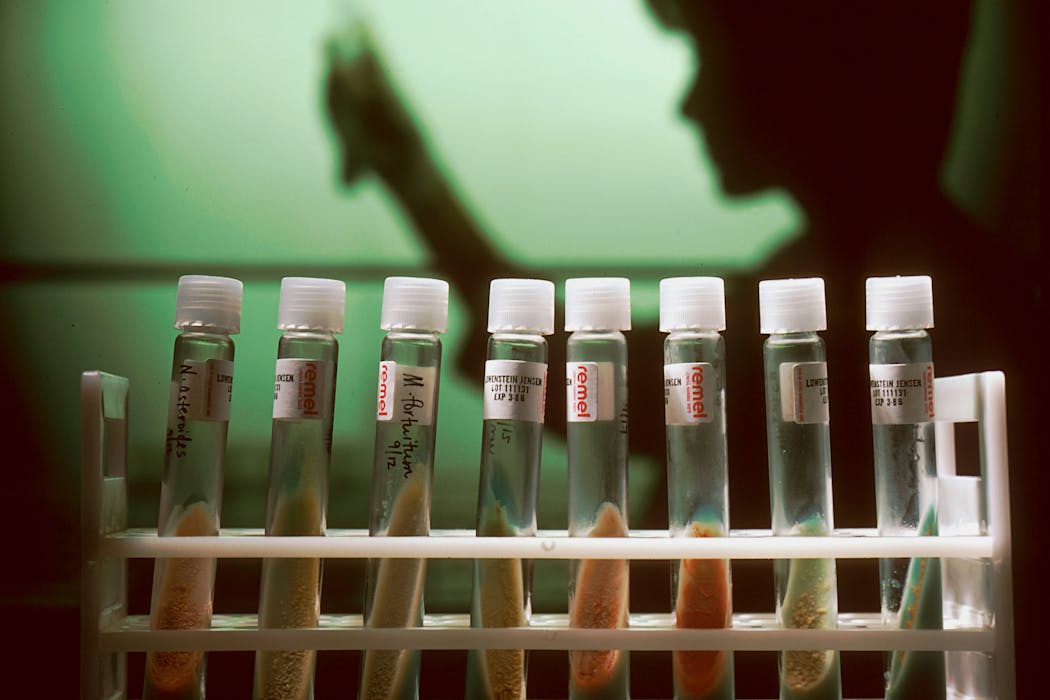
National Cancer Institute

Most of us trust scientists. We believe they are not just competent, but honest as well.

This belief is well-founded. However, scientists are also human – and sometimes they can make mistakes. These mistakes can be accidental. But they can also be intentional, as the rising number of academic papers retracted on the grounds of scientific misconduct demonstrates.

Scientific misconduct – which includes data fabrication, falsification and misrepresentation, and is being fuelled by artificial intelligence – isn’t merely an academic problem. Medical studies based on misleading or falsified data, for example, can harm human health. In extreme cases, scientific misconduct can also prove fatal.

Different countries have different approaches to tackling this problem. Sweden and Denmark are often lauded as “world-leaders” for establishing independent bodies that have the power to investigate allegations of scientific misconduct.

Australia has no such body. It instead relies on a self-regulation model, whereby universities assess and investigate scientific misconduct cases involving their staff internally.

Should Australia follow the approach of its international peers and establish an independent body that has the power to investigate scientific misconduct cases? We asked five experts. Three answered yes. Even the two who answered no said Australia could do more to protect research integrity.


Disclosure statements

Jason Chin is a board member of the Association for Interdisciplinary Metaresearch and Open Science (AIMOS), a charity that seeks to study and improve science.

Dane McCamey is involved in overseeing research ethics and compliance at UNSW.

Jennifer Byrne receives funding from the NHMRC. She is the current recipient of the Professor David Vaux Research Integrity Fellowship (2025–2026) offered by the Australian Academy of Science. She is also a Research Integrity Advisor at the University of Sydney.

Ben W. Mol receives funding from NHMRC, MRFF, as well as international competitive grants.

Nicholas Fisk served as Dean Medicine and Health at the University of Queensland (2010-16) and DVC Research and Enterprise at UNSW (2016–24). He is a board member of the peak body Research Australia.

The Conversation

This article was originally published on The Conversation. Read the original article.

Sign up to read this article
Read news from 100’s of titles, curated specifically for you.
Already a member? Sign in here
Related Stories
Top stories on inkl right now
One subscription that gives you access to news from hundreds of sites
Already a member? Sign in here
Our Picks
Fourteen days free
Download the app
One app. One membership.
100+ trusted global sources.