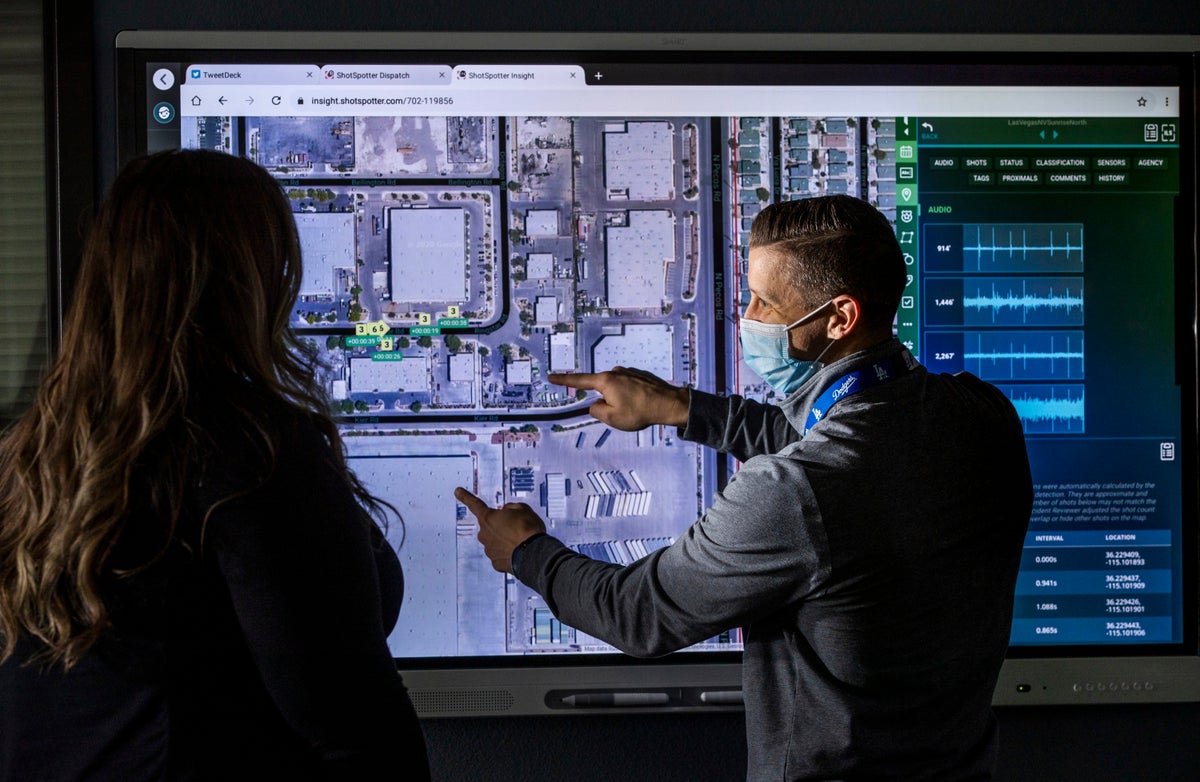
In more than 140 cities across the United States, ShotSpotter’s artificial intelligence algorithm and intricate network of microphones evaluate hundreds of thousands of sounds a year to determine if they are gunfire, generating data now being used in criminal cases nationwide.
But a confidential ShotSpotter document obtained by The Associated Press outlines something the company doesn’t always tout about its "precision policing system” — that human employees can quickly overrule and reverse the algorithm's determinations, and are given broad discretion to decide if a sound is a gunshot, fireworks, thunder or something else.