
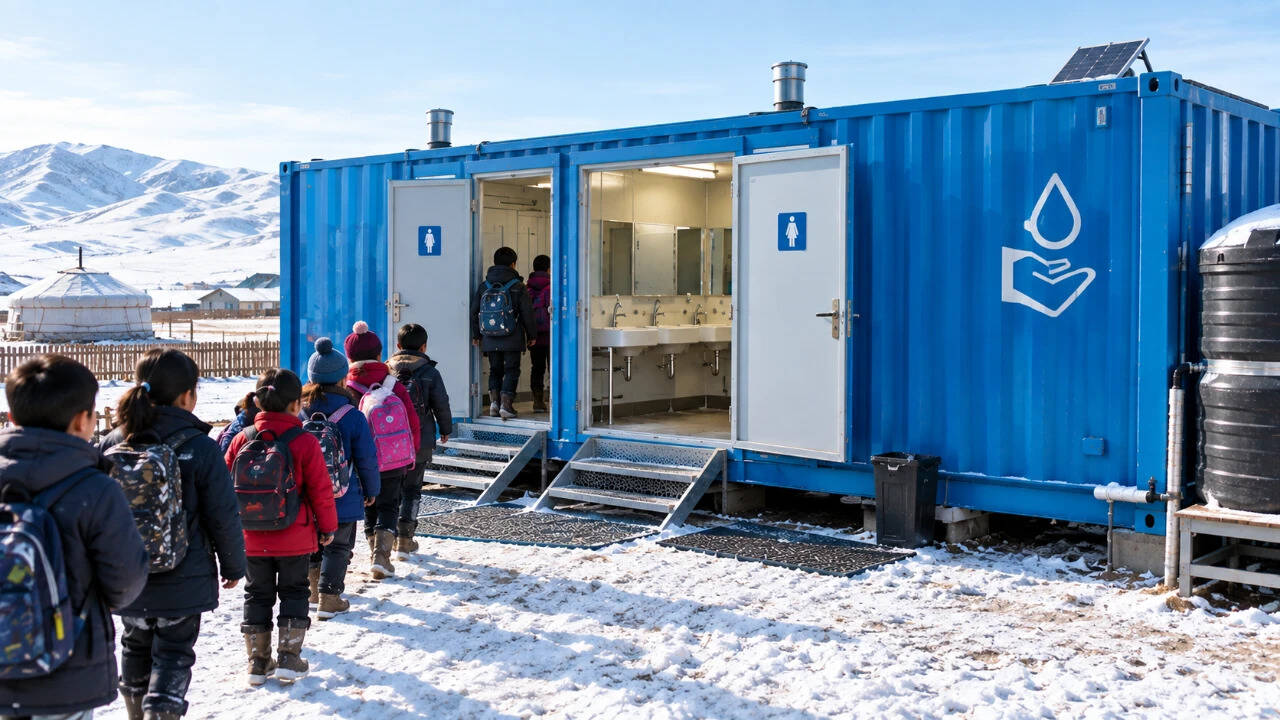
For children in Mongolia’s remote herding communities, using a toilet could mean leaving a heated classroom and stepping outside into temperatures far below freezing. Many rural schools and kindergartens depended on outdoor latrines, while access to warm water for washing was limited. The problem was especially difficult in a country where nomadic families move with their livestock and frozen ground can complicate conventional construction.
Get breaking news anytime, anywhere. Download the TOI app now!

According to UNICEF , the organisation developed relocatable WASH Houses in Mongolia by adapting the principles of insulated shipping-container construction. The units provided toilets and basins with warm running water in heated, well-lit structures that could be connected to classrooms or ger kindergartens. By 2015, 15 WASH Houses had been installed alongside ger kindergartens and regular classrooms, directly benefiting about 1,400 students.
Building a bathroom that could survive winter
The WASH House was developed as a prefabricated and relocatable solution for Mongolia's harsh climate. The organisation worked with local partners to develop several models based on insulated shipping-container structures. Rather than building every facility from scratch at the school site, the units could be manufactured elsewhere and transported to remote communities. The design addressed one of the biggest problems facing sanitation infrastructure in Mongolia: freezing temperatures. The units were insulated and heated, while their water and sanitation systems were designed to operate in winter conditions. They contained toilets and washing facilities supplied with warm water, giving children access to basic hygiene without having to leave the building for an outdoor latrine.
The facility’s portability was especially useful for ger schools and kindergartens. A ger is a round tent-like home traditionally used by Mongolian herding families, and schools in remote areas often have to adapt to that way of life. A portable sanitation facility can offer more flexibility compared to a regular building made of bricks and concrete. UNICEF said the units could be adapted to different water and sanitation setups depending on the site. Some could use wells and septic tanks, while others could connect to existing systems.







