From McClendon v. Long, decided today by the Eleventh Circuit, in an opinion by Judge Frank Hull, joined by Chief Judge William Pryor and Britt Grant:
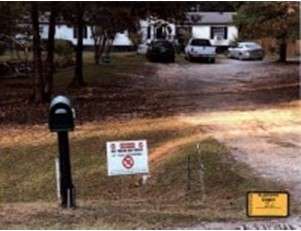
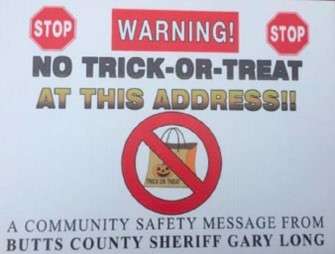
In October 2018, two deputies from the Butts County Sheriff's Office placed signs in the front yards of the residences of all 57 registered sex offenders within the County, warning "STOP" and "NO TRICK-OR-TREAT AT THIS ADDRESS." Before Halloween 2019, three registered sex offenders living in Butts County sued, seeking to enjoin the Sheriff from placing the signs again. The district court denied a permanent injunction and granted summary judgment in favor of the Sheriff…. [W]e conclude that the Sheriff's warning signs are compelled government speech, and their placement violates a homeowner's First Amendment rights. Thus, we vacate the district court's judgment in favor of the Sheriff and remand for further proceedings consistent with this opinion….
The Sheriff's Office placed these warning signs in front of the listed homes of all registered sex offenders in Butts County, without considering whether the State had classified any of them as posing an increased risk of recidivism. The deputies collected the signs on November 1….
After the warning signs were placed, Sheriff Long posted a message on his official Facebook page, along with a picture of the sign. In his post, he explained that the signs had only been placed in front of the homes of registered sex offenders. His message also represented that Georgia law forbids registered sex offenders from participating in Halloween …. It is now undisputed, however, that Georgia law does not forbid registered sex offenders from participating in Halloween.
First Amendment protection "includes both the right to speak freely and the right to refrain from speaking at all." Wooley v. Maynard (1977). "The right to speak and the right to refrain from speaking are complementary components of the broader concept of individual freedom of mind." The compelled speech doctrine applies to ideological speech and purely factual, non-commercial speech. Riley v. Nat'l Fed'n of the Blind (1988); Nat'l Inst. of Family and Life Advocs. v. Becerra (2018).