
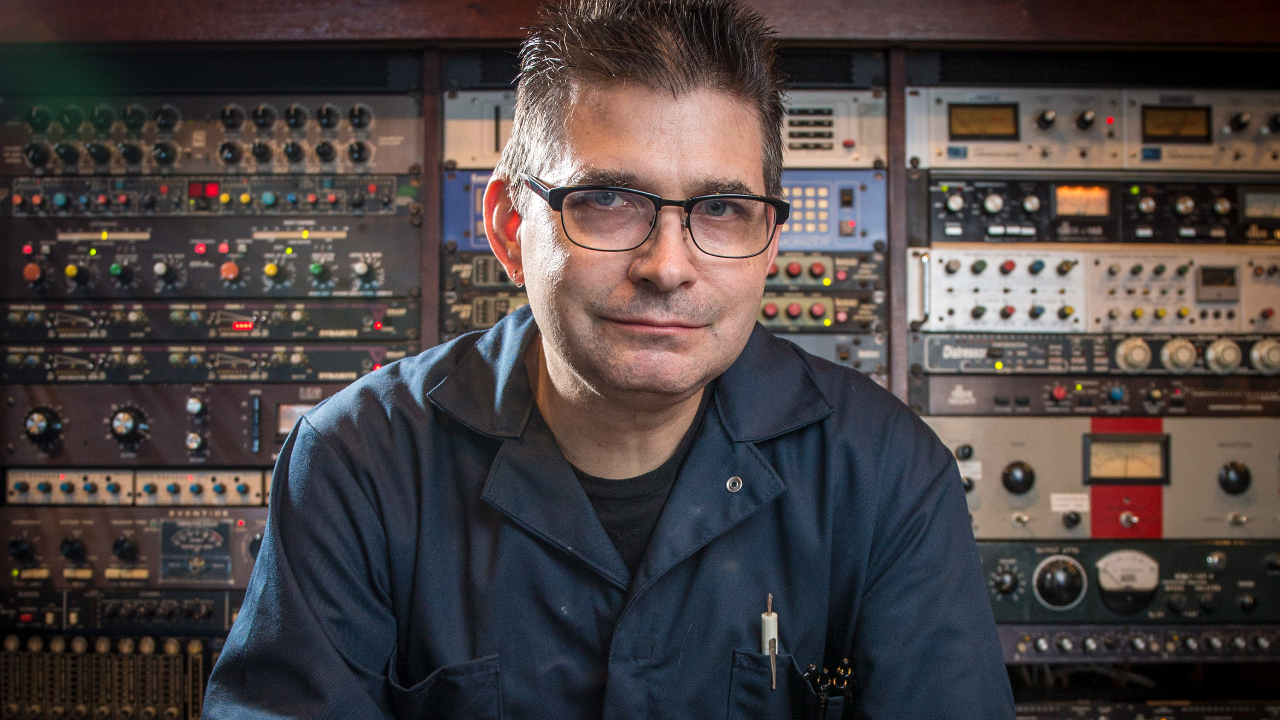
Steve Albini, one of the best-known personalities in US underground rock, frontman of Shellac and the recording engineer on classic albums by Nirvana, Pixies, PJ Harvey, The Jesus Lizard and more, has died, aged 61.
Albini died of a heart attack last night (May 7), staff at his Chicago recording studio Electric Audio confirmed to music website Pitchfork.
Born in Pasadena, California, Albini grew up in Montana, before moving to Evanston, Illinois to study at NorthWestern University. While studying journalism at the university, Albini initially carved out a reputation as an acerbic fanzine writer, before forming, in 1981, Big Black, a band who would become one of the most influential, hard-hitting acts in US alternative rock.
The liner notes the notoriously outspoken Albini penned for Big Black’s posthumous live album Pigpile may have referred specifically to that band’s modus operandi but they also laid out the basic principles which informed his life’s work, from his days as a fanzine writer through to his career as a musician and studio technician.
"Treat everyone with as much respect as he deserves (and no more)," he wrote. "Avoid people who appeal to our vanity or ambition (they’ll always have an angle). Operate as much as possible apart from the 'music scene'. Take no shit from anyone in the process."
Like so many US musicians of his generation, Albini was turned on to punk rock by the Ramones. Speaking to this writer three years ago, Albini said, "I didn’t know anything about music except what leaked out of the popular consciousness, so when this band appeared, fully-formed, that played directly into the obsessions of me and my dorky friends – horror films and trash culture, general adolescent misbehaviour and transgressive thoughts – I took to them like a fish to water. It was inescapable that this would be the band and the scene for me. Rock music at the time had a lot of pageantry and pomp attached, and a lot of it struck me as affected nonsense. Then the Ramones appeared, dressed like me and my friends, with no robes or smoke machines, and that seemed so much more powerful."












