
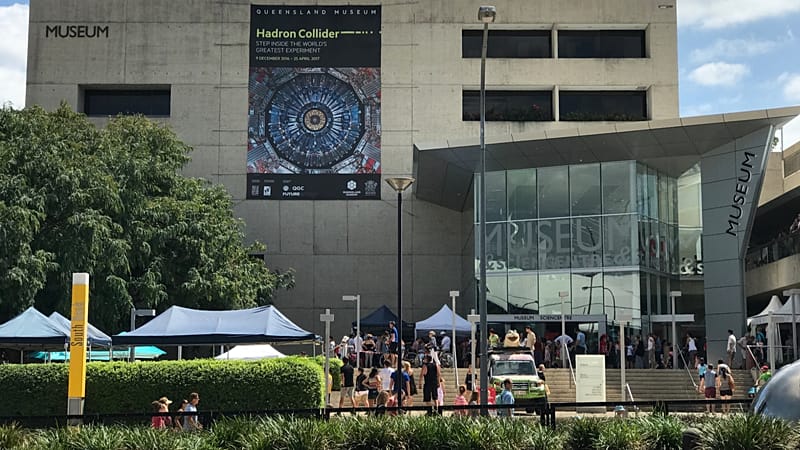
A popular museum is under growing pressure to cut ties with fossil giant Shell after being accused of misleading children about the climate crisis.
An investigation by climate advocacy group Comms Declare found that Queensland Museum in Australia has accepted more than $10.25 million AUD (around €5.84 million) from Shell’s QGC gas business since 2015.

In a new report, researchers say this has given the oil and gas company “potential influence” over curriculum-aligned programs and “widespread exposure” in education materials used by school children.
Despite the museum insisting it has “full independence”, Comms Declare found Shell-branded school materials delivered under the Museum’s authority had “systematic omissions and distortions” which downplay fossil fuels’ role in climate change.
What the Shell-funded materials don’t teach children
The report analyses multiple booklets issued to children under Queensland Museum’s Future Makers program, to check for any bias.
It found that fossil fuels were not cited as the primary driver of global warming andocean acidification – despite overwhelming scientific consensus suggesting otherwise.
The UN describes burning coal, oil and gas as the “largest contributor” toclimate change, accounting for around 68 per cent of global greenhouse gas emissions and almost 90 per cent of all carbon dioxide emissions. Ocean acidification is mainly caused by CO2 in the atmosphere dissolving into the ocean, lowering the water’s pH.
However, in the resource ‘Introduction to Ocean Acidification’, students were actually asked to focus on designing their own carbon capture and storage (CCS) technology rather than discussing coal, oil and gas combustion.
“By removing fossil fuels from the casual chain and highlighting CCS as a ‘solution’, the resource reframes a fossil-fuel-driven crisis as a neutral scientific challenge,” the report states. “It effectively provides corporate greenwashing in the guise of STEM learning.”
In the resource ‘States of Matter: Our Warming World’, researchers found no link between global warming and fossil fuels – with the phrase only being used once in a teacher note, and not as part of any core learning outcome.
The report also argues that Shell "shifts responsibility” from systemic causes to individual behaviour or invention, minimising corporate and policy accountability.
Should Queensland Museum’s resources be axed?
Comms Declare’s founder Belinda Noble says the findings raise “urgent concerns” for Queensland parents that their children are being taught “biased, half-truths” about climate change and the energy future.
“This is climate obstruction dressed up as education,” Noble adds. “We wouldn’t let Big Tobacco sponsor teaching materials. Fossil fuel companies shouldn’t shape how kids learn about the climate.”
Queensland Conservation Council campaigner Charlie Cox argues most Queensland families would be “alarmed” to see how “heavy-handed and misleading” Shell’s influence has been on the state museum for the last decade.
“These fossil fuel-funded materials leave our kids without the scientific foundations they need to navigate the world they’re inheriting,” she says. “Science should inform politics, not the other way around.”
Cox, along with Comms Declare and other environmentalists, is now calling on Queensland Museum to end its long-standing partnership with Shell.
What does the museum say about the claims?
However, Queensland Museum did not answer Euronews Green when directly asked if it plans on scrapping the materials.
Instead, a spokesperson said that Shell's QGC business does not authorise any content and that the museum develops all learning resources to align with the Australian Curriculum and the Queensland Curriculum and Assessment Authority.
"Since mid-2024, Queensland Museum's small team of education specialists have been systematically reviewing 130 learning resources to align with the updated Version 9 of the Australian Curriculum," the spokesperson added.
A Shell spokesperson says it has a "long and valued" relationship with the museum to support the Future Makers program, which encourages children to take an interest in STEM, adding: "We have no role in developing or approving any of the museum's materials."