Get all your news in one place.
100’s of premium titles.
One app.
Start reading
The Times of India
The Times of India
National
Saranya Chakrapani | TNN

Share, like, and subscribe, for some quiet

CHENNAI: You wake up, and before your brain can register what day it is, your hand has grabbed the phone and you’re half-consciously checking in on how Kim Kardashian likes her morning coffee or Ayushmann Khurrana’s cycling routine.

It’s half past noon and you’re working and almost involuntarily, your hand is at it again to read the ‘seven steps to kill rumination’, followed by a bunch of strangers at a hamburger-eating contest.

Radha Kannan, a freelance writer from the city, says she lost both prospective gigs and her mind doing just this on loop for more than two years. What started as a coping mechanism at the onset of the pandemic turned into her darkest addiction in no time, until she was spending an average of seven hours in bed during the day.

Her saviour was ‘Forest’, an app designed to shut out mindless digital consumption and help focus on important things for a set time. “You give a personality test when you sign up, and plan your day with activities that resonate with your goals. As you begin, you also plant this imaginary tree, which you see wither every time you break the schedule,” she says. “It guilted me into staying productive through the day. ”

Globally, close to five billion people are said to be dependent on the internet for everything from information to food, transport, work and relationships.

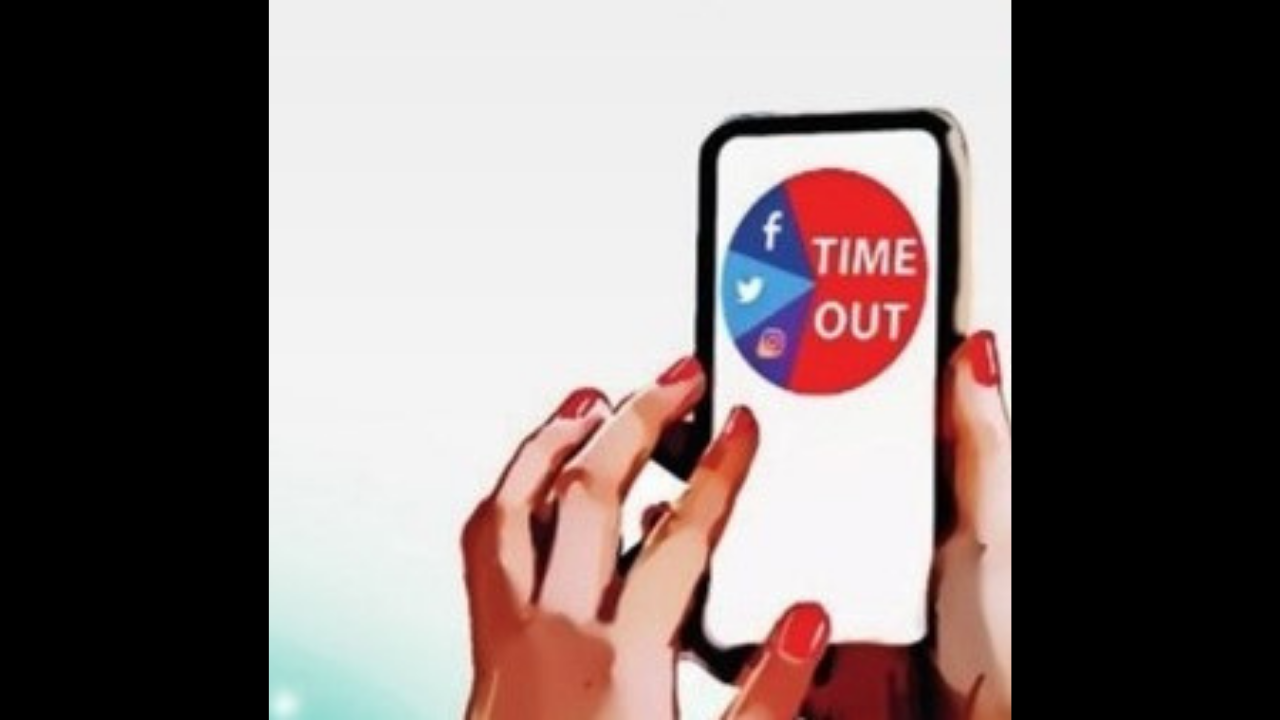
At a time when life without a smartphone seems counterintuitive, some digital innovators are suggesting that the antidote to short attention spans, sleep deprivation, and almost every other disease emerging out of technological dependence may be lying within the code world. Their answer? Smart applications created to know you better so as to slow you down, exercise more, get work done and maybe, even live in the moment, if you will.

Using Forest, for instance, the more ‘trees’ you grow, the more virtual coins you collect, which say the app’s creators, can be spent to plant real trees through a tree-planting organization they have partnered with. According to the team, 1,383,508 have been planted in five countries across Africa through these donations.

‘A Wall Street Journal’ report last year revealed that features within Instagram caused teenage girls to develop negative feelings about their own body image. A study published in the Indian Journal of Psychiatry in January-February this year said college-going students were significantly more likely to feel that “life would be less interesting”, “they could not imagine living”, and “felt unhappy and annoyed when not connected” to social media.

Sanatan Jain, senior manager (digital marketing) at Systweak Software, says the firm launched social media time tracker app Social Fever in early 2019 when social media addiction among school students was at a disturbing high (following movements such as Blue Whale). He says that between March 2020 and December 2021, Social Fever saw 39,820 new users, and as of March 2022, it has 1,00,000 active users. The app comes with ‘soft reminders’, or force stop options you can set to the social media or gaming apps you’re overusing.

“We are working on parental controls and also planning to connect users with each other on how they limited their social media usage and replaced it with healthier interests like running, cycling, or cooking, and post it publicly to inspire users,” says Sanatan.

Jaipur-based biotechnology student Chahat Vijay, who comes from a family of jewellery designers, began Instagramming to find videos related to the craft, and before she knew it, was being relayed from one suggestion video to another, until hours passed and day turned to dusk. “The past two years, we were doing internships from home and it was impossible to get through with me spending my days like this,” she says.

While she got on to a time tracker app sceptically, she’s happy with the progress she’s made. “From three hours a day, I now spend 35 minutes on Instagram. The alarms are deliberately loud and annoying, so you are snapped out of that mood,” she says.

Bengaluru-based psychiatrist J Vijaya Savithri has seen a surge in people seeking help for social media addiction. She says their realities are often warped after months of being isolated from the outside world and being online.

“Social media addiction is real and institutes like NIMHANS have launched clinics to deal with it. While it’s good to see apps limiting one’s usage, many of them are put together by tech professionals and people in the mental health field with little experience backing them,” she says.

“When you’re unable to participate in day-to-day activities, start to believe all that you read online and idolise influencers, not realising that the world outside your screen is different — it’s time to get professional help. ” |

Sign up to read this article
Read news from 100’s of titles, curated specifically for you.
Already a member? Sign in here
Related Stories
Top stories on inkl right now
One subscription that gives you access to news from hundreds of sites
Already a member? Sign in here
Our Picks
Fourteen days free
Download the app
One app. One membership.
100+ trusted global sources.