
Get all your news in one place.
100's of premium titles.
One app.
Start reading
LiveScience
LiveScience
Patrick Pester

'Sexy' pterosaur tail should have been nightmare for flying. How did it work?

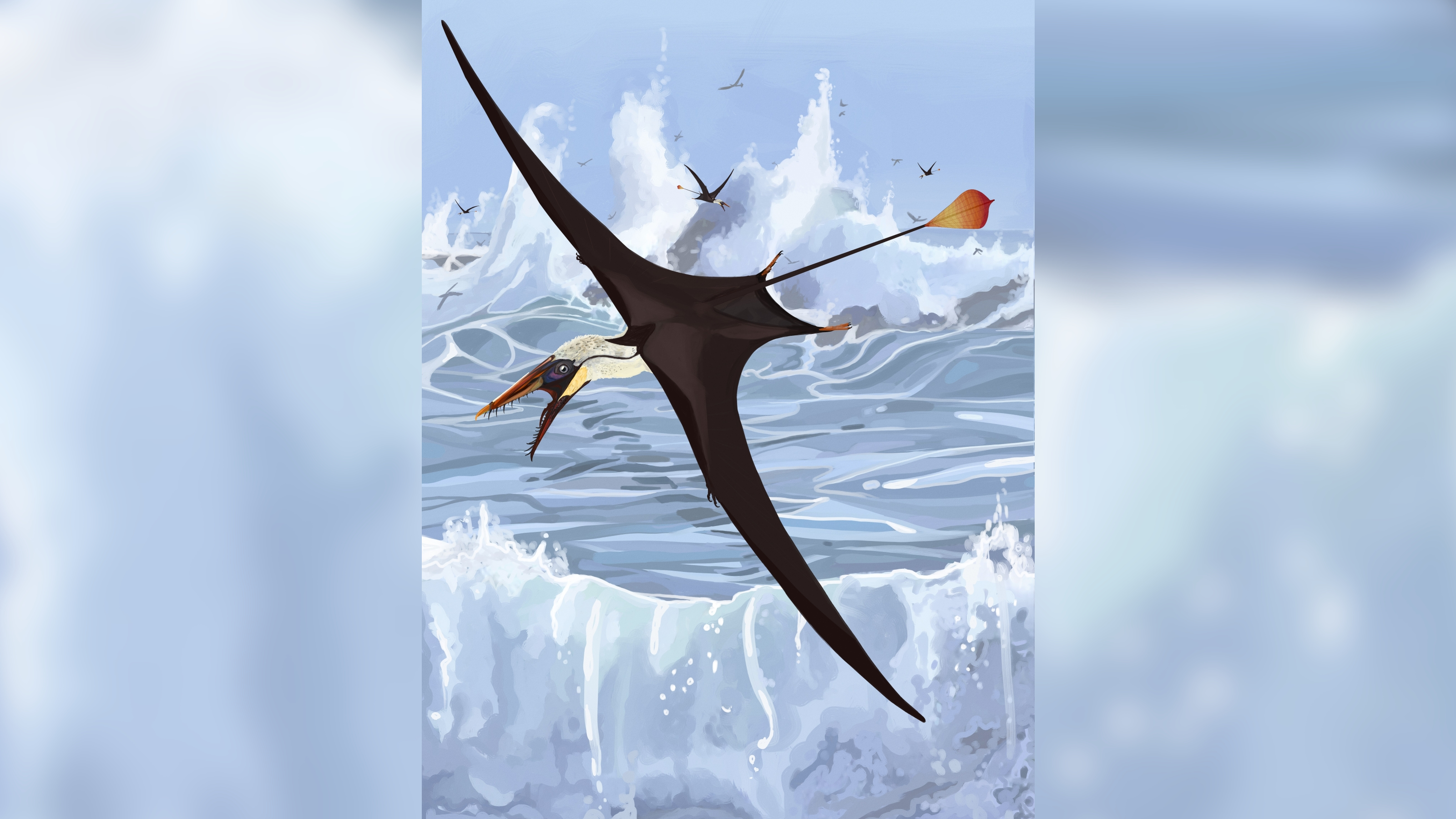
Illustration of an early pterosaur flying with its tail vane.

The first pterosaurs took flight during the age of dinosaurs thanks to a sail-like tensioning system, a new study has found.

Early pterosaurs — informally called "pterodactyls" — had long tails with thin, leaf-shaped flaps of tissue on the end called vanes. This vane would have compromised their flight if it were floppy and fluttered like a flag, so paleontologists knew it was stiff, but they didn't know how the vane maintained stiffness until now.

Sign up to read this article
Read news from 100's of titles, curated specifically for you.
Already a member? Sign in here
Related Stories
Top stories on inkl right now
One subscription that gives you access to news from hundreds of sites
Already a member? Sign in here
Our Picks
Fourteen days free
Download the app
One app. One membership.
100+ trusted global sources.