Get all your news in one place.
100’s of premium titles.
One app.
Start reading
The Guardian - AU
The Guardian - AU
Comment
Shamikh Badra

Seven of my relatives were killed in Gaza. For me, Herzog’s visit was never an abstract debate

Members of NSW police clash with rally participants
‘The repression of peaceful protesters cannot be dismissed as a mere security misjudgment; it signals a deeper crisis in how the state understands its responsibilities to its own people.’ Photograph: Darrian Traynor/Getty Images

Isaac Herzog’s visit to Australia was not a routine diplomatic engagement. It was an ethical and political test of the Australian state. At the very moment a red carpet was rolled out for a man accused of inciting genocide, peaceful Australian citizens were met with batons while exercising their democratic right to protest.

For me, this was never an abstract political debate. Before the visit, I pursued the legal channels that are meant to protect citizens and lodged a formal complaint with the Australian government about the role Herzog played in rhetoric and policies that contributed to the destruction of my family in Gaza. Seven of my relatives were killed. My father died because of a lack of medicine, food and water. My brother, his wife, their four children and her father were also killed. Their bodies remain buried beneath the rubble. Despite the seriousness of this complaint, I have received no response from the government.
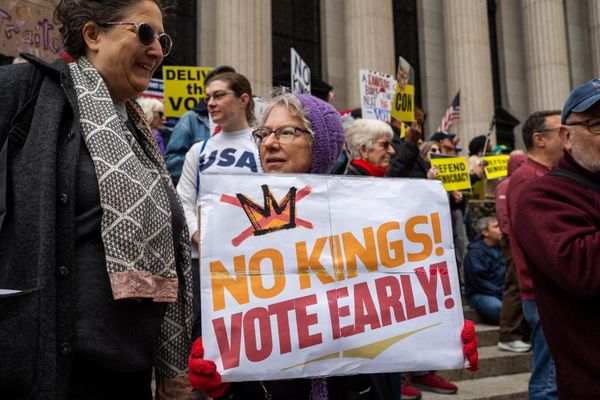
I later attended a protest in Sydney convened specifically in opposition to Herzog’s visit. I did so peacefully. Yet I witnessed fellow demonstrators being confronted with batons and excessive force. My concerns were disregarded when I sought redress through legal channels, and my rights were not respected when I turned to lawful protest. The impression was clear: the state was more intent on silencing dissent than engaging with it.

To what extent, then, is the Australian citizen now being disregarded?

This question is especially urgent because Australia is not a state without obligations. It ratified the UN genocide convention in 1949, a foundational pillar of postwar international law that transformed the prevention of genocide from a moral aspiration into a binding legal duty. The convention requires states to exercise due diligence to prevent genocide, to avoid facilitating it, and to refrain from conferring political or diplomatic legitimacy on those credibly accused of inciting it. Breaching these commitments does not merely invite criticism; it undermines Australia’s claim to uphold human rights and the rule of law.

When a citizen directly harmed by these policies has their complaint ignored, and is then met with force when protesting peacefully, the message is troubling. Truth becomes inconvenient, and legitimate dissent is treated as a threat.

What we have witnessed suggests a dangerous drift away from the values Australia has long claimed to cherish: freedom of expression, the rule of law and democratic accountability. When the protection of power is placed above the protection of citizens, democracy begins to erode from within.

The decision to host a figure accused of inciting genocide was a grave political and moral error. The repression of peaceful protesters cannot be dismissed as a mere security misjudgment; it signals a deeper crisis in how the state understands its responsibilities to its own people.

Australia now stands at a crossroads. It can either be a country that extends red-carpet treatment to individuals suspected of serious crimes, or a country that safeguards the right of its citizens to protest, pursues justice, and honours its international commitments.

The question that should remain before the public is therefore unavoidable: red carpet for Herzog, batons for Australians?

• Shamikh Badra is an independent Palestinian-Australian researcher and writer. He holds a master’s degree in peace and conflict studies and is a PhD candidate at the University of Wollongong

Sign up to read this article
Read news from 100’s of titles, curated specifically for you.
Already a member? Sign in here
Related Stories
Top stories on inkl right now
One subscription that gives you access to news from hundreds of sites
Already a member? Sign in here
Our Picks
Fourteen days free
Download the app
One app. One membership.
100+ trusted global sources.