Get all your news in one place.
100's of premium titles.
One app.
Start reading
The Conversation
The Conversation
Gabriela Radulescu, Guggenheim Postdoctoral Fellow, Smithsonian Institution

SETI’s ‘Noah’s Ark’ – a space historian explores how the advent of radio astronomy led to the USSR’s search for extraterrestrial life

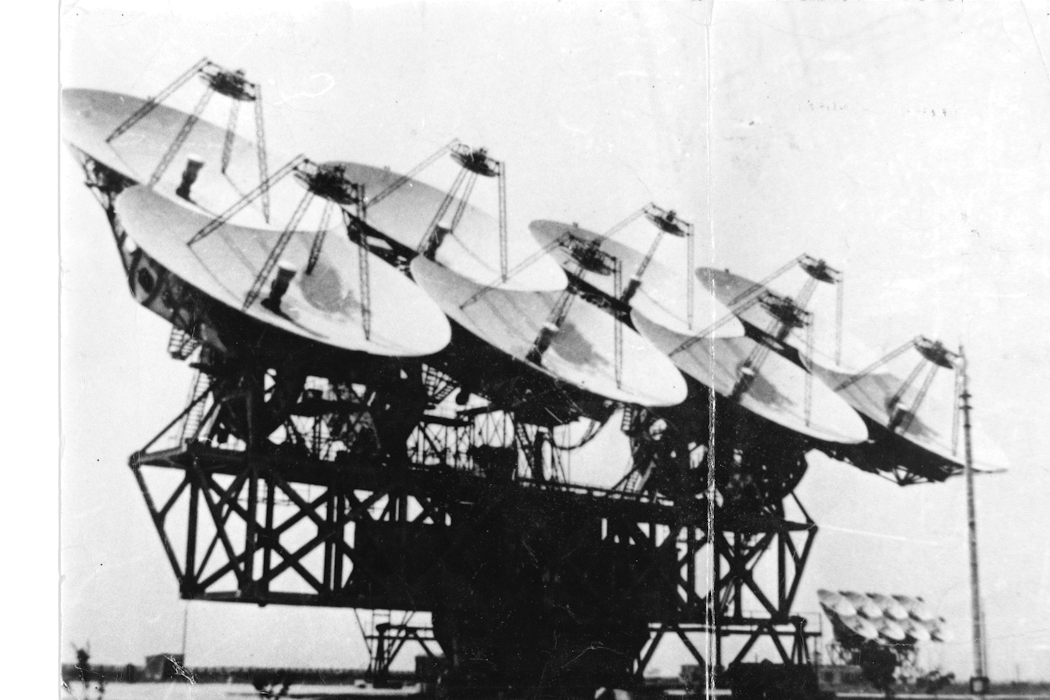
The planetary radar, built in 1960 in Crimea, from which the Morse signal 'MIR, Lenin, USSR' was sent in November 1962. National Radio Astronomy Observatory Archive

As humans began to explore outer space in the latter half of the 20th century, radio waves proved a powerful tool. Scientists could send out radio waves to communicate with satellites, rockets and other spacecraft, and use radio telescopes to take in radio waves emitted by objects throughout the universe.

However, sometimes radio telescopes would pick up the artificial radio signals from telecommunications. This interference threatened sensitive astronomy observations, causing inaccurate data and even damaging equipment. While this interference frustrated scientists, it also sparked an idea.

Sign up to read this article
Read news from 100's of titles, curated specifically for you.
Already a member? Sign in here
Related Stories
Top stories on inkl right now
One subscription that gives you access to news from hundreds of sites
Already a member? Sign in here
Our Picks
Fourteen days free
Download the app
One app. One membership.
100+ trusted global sources.