Get all your news in one place.
100's of premium titles.
One app.
Start reading
Bangkok Post
Bangkok Post
Comment

Senate probe risks public trust

Unsuccessful Senate candidates get an update at the EC on May 21 on the progress of the probe into alleged cheating in the Senate election in 2024. (Photo: Pattarapong Chatpattarasill)

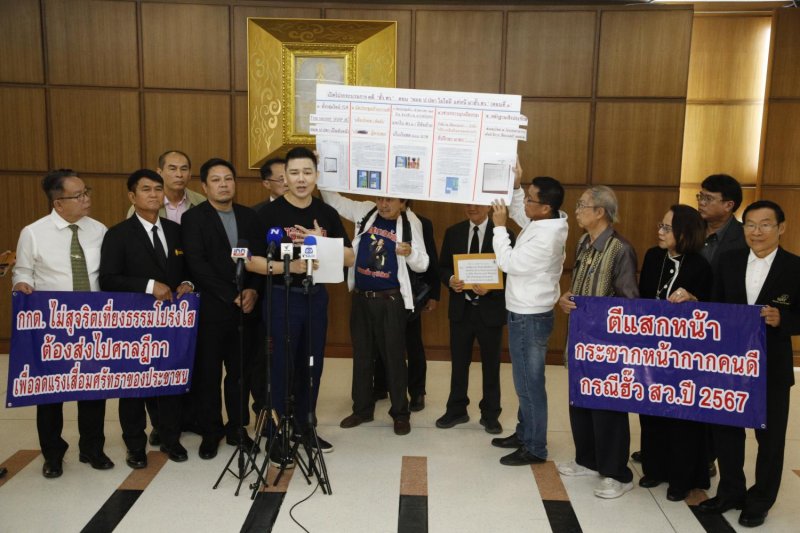
As the Election Commission wraps up its probe into Senate election fraud late this month, the public must keep a close eye on the process.

It remains uncertain if the EC will leave the case to the Supreme Court, as urged by political activists and the opposition. It is widely speculated that the commission may selectively send low-level wrongdoers to court while sparing the big fish.

Another option is to extend the deadline by citing additional evidence and witness accounts. Reports suggest the EC may call more witnesses and request more evidence from applicants in 64 provinces while limiting financial-trail investigations to low-level players. Lest we forget, the probe has been ongoing for over a year, and this Senate is already in its second year.

Fears of delay tactics are not exaggerated if one follows how the EC has handled this inquiry.

Previously, two probe teams formed by the commission came up with conflicting findings, requiring a final ruling from the main EC. Such disparity is astounding: one panel pinpoints wrongdoers, while the other finds them innocent. The main EC has never explained this phenomenon.

Altogether, 299 people are alleged to have been involved in senate election rigging in 2024. Of that total, 138 are current senators, while the rest are politicians from the Bhumjaithai Party. Names of suspects slated for summons include real heavyweights such as Anutin Charnvirakul and Newin Chidchob, as well as senior Bhumjaithai figures.

Although the allegations are not new, as the party adamantly claims, a swath of evidence recently released by iLaw and unsuccessful candidates in June forums is drawing intense public attention.

In those forums, unsuccessful candidates and reserve senators accused their competitors -- now sitting senators -- of violating election rules through poll-fixing, such as using ballots showing blocks of candidates voting in identical patterns. iLaw also presented what it said were money trails involving Senate candidates and Bhumjaithai politicians. The party has sternly denied the claims and sued iLaw for defamation.

Regardless of whether these details are true, they only harm the Senate's reputation as progress remains sluggish.

Critics argue the EC's sluggishness may stem from the fact that a few election commissioners were appointed by the current Senate. If so, this entrenched cycle will only undermine the system of checks and balances our democracy relies on. Besides, there is evidence of lax eligibility checks during the application stage that allowed ineligible individuals to successfully apply. Some claimed to represent career groups, such as education or healthcare, but were actually deployed as voters to secure victory for specific candidates.

In fact, Senate election rules make rigging easy. Because candidates use the same number from the province-level to the national-level contest, it is simple for candidates to build rapport and form networks, providing loopholes for masterminds to manipulate results.

If this speculation proves true, the EC will suffer a severe trust deficit, compounding the blunders related to QR codes on ballot papers used in the Feb 8 election. Again, even if a probe is conducted, concerns persist about partiality in the absence of a third party. Little can be expected when the EC relies on self-investigation -- investigators probing the EC secretary-general are none other than his own subordinates.

As experts point out, the EC does not need to make a final ruling on the senate poll saga itself. It can, and should, refer all complaints and evidence to the court so those in the wrong are punished accordingly.

Several observers are not optimistic, worrying the senate fraud probe may end the same way as local administration exam cheating, where big bosses comfortably escaped legal trouble.

If that is the case, it will confirm that the bond between Bhumjaithai -- the so-called blue party -- and independent agencies is real and that, together, they form a strong force capable of dominating the country's political landscape for a long time.

Chairith Yonpiam is an assistant news editor at the Bangkok Post.

Sign up to read this article
Read news from 100's of titles, curated specifically for you.
Already a member? Sign in here
Related Stories
Top stories on inkl right now
One subscription that gives you access to news from hundreds of sites
Already a member? Sign in here
Our Picks
Fourteen days free
Download the app
One app. One membership.
100+ trusted global sources.