
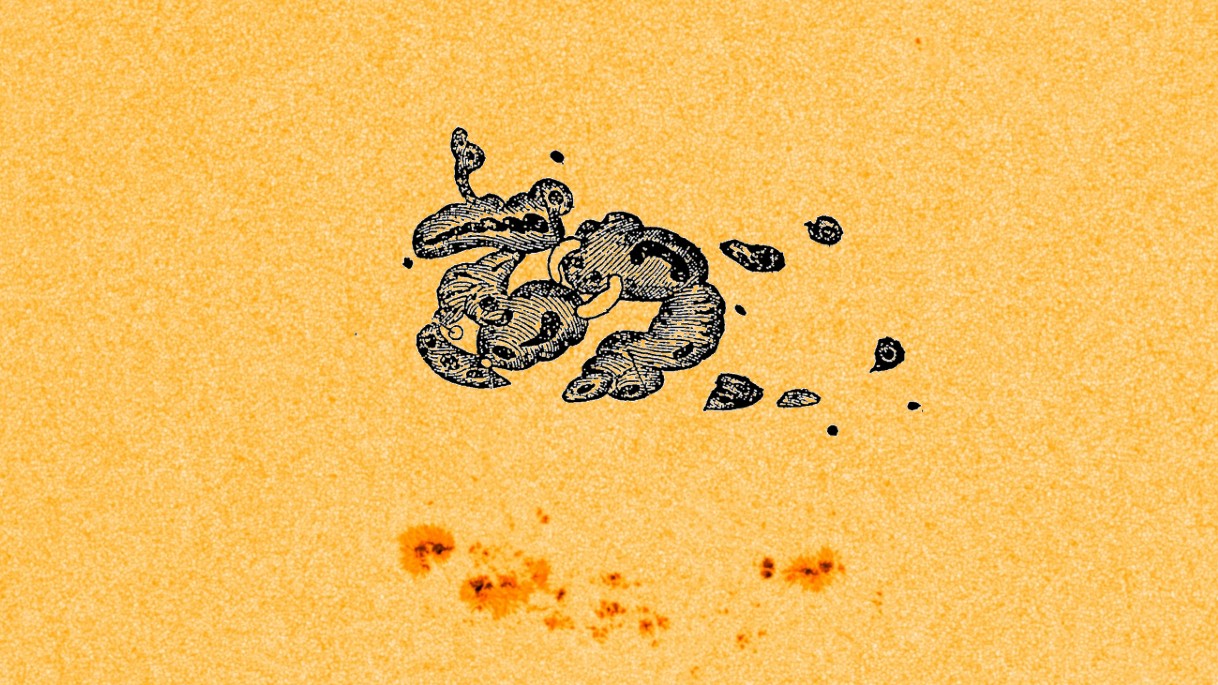
On Sept. 1, 1859, British astronomer Richard Carrington was investigating a strange cluster of dark blobs in the sun's atmosphere when a bright blast of light caught his eye. Shining for nearly five minutes, the flash would later make history as the first recorded solar flare ever observed — but Carrington's name would ultimately become synonymous with the violent solar storm that slammed into Earth less than 48 hours later.
Now called the Carrington Event, the speeding storm of electrically charged particles caused telegraph offices to go up in flames and triggered colorful auroras as far south as Cuba and Hawaii. To this day, the Carrington Event is considered the most intense solar storm in recorded history. And those dark blobs that Carrington was studying — vast, planet-size regions of pent-up magnetic energy called sunspots — could have provided a big clue that something nasty was on its way.














