
Each Monday I pick out the northern hemisphere’s celestial highlights (mid-northern latitudes) for the week ahead, but be sure to check my main feed for more in-depth articles on stargazing, astronomy, eclipses and more.
What To Watch For In The Night Sky This Week: March 14-20, 2022
With a waxing gibbous Moon high in the sky and getting brighter each day as it gets close to being full on Thursday or Friday (depending on where you live), this isn’t the best week for stargazing. While the Moon dominates the early evening night sky, the pre-dawn eastern sky is dotted with planets. Venus is the brightest by far, but below it are Mars and Saturn, with Jupiter peeking above the horizon close to sunrise.
The week ends with an equinox—not exactly a sight to see, but a definite way-marker in our planet’s journey around the Sun.
Here’s what to look for in the night sky this week:
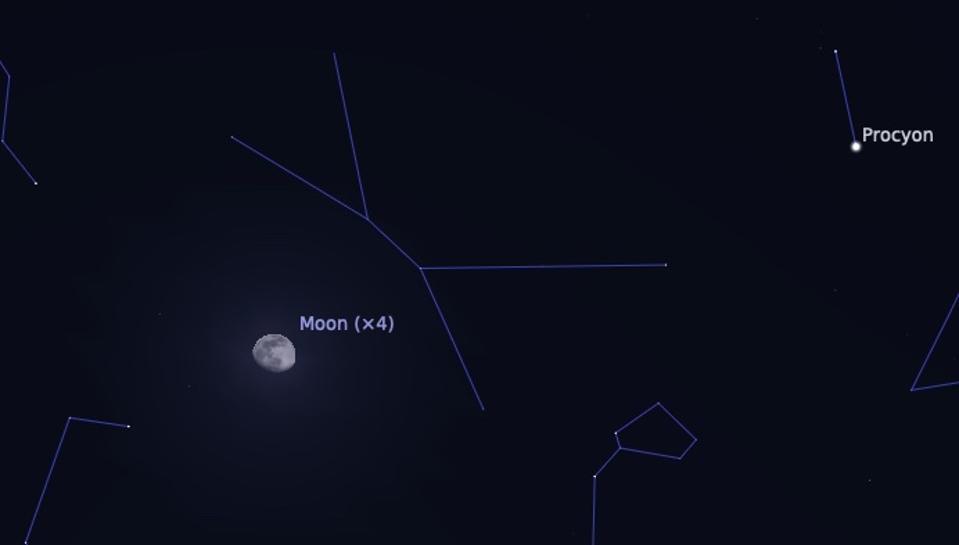
Monday, March 14, 2022: Moon in Cancer ‘the crab’
Tonight right after dark high in the east an 88%-lit waxing gibbous Moon will be just to the side of the constellation of Cancer, the crab. Put some binoculars just to the right-hand side of the Moon while you look east and you’ll get eye-s-on with the Beehive Cluster of about 100 visible stars.
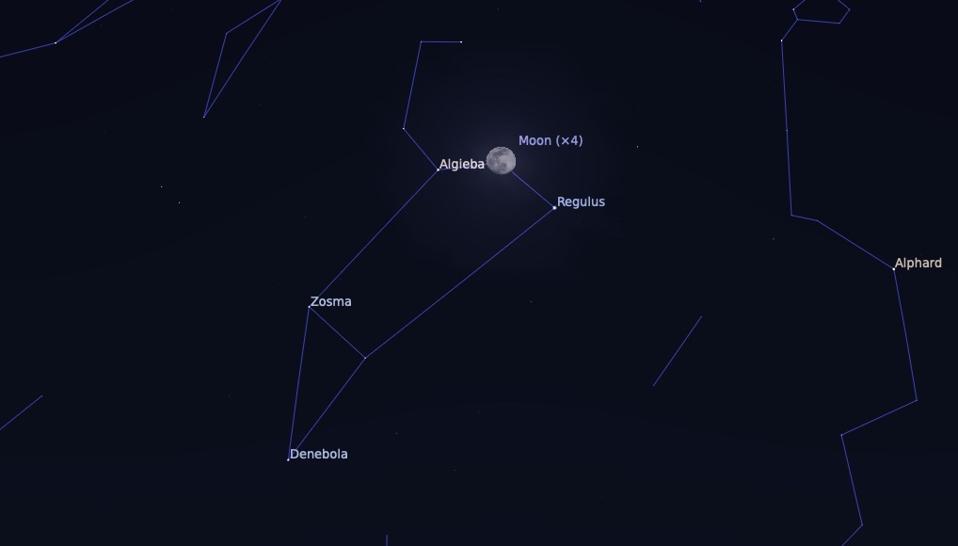
Tuesday, March 15, 2022: Moon in Leo ‘the lion’
Look high above the eastern horizon right after dark tonight and you’ll see a 94%-illuminated waxing gibbous Moon on the “chest” of Leo, the lion. It will be about 5º above bright star Regulus, which is about 77 light-years distant.
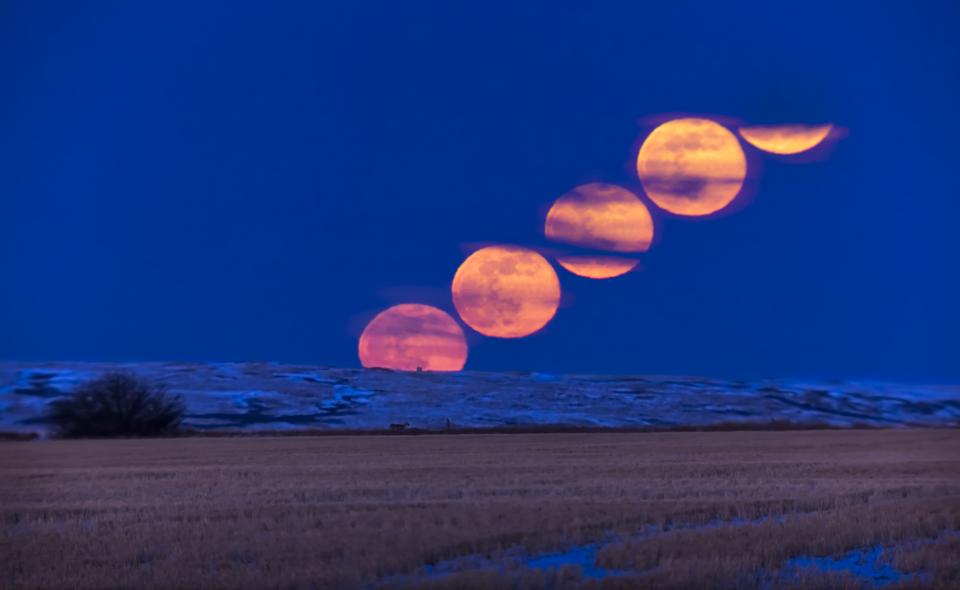
Thursday, March 17, 2022: A beautiful orange moonrise
Though the full Moon is officially tomorrow for most locations, sunset and moonrise are the best times to watch it this month, when the gap between them is the shortest. For New York, the best time to watch be be moonrise at 6:32 p.m. EST while in Los Angeles it will be best to watch the moonrise at 6:42 p.m. PDT. See the moonrise and moonset times for your location.
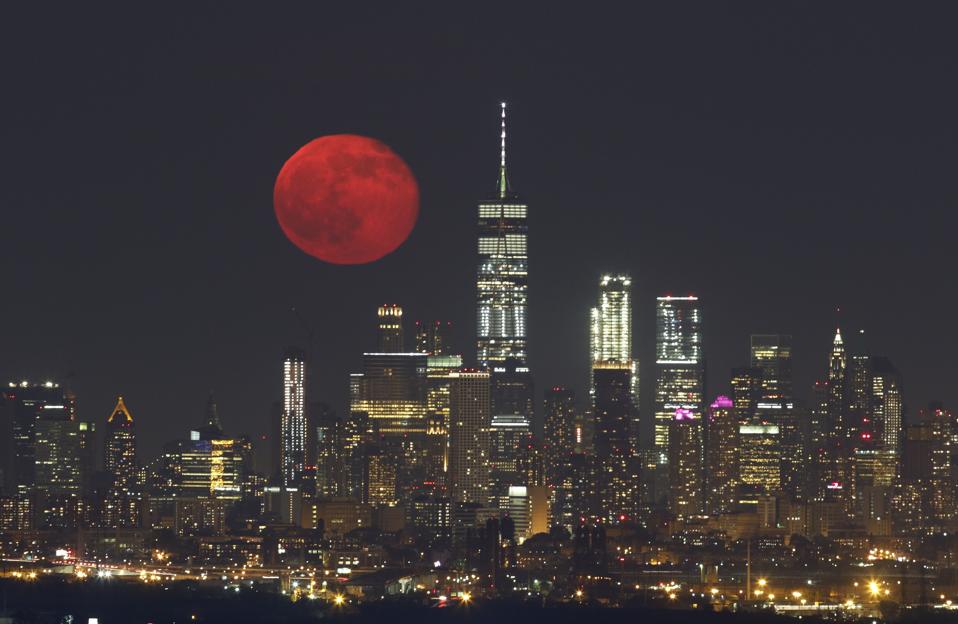
Friday, March 18, 2022: the Full ‘Worm Moon’
For most locations in North America and Europe the Moon is 100% full at 07:17 UTC today, though it’s not necessarily the best time to view it at moonrise tonight (see yesterday). In London the best views of the rising “Worm Moon” can be had tonight at 6:28 p.m. See the moonrise and moonset times for your location.
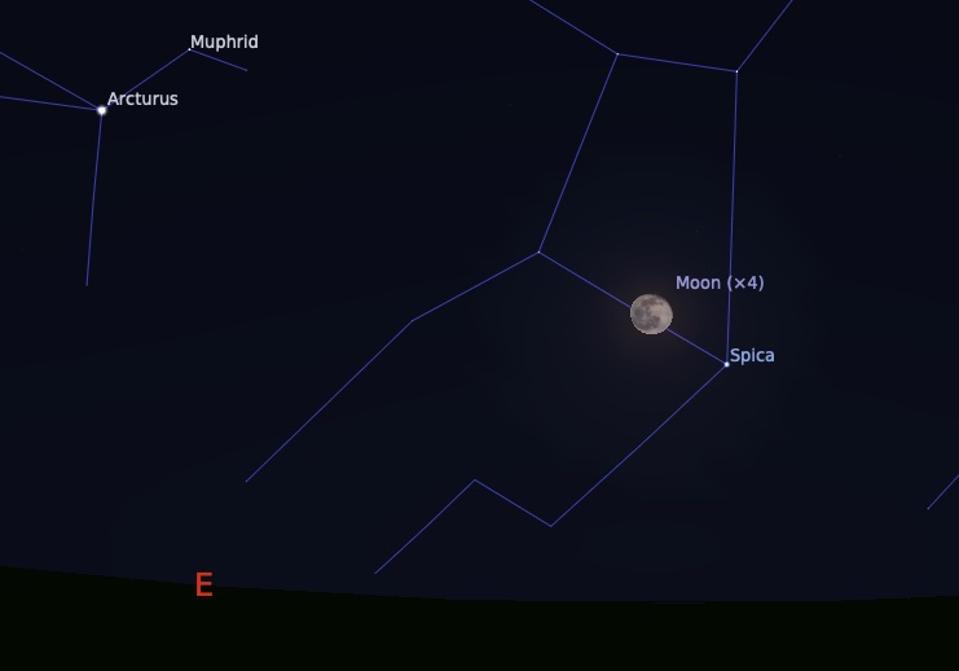
Saturday, March 19, 2022: A waning gibbous Moon close to Spica
Tonight the Moon will rise over an hour after dark, and no longer be full, but it will be about 4º from the bright star Spica in Virgo.
Sunday, March 20, 2022: Northward equinox and Venus peaks
Today is the beginning of astronomical spring—the northward equinox! It marks the occasional of the Sun passing across the equator, moving north, to bring longer days in the northern hemisphere.
This morning Venus is at greatest western elongation; it’s furthest from the Sun during its current apparition. Look to the east before sunrise to see it shine brightly while 50% illuminated—it’s bright because it’s close, not because it’s receiving the Sun’s full glare.
Wishing you clear skies and wide eyes.