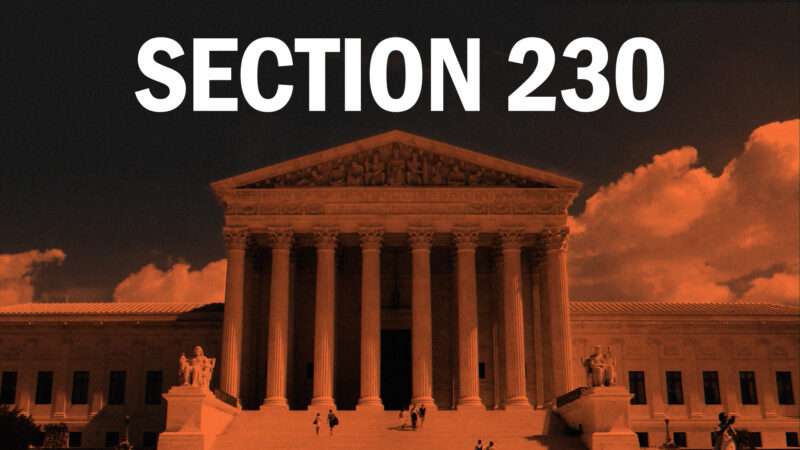
In the summer of 1995, then-Rep. Chris Cox (R–Calif.) read an article that left him unsettled. A New York trial court had ruled that Prodigy, one of the early online service providers, could be held liable for allegedly defamatory statements posted on one of its bulletin boards. What made the decision "surpassingly stupid," as Cox would later describe it, was that Prodigy had incurred this legal exposure by doing what we now call content moderation. Prodigy was being penalized for trying to provide a family-friendly product. To eliminate this "moderator's dilemma"—a legal regime in which an online forum that moderates some content becomes legally responsible for all the content it hosts—Cox and then-Rep. Ron Wyden (D–Ore.) introduced the bill that eventually became what's now known as Section 230.
With limited exceptions, Section 230 protects platforms—from large websites and apps to individual blogs and social media accounts—from liability for disseminating speech created by others. That rule allowed the internet to flourish. By pinning culpability for illegal material squarely on the person who created it, Section 230 let internet services grow and profit by offering spaces for user-generated content. By filling the internet with different speech environments, the services' innovation enabled a wide array of people to find places online where they feel comfortable speaking. Section 230 was a boon for free speech, for the internet, and for free speech on the internet.