When someone claims to have been arrested in retaliation for constitutionally protected speech, what sort of evidence is necessary to make that case? Five years ago in Nieves v. Bartlett, the Supreme Court held that an arrest can violate the First Amendment even if it was based on probable cause, provided the claimant can present "objective evidence that he was arrested when otherwise similarly situated individuals not engaged in the same sort of protected speech had not been." Today in Gonzalez v. Trevino, the Court said that showing does not require "very specific comparator evidence" indicating that "identifiable people" engaged in very similar conduct but were not arrested.
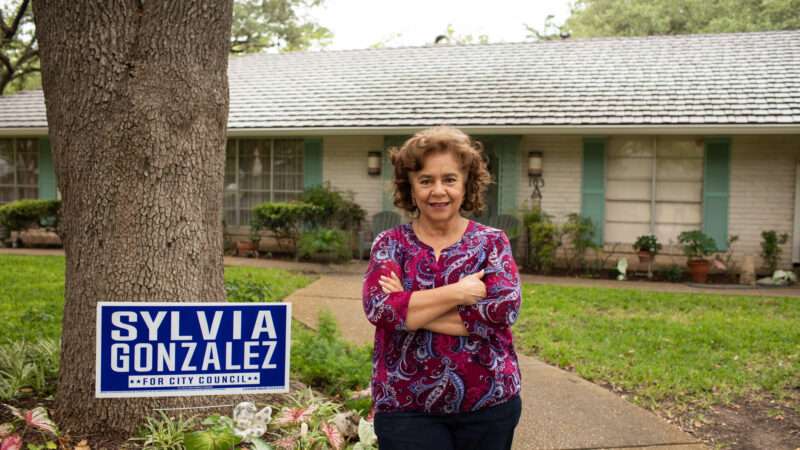
"This is a great day for the First Amendment and Sylvia Gonzalez, who has courageously fought against retaliatory actions by government officials," says Anya Bidwell, a senior attorney at the Institute for Justice, which represents Gonzalez, a former Castle Hills, Texas, city council member who says her political opponents engineered her arrest on a trumped-up charge of tampering with a government document. The document in question was a petition that Gonzalez herself had spearheaded, calling for the replacement of City Manager Ryan Rapelye. Gonzalez had run for office on a promise to seek Rapelye's removal, and she claimed his allies were determined to punish her for that position.