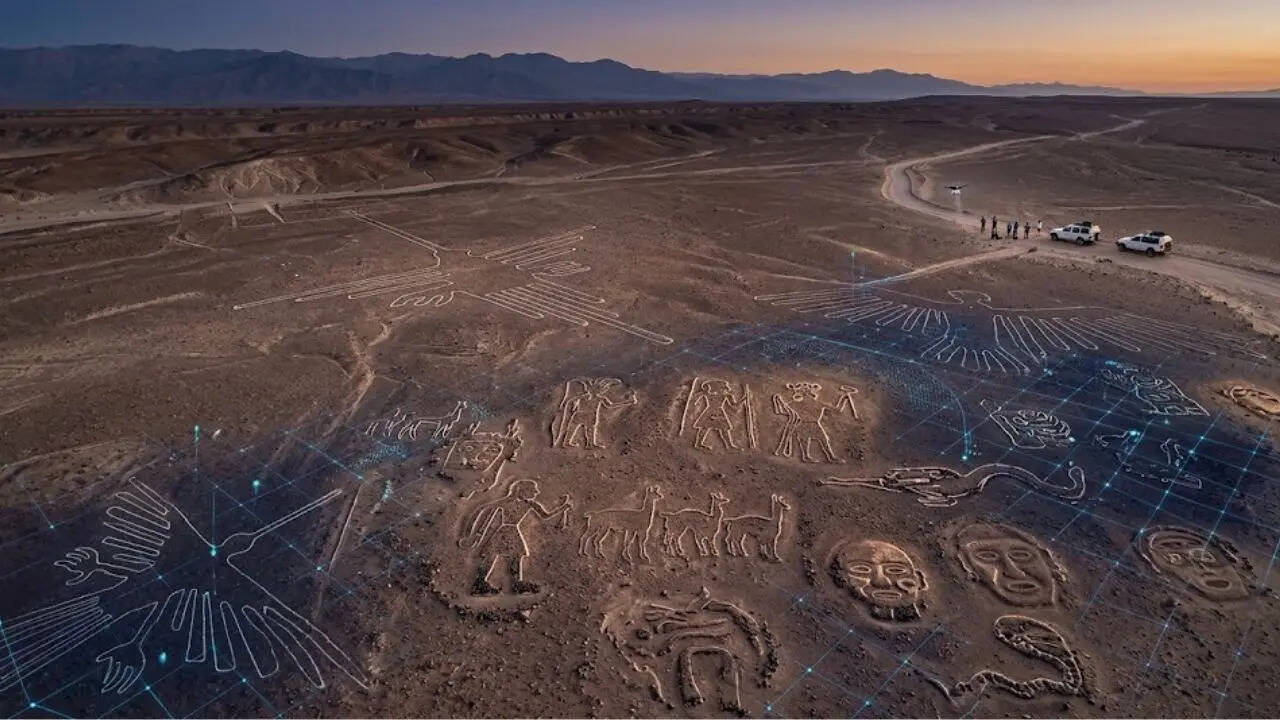
Researchers have now used artificial intelligence to overcome the challenges faced by traditional human survey methods. The team from Yamagata University and IBM Research employed deep-learning models to analyse large areas of the Nazca Pampa, a job that would have required decades using conventional aerial observation techniques.
Remarkably, the AI (artificial intelligence) managed to identify 303 new relief-type geoglyphs within just half a year, nearly doubling the catalogue of known figures as noted in the study published on PNAS. These newly found artworks mainly show human shapes, domesticated animals, and severed heads. This offers profound insights into both the ritualistic and everyday lives of the Nazca people who created them over 2,000 years ago.