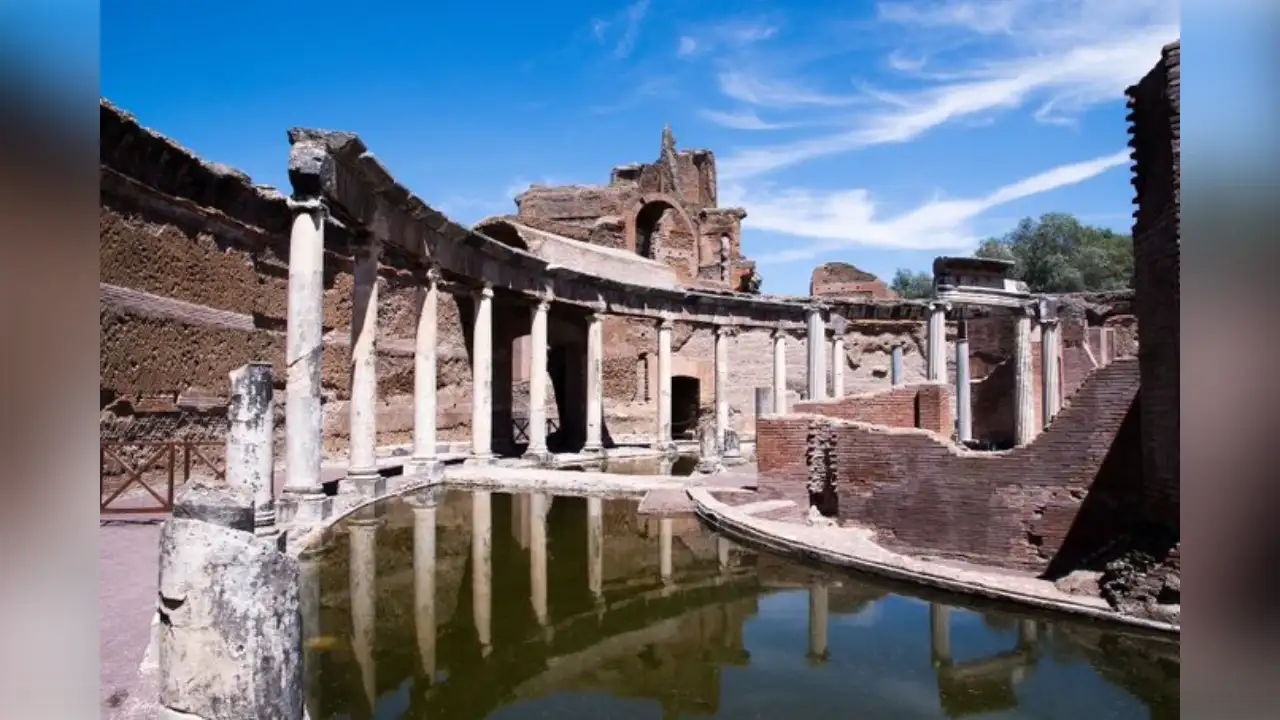
A communal latrine at Hadrian's Villa near Rome is helping researchers understand why some Roman concrete has survived for nearly 2,000 years. A new study suggests the material did more than simply resist decay. Over centuries, calcite gradually formed inside pores and small fractures, helping bind the concrete into a denser and more durable structure.
The findings come from a largely undisturbed section of ancient Roman concrete. By studying the latrine, which had not undergone extensive restoration, researchers gained a rare opportunity to observe how the material naturally changed over almost two millennia, as per a report.