Get all your news in one place.
100's of premium titles.
One app.
Start reading
The Times of India
The Times of India
World
TOI World Desk

Scientists took 232 gravity readings across a Utah mountain and discovered 1.55 million cubic metres of ice hidden beneath loose rock, enough frozen water to fill about 600 Olympic swimming pools

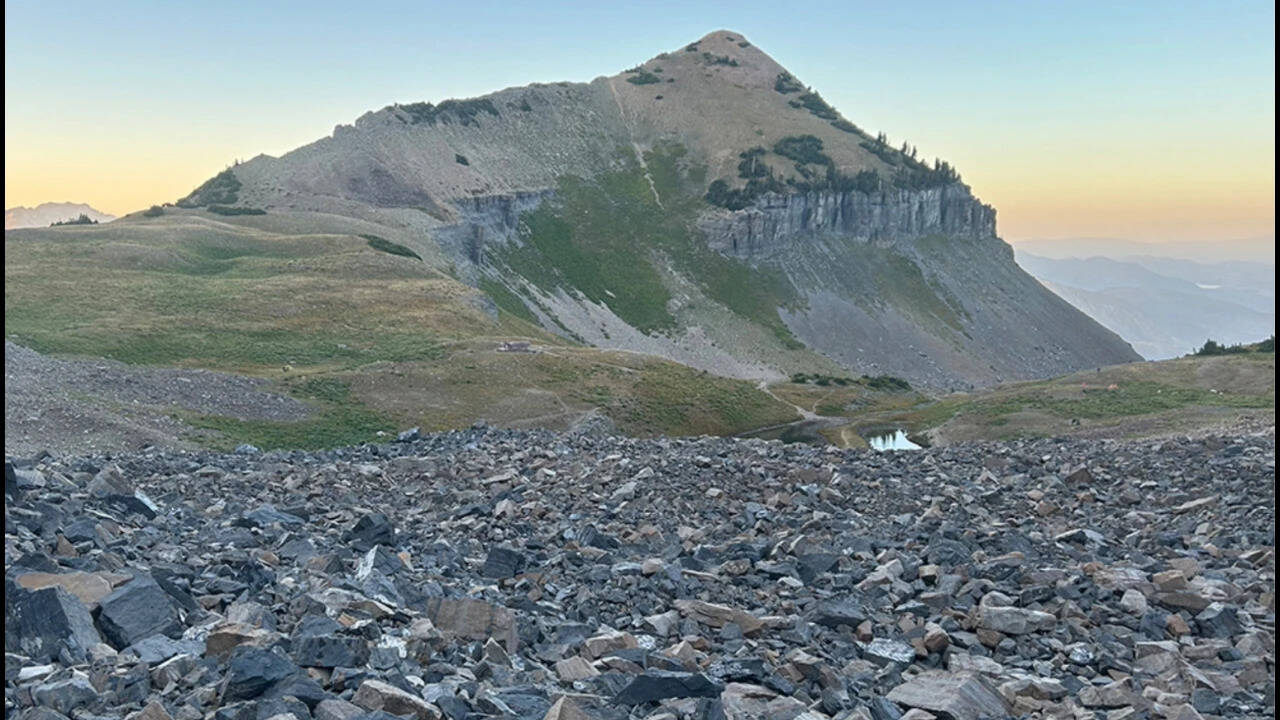
From a distance it looks like nothing more than a sprawling pile of rocks high in Utah’s Wasatch Range. But beneath the rubble of Mount Timpanogos is a spectacular hidden reservoir: ice enough to hold some 1.55 million cubic meters of water, which is about 600 Olympic-sized swimming pools. Now, researchers at the University of Utah have mapped this invisible ice using an unusual approach: measuring tiny variations in gravity across the rocky landscape, the university website reports. It’s the Timpanogos Rock Glacier, one of hundreds of rock glaciers in Utah. Unlike normal glaciers, which are large masses of exposed ice and snow, rock glaciers are covered by a thick mantle of loose rock. That rocky exterior is difficult to study, but below it there may be vast amounts of frozen water, the news report states. Timpanogos Rock Glacier is estimated to be around 83% ice and 17% loose rock and is particularly ice-rich. At its deepest point, the ice is buried about 150 feet beneath the surface. According to glaciologist Leif Anderson, “There’s a lot of ice hiding in Utah’s mountains.” Hikers walking over what seems to be normal rubble may be blissfully unaware that dozens of meters of ice could be underneath. Scroll down to read more about it.

Get breaking news anytime, anywhere. Download the TOI app now!

232 gravity readings have uncovered the secret ice

In fall 2024, University of Utah geologist Bronson Cvijanovich led fieldwork at the glacier to get a better sense of what was beneath the surface. The team made six trips to the site, carrying sensitive scientific equipment up a tough trail. The site is accessible from a trailhead, but it’s a five-mile hike and climb of some 3,500 feet to reach the rock glacier. The researchers used a sophisticated gravimeter to take readings at 232 locations about 25 meters apart. It measures small variations in gravitational acceleration resulting from density differences. Areas with thicker buried ice have a slightly weaker pull from gravity, because rock is much denser than ice. Scientists corrected the measurements for elevation, latitude, terrain, and gravitational effects from the Sun and Moon. They then used Bayesian statistical modeling to generate a three-dimensional picture of the ice under the rocks. It gave an unprecedented view of the interior of Timpanogos Rock Glacier.

How does ice get under all that rock?

The researchers also explored yet another equally interesting question: how does a rock glacier develop ice when its surface is covered with rocks? The answer seems to be a combination of snowfall and rockfall. Rock glaciers often occur beneath steep mountain slopes and cirques where rocks frequently break loose. Large rocks falling on areas of persistent snow can bury and protect the snow from melting. This process adds ice to the rock glacier over time. Researchers found that years with heavy snowfall, cool summers and substantial rockfalls can contribute to ice accumulation. More than 70 patches of debris-covered snow still exist at Timpanogos, scientists have found.

The secret water reserves in a warming climate

The discovery could have significance beyond Mount Timpanogos. Utah has 836 known rock glaciers, while researchers estimate there may be around 50,000 worldwide. Using a relationship between a rock glacier’s surface area and the volume of ice buried beneath it, the researchers estimate that rock glaciers around the world hold about 48 gigatons of water. In Utah, rock glaciers may contain about one gigaton of water, equal to roughly 815,000 acre-feet. However, scientists point out that not all rock glaciers are still gaining ice. Some have already lost their frozen cores. The Timpanogos Rock Glacier, however, appears to remain active and is still adding ice.

Why are rock glaciers important?

Such hidden ice reserves could be especially significant to a warm, dry state like Utah. A thick layer of rock helps shield the ice below from heat and sun, potentially allowing rock glaciers to keep water around longer than exposed ice. The research also alters scientists’ view of these formations. Some rock glaciers are not just relics of ancient glacial history but are dynamic systems interacting with today's climate. What appears from above to be an ordinary rocky landscape could be hiding a large reserve of frozen water beneath the surface. New scientific tools are now helping researchers detect what lies underground.

Images Courtesy: The University of Utah

Sign up to read this article
Read news from 100's of titles, curated specifically for you.
Already a member? Sign in here
Related Stories
Top stories on inkl right now
One subscription that gives you access to news from hundreds of sites
Already a member? Sign in here
Our Picks
Fourteen days free
Download the app
One app. One membership.
100+ trusted global sources.