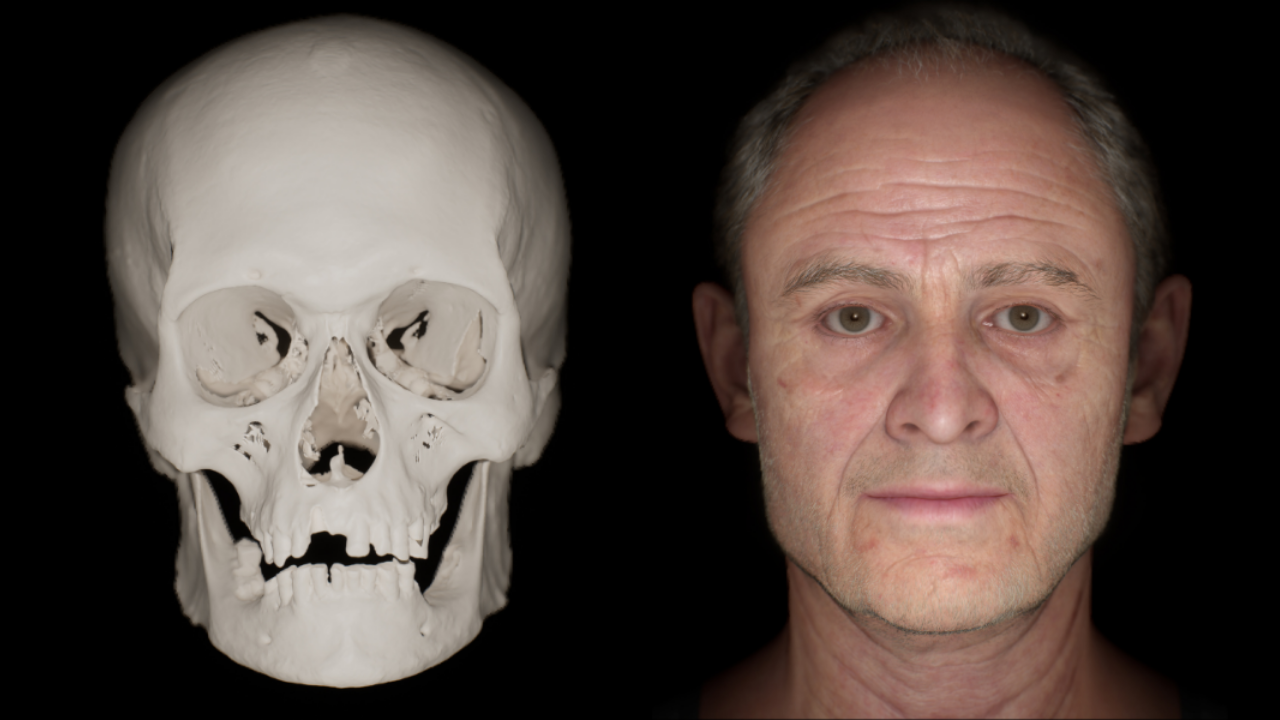
More than 1,000 years after his death, a man who lived through the upheaval of the Norman Conquest has been given a face. Known as “Conquest Man”, he was buried at St Peter’s Church in Barton-upon-Humber, Lincolnshire, around 1079, just 13 years after William the Conqueror’s victory at Hastings. New research has combined osteological analysis, ancient DNA, isotope testing and digital facial reconstruction to investigate who he may have been and where he came from. The study, led by English Heritage with researchers from Historic England, the Francis Crick Institute, British Geological Survey, University of Southampton, muVIS and Face Lab at Liverpool John Moores University, points to a man with connections extending beyond England. The findings provide clues about his ancestry, diet, movements and appearance, helping researchers reconstruct aspects of his life from remarkably limited physical evidence. His reconstructed face now offers a strikingly personal glimpse into a period usually told through kings, battles and political upheaval.
Get breaking news anytime, anywhere. Download the TOI app now!