Get all your news in one place.
100’s of premium titles.
One app.
Start reading
The Conversation
The Conversation
Laura Elin Pigott, Senior Lecturer in Neurosciences and Neurorehabilitation, Course Leader in the College of Health and Life Sciences, London South Bank University

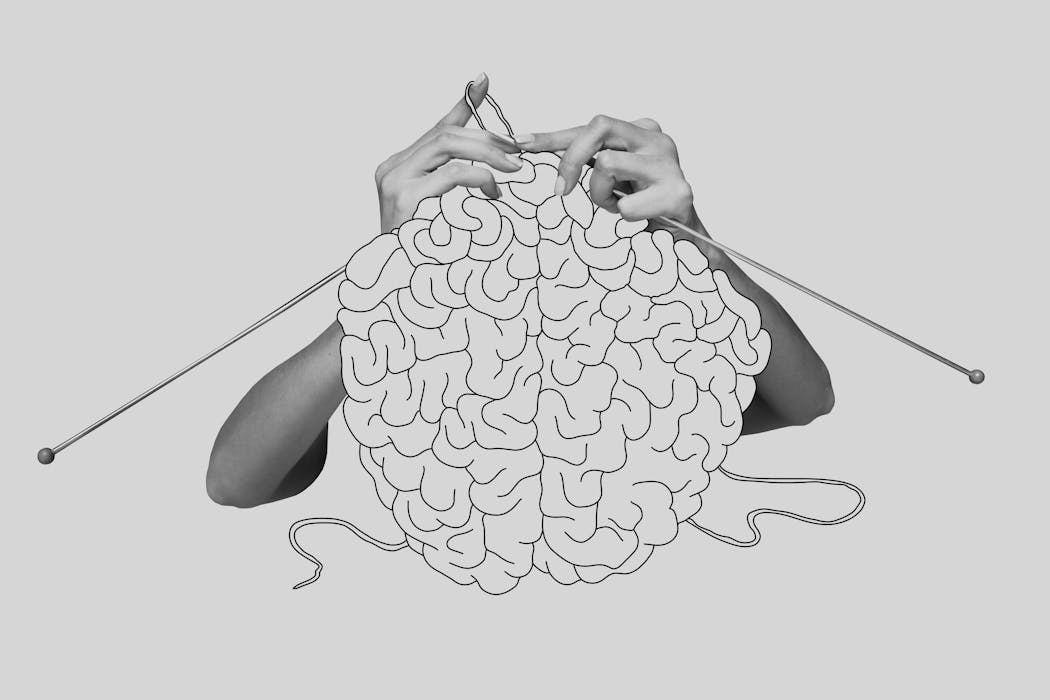
Scientists once thought the brain couldn’t be changed. Now we know different

Master1305/Shutterstock

For much of the 20th century, scientists believed that the adult human brain was largely fixed. According to this view, the brain developed during childhood, settled into a stable form in early adulthood, and then resisted meaningful change for the rest of life.

Today, the concept of neuroplasticity, the brain’s ability to change its structure and function in response to experience, is a central principle of brain science. The brain can change throughout life, but not without limits, not instantly and not effortlessly.

Neuroplasticity therefore reframes the brain as neither rigid nor infinitely malleable, but as a living system shaped by experience, effort and time.

The roots of neuroplasticity can be traced to the mid-20th century. In 1949, psychologist Donald Hebb proposed that connections between neurons, the brain’s nerve cells, become stronger when they are repeatedly activated together.

This principle later became known as “Hebbian learning”. At the time, Hebb’s idea was considered relevant mainly to childhood development. Adult brains were still thought to be relatively unchangeable.

That assumption has since been overturned. From the late 20th century onward, studies showed that adult brains can reorganise in response to learning, changes in sensory input, or physical injury. Sensory changes include alterations in vision, hearing or touch due to training, loss of input or environmental change.

More recently, advances in brain imaging have allowed researchers to observe these changes directly in living people. These studies show that learning alters patterns of brain activity and connectivity across the lifespan.

Neuroplasticity is now understood not as a rare exception, but as a basic property of the nervous system. It operates continuously, within biological limits shaped by age, genetics, prior experience and overall brain health.

How the brain changes

Neuroplasticity involves changes in how existing brain cells communicate with one another.

When you learn a new skill, specific synapses, the tiny junctions where neurons pass signals to each other, become stronger and more efficient. Neural networks, which are groups of neurons that work together, become better organised. Communication between brain regions involved in that skill improves.


Read more: No, your brain doesn’t suddenly 'fully develop' at 25. Here's what the neuroscience actually shows


At the cellular level, plasticity involves changes in synaptic structure, the release of chemical messengers called neurotransmitters, and the sensitivity of receptors that receive those signals. So, it changes how neurons communicate with each other.

In a few areas of the adult brain, particularly the hippocampus, which plays a key role in memory, limited adult neurogenesis, the creation of new neurons, also occurs. Although influenced by factors such as stress, sleep and physical activity, its significance in humans is still debated.

Hand with a blue pen points to the right hippocampus on a MRI scan
The hippocampus is constantly rewiring to store new information. FocalFinder/Shutterstock

Crucially, neuroplasticity is experience-dependent. The brain changes most reliably in response to repeated, focused and meaningful engagement that requires attention, effort and feedback. Passive exposure to information has far less impact.

What strengthens and weakens plasticity

Over the past decade, research has identified several factors that strongly influence how plastic the brain can be.

1. Practice and challenge are essential.

Repeatedly engaging in tasks that stretch your abilities leads to changes in both brain activity and brain structure, even in older adults.

2. Physical exercise is one of the most powerful enhancers of plasticity.

Aerobic activity increases levels of brain-derived neurotrophic factor, or BDNF, which supports neuron survival and strengthens synaptic connections. Regular exercise is consistently linked to better learning, memory and overall brain health.

3. Sleep plays a critical role in consolidating brain changes.

During deep sleep, important neural connections are strengthened while less useful ones are weakened, supporting learning and emotional regulation, as shown in neuroscience research.

Woman asleep in bed
Sleep is essential for brain health. Prostock-studio/Shutterstock

4. Chronic stress can seriously impair plasticity.

Long-term exposure to stress hormones is associated with reduced complexity of neural connections in memory-related brain regions and heightened sensitivity in threat-processing systems, undermining learning and flexibility.

When plasticity works against us

One of the most important and often misunderstood aspects of neuroplasticity is that it is value-neutral. The brain adapts to repeated experiences whether those experiences are helpful or harmful.

This helps explain why conditions such as chronic pain, anxiety disorders and addiction can become self-reinforcing. Through repeated patterns of thought, feeling or behaviour, the brain learns responses that are unhelpful but deeply ingrained, a process known as maladaptive plasticity.

The hopeful side of this insight is that plasticity can also be deliberately directed toward recovery. Psychological therapies such as cognitive behavioural therapy are associated with measurable changes in brain activity and connectivity, particularly in networks involved in emotional regulation. Rehabilitation after stroke or brain injury relies on the same principles, using repeated, task-specific practice to compensate for damaged areas.

Clearing up common myths

Perhaps the most persistent myth is that neuroplasticity means the brain can change rapidly or without limits. In reality, meaningful neural change takes time, repetition and sustained effort, within biological constraints.

Another misconception is that plasticity disappears after childhood. While children’s brains are especially flexible, strong evidence shows that plasticity continues throughout adulthood and into older age.

Claims that brief brain-training programmes dramatically increase intelligence or prevent dementia are not supported by solid scientific evidence. The issue is that meaningful brain change happens most when learning is challenging, varied, and connected to real life.


Read more: Brain-training games remain unproven, but research shows what sorts of activities do benefit cognitive functioning


Activities such as learning a language, exercising regularly, playing a musical instrument, or engaging in complex social interaction are far more effective at strengthening the brain than tapping through app-based puzzles.

In short, brain-training games can be fun and mildly useful, but they train you to play games well, not to think better overall.

Our understanding of neuroplasticity has come a long way since Hebb’s early ideas. What was once thought impossible is now accepted scientific fact. Embracing neuroplasticity means recognising that brains can change, while remaining realistic about how slowly and selectively that change occurs.

More than a century ago, Spanish neuroscientist Santiago Ramón y Cajal wrote that every person can become the sculptor of their own brain. Modern science shows that this sculpting never truly ends. It simply requires effort, patience and persistence.

The Conversation

Siobhan Mc lernon receives funding from The Burdett trust for Nursing

Laura Elin Pigott does not work for, consult, own shares in or receive funding from any company or organisation that would benefit from this article, and has disclosed no relevant affiliations beyond their academic appointment.

This article was originally published on The Conversation. Read the original article.

Sign up to read this article
Read news from 100’s of titles, curated specifically for you.
Already a member? Sign in here
Related Stories
Top stories on inkl right now
One subscription that gives you access to news from hundreds of sites
Already a member? Sign in here
Our Picks
Fourteen days free
Download the app
One app. One membership.
100+ trusted global sources.