
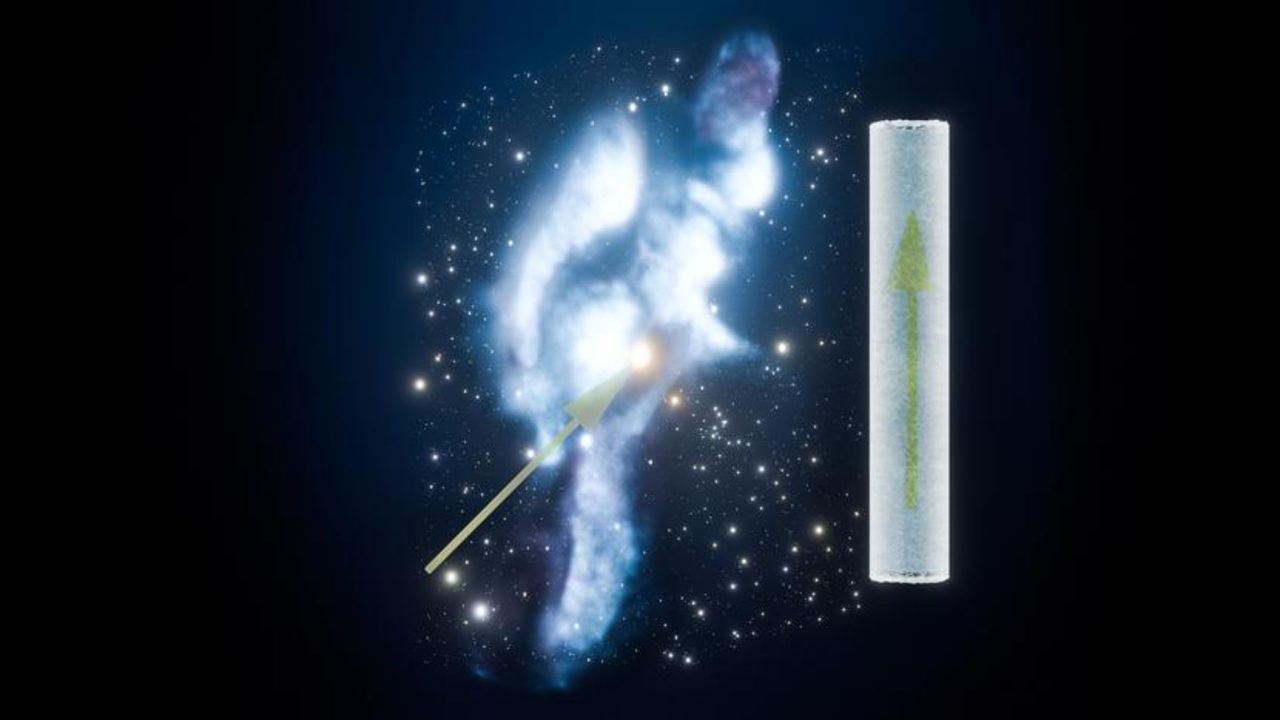
Radioactive stardust remnants from stellar explosions have been found trapped in ice in Antarctica. These cosmic remains serve as clues that help uncover the history of our solar system, researchers have found in a new study.
Across the universe, we find colossal interstellar clouds of gas, dust, and plasma that lie between stars. Our own solar system is currently passing through such a cloud, known as the Local Interstellar Cloud, nicknamed the "Local Fluff." These clouds can accumulate matter as they float through the cosmos, and that matter can sometimes end up on Earth as our planet passes through the Local Fluff. In a new study of some of this matter, researchers have found a byproduct of ancient supernovas, a radioactive iron isotope known as iron-60 (60Fe), that got stuck in the cloud and ended up embedded in Antarctic ice.










