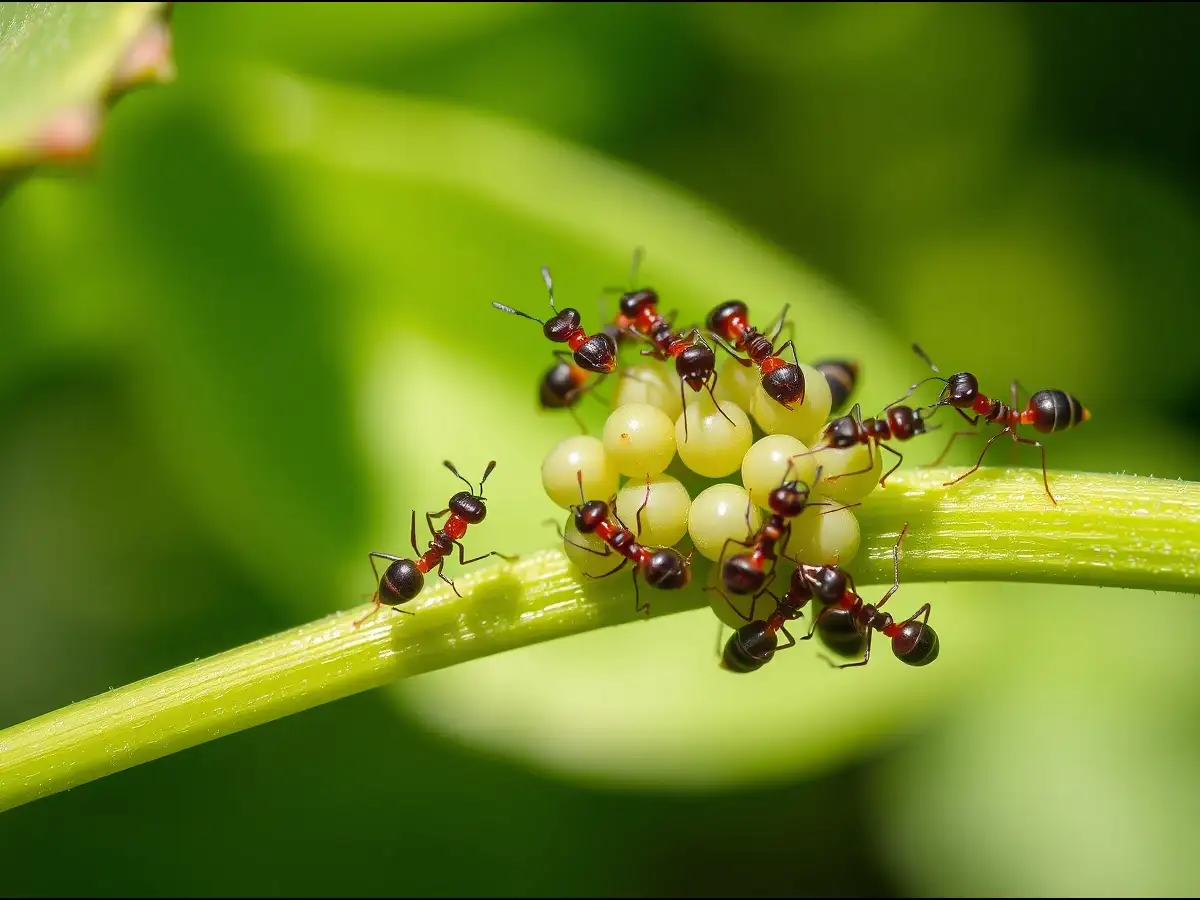
Ants are often admired for their teamwork and organization, but scientists say one of their most remarkable achievements has been happening quietly for millions of years. Long before humans began keeping livestock, certain ants had already mastered a farming system of their own.
According to a research review published in the journal Current Biology by researchers Aniek B.F. Ivens and Daniel J.C. Kronauer, ants have spent at least 35 million years tending aphids in a mutually beneficial partnership. The study explains how this ancient relationship has endured through evolution and why both species continue to depend on one another.

Why do ants keep aphids like livestock?
To most people, aphids are little more than tiny insects feeding on plants. To ants, however, they are something far more valuable.
According to the Current Biology research review, ants "farm" aphids in a relationship known as trophobiosis, where food is exchanged for protection. The aphids act as the "trophobionts," producing a sugary liquid called honeydew, while the ants provide services that help the insects survive.
Honeydew is produced after aphids feed on nutrient-rich plant phloem. Although aphids consume large amounts of sap, their digestive system leaves plenty of sugars, amino acids, organic acids and salts in their waste. For ants, that sweet liquid becomes a reliable food source.
Rather than waiting for the droplets to appear naturally, ants gently tap an aphid's abdomen with their antennae. The aphid immediately releases a drop of honeydew, which the ants consume. In addition to collecting honeydew, ants occasionally eat some of the younger aphids or those producing less honeydew, making the colony both a source of carbohydrates and protein.
This farming system works because aphids remain in stable colonies for much of their lives, giving nearby ant colonies a dependable food supply.