
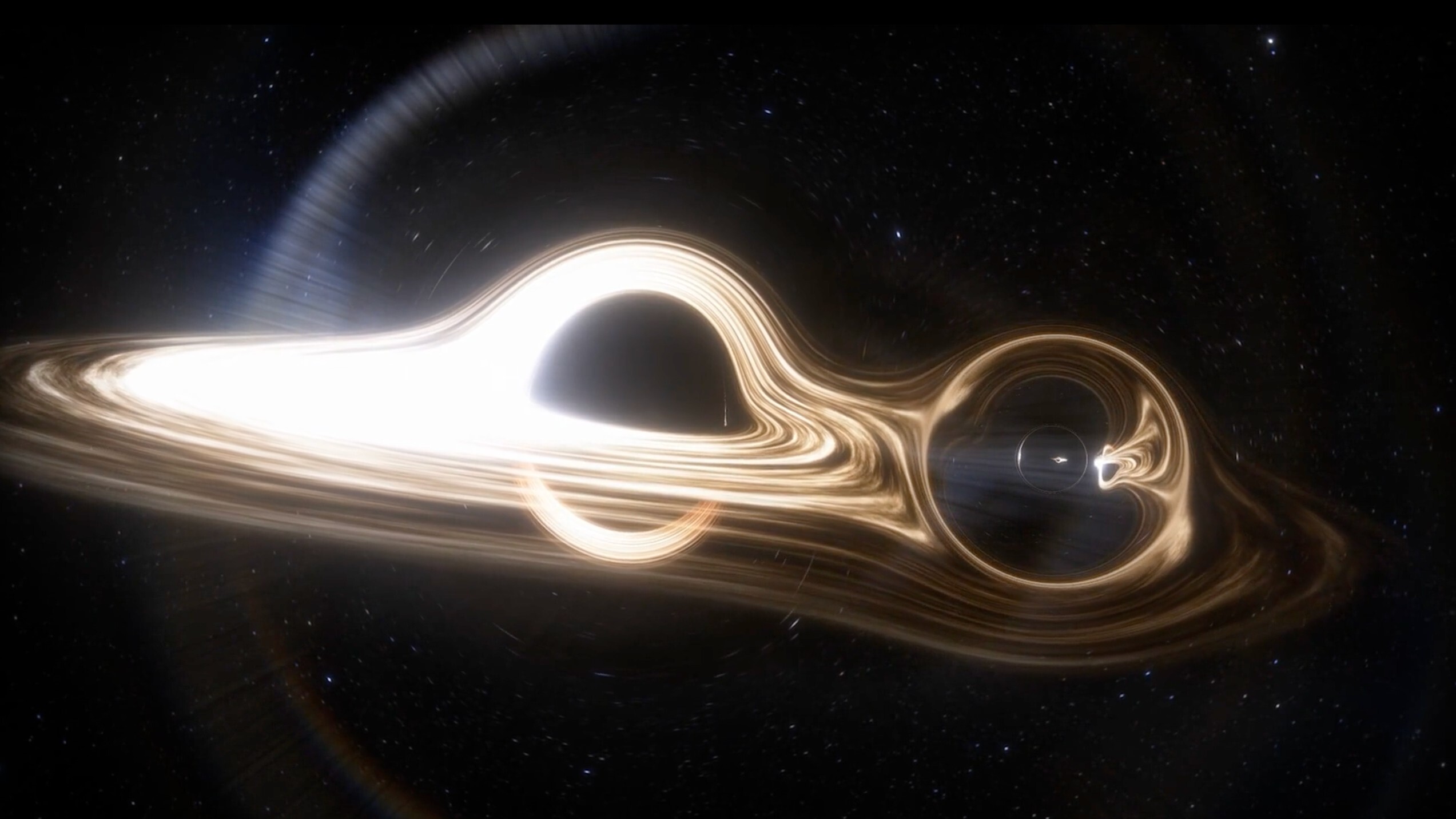
Supermassive black holes — cosmic titans with masses of 100,000 to billions of times the mass of the sun — are among the universe's most fearsome phenomena. These celestial behemoths can consume entire stars and unleash torrents of powerful radiation visible across vast cosmic distances. However, in a recent study, researchers observed something entirely unprecedented: a pair of supermassive black holes devouring an enormous gas cloud that's unlike any celestial meal scientists have ever seen.
This discovery, made possible by a curious radiation signal, offers new insight into the behavior of these cosmic giants and their relationship with the galaxies they inhabit.