Get all your news in one place.
100's of premium titles.
One app.
Start reading
The Times of India
The Times of India
World
TOI World Desk

Scientists discover a huge freshwater reservoir beneath the Great Salt Lake in Utah with the help of air drones

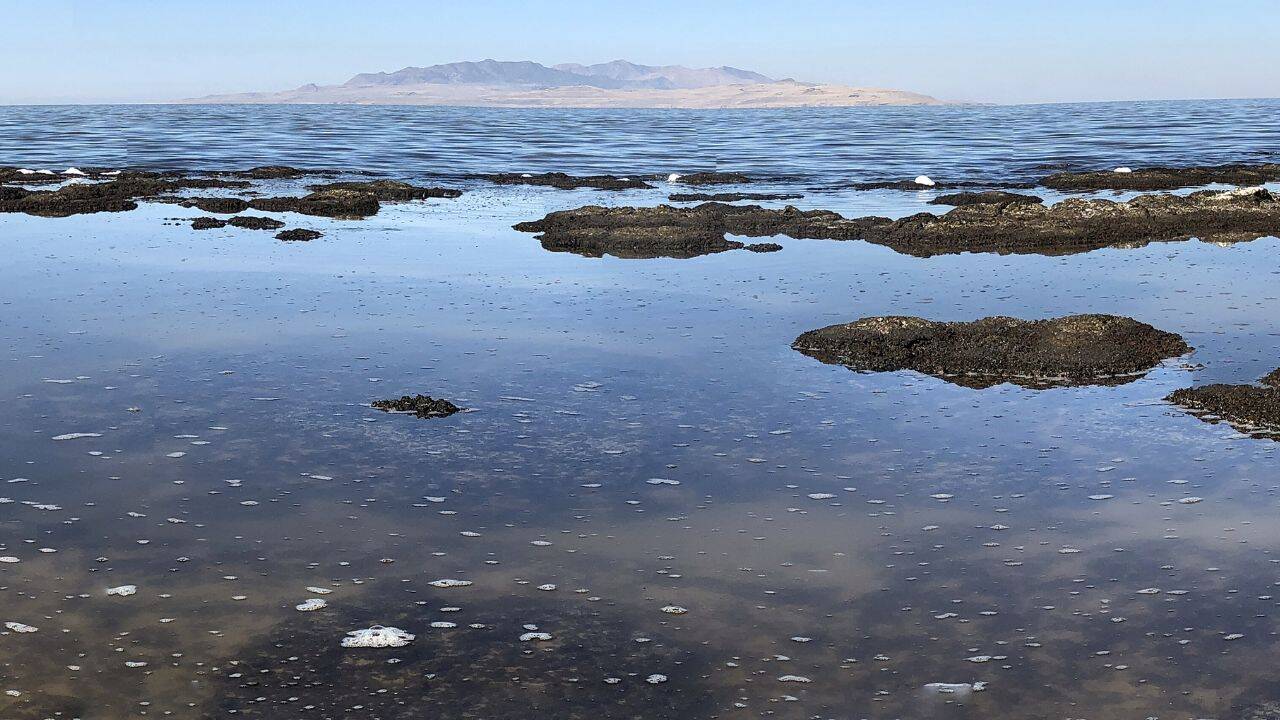
A large freshwater reservoir appears to be hiding beneath the eastern edge of Utah’s Great Salt Lake, according to a 2026 study published in Scientific Reports . Researchers used an airborne electromagnetic survey to look beneath the lake’s salty surface. They found a broad layer that behaves differently from the brine above it. The findings suggest that freshwater-saturated sediments extend across part of the Farmington Bay Playa and may continue into a much deeper basin beneath the lake. The study is important because the discovery could reveal a difficult-to-map water resource beneath one of North America’s best-known saline lakes. It also offers a new way to understand the hidden groundwater system beneath the lake. It is important as scientists seek better ways to manage the region’s water and understand the environmental pressures facing the Great Salt Lake today.

Get breaking news anytime, anywhere. Download the TOI app now!

Discovering freshwater under Utah’s Great Salt Lake without even drilling

The discovery came from a pilot airborne survey carried out over part of the Great Salt Lake in Utah. The research team wanted to determine whether freshwater existed below the lake’s highly saline surface and, if so, how far it extended. According to the study, researchers used airborne electromagnetic(AEM) technology to measure changes in the electrical properties beneath the lake. The technique allowed them to distinguish between the highly conductive salty water near the surface and a much less conductive layer underneath. The survey covered 248 kilometres of flight lines across the Farmington Bay Project Area during five flights in a single day. Rather than drilling across the lake, the researchers were able to build a 3D picture of the underground environment from measurements collected from the air. The results showed a broad, resistive layer beneath the saline material. While such a signal can have several possible causes, the researchers had an important advantage of confirmed freshwater-saturated sediments in the same area. That meant the airborne results provided evidence not simply of an unusual underground feature, but of the wider continuation of a known freshwater system.

How large and deep could the hidden water system be

The survey revealed that freshwater-saturated sediments continue laterally beneath the southeastern part of the lake, particularly beneath the Farmington Bay Playa. Beneath the area, the rocky basement changes dramatically in depth. In one part, the basement lies less than 200 metres below the surface. Further west, it drops sharply, reaching depths of more than 3 kilometres. The researchers interpret this deeper basin as potentially containing freshwater-saturated sediments. If that interpretation is correct, the underground system could hold a substantial volume of freshwater. However, the study does not present the entire deep basin as a confirmed freshwater reservoir. The researchers stress that additional hydrological observations are needed to test the interpretation.

Reason for the existence of freshwater beneath the Great Salt Lake.

The study explains that the area was once covered by freshwater Lake Bonneville, which existed around 15,000 years ago. As the climate changed, the ancient lake declined and became increasingly salty, eventually giving rise to the modern Great Salt Lake. Groundwater continues to move through the region. The Wasatch Mountains east of the lake receive significant precipitation, allowing groundwater to recharge before moving westwards towards the lake and its surrounding playas. This helps explain how freshwater can exist beneath a lake that is now famously saline. The modern surface environment and the deeper groundwater system are not the same. Beneath the salty water and sediments, older and continuing groundwater movement can create a very different underground environment.

What is the next step of exploration in the basin

The researchers describe the survey as a pilot project rather than a complete examination of the Great Salt Lake. Only a limited portion of the lake was surveyed, meaning the findings cannot yet be applied automatically to the entire basin. The scientists say a lake-wide airborne survey would be needed to establish how continuous the freshwater sediments are, determine their thickness and identify changes across the wider lakebed. Such a survey could also help identify areas where groundwater enters or leaves the underground system and improve understanding of the boundary between freshwater and saltwater. The study shows that airborne electromagnetic surveys can cover large areas quickly, making them useful for investigating the more than 4,000-square-kilometre footprint of the Great Salt Lake. For now, the discovery represents a glimpse into a largely unseen world beneath the Great Salt Lake.

Sign up to read this article
Read news from 100's of titles, curated specifically for you.
Already a member? Sign in here
Related Stories
Top stories on inkl right now
One subscription that gives you access to news from hundreds of sites
Already a member? Sign in here
Our Picks
Fourteen days free
Download the app
One app. One membership.
100+ trusted global sources.