
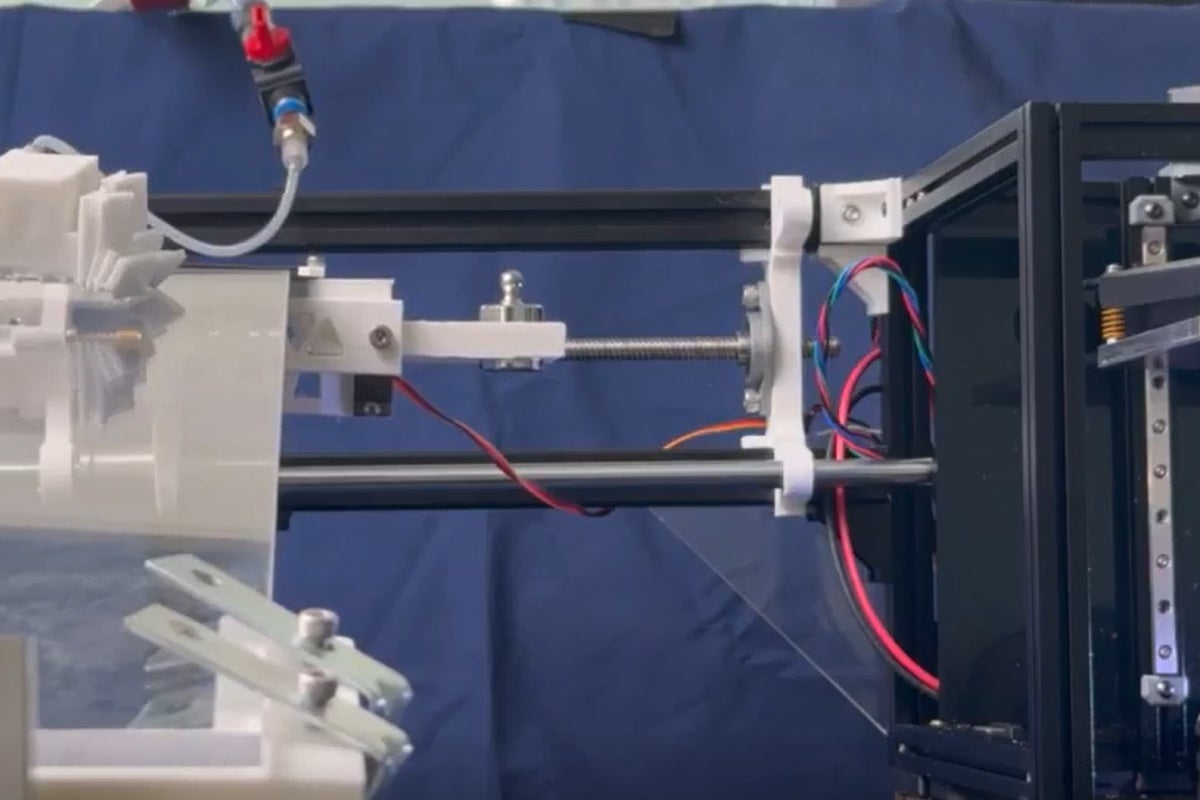
Scientists have achieved a breakthrough in soft robotics, creating four-legged robots capable of walking immediately after being 3D-printed. This innovation utilizes a novel upside-down printing method, paving the way for scalable production of flexible devices.
Soft machines, constructed from pliable materials like soft plastics, hold immense promise for various applications, including nuclear decommissioning, biomedicine, and space exploration. However, the lack of standardized design and scalable manufacturing has hindered their widespread adoption, presenting both technical and financial obstacles.













