
Get all your news in one place.
100's of premium titles.
One app.
Start reading
LiveScience
LiveScience
Drew Turney

Scientists asked ChatGPT to solve a math problem from more than 2,000 years ago — how it answered it surprised them

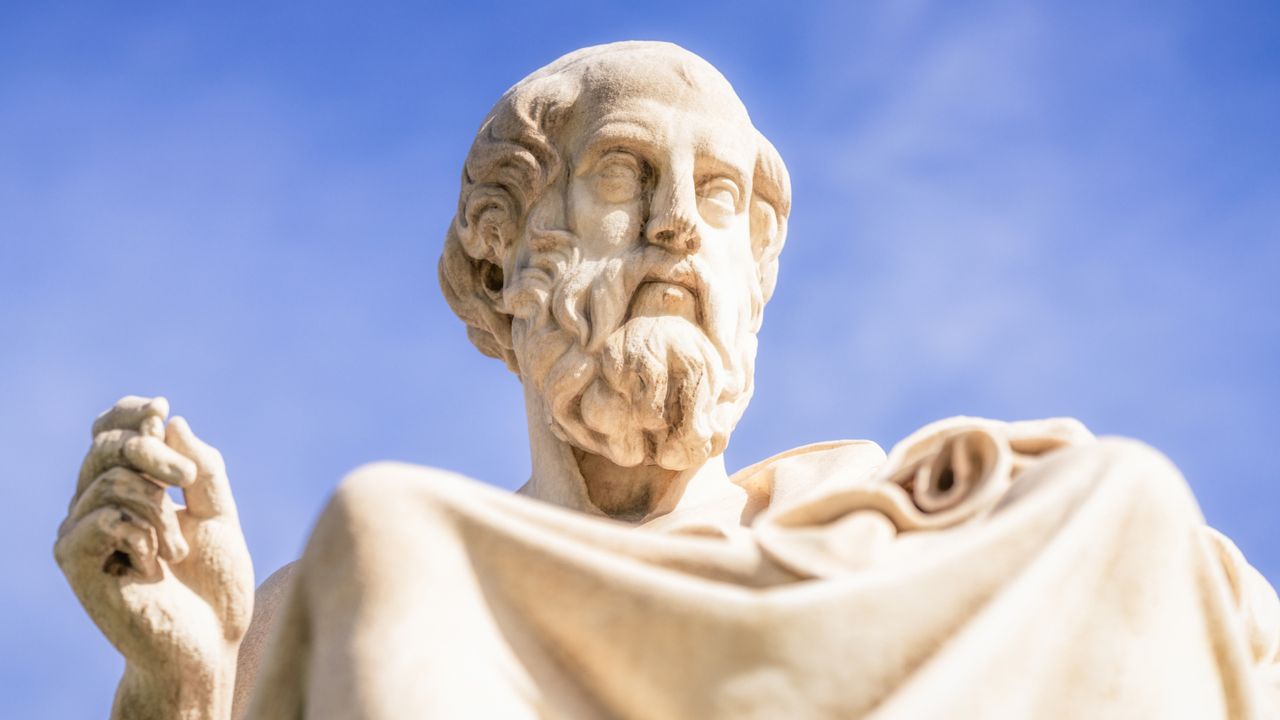
A front view close up of the marble statue of the ancient Greek philosopher Plato, located outside the Academy of Athens. The statue was completed in 1885 by Leonidas Drosis.

The Greek philosopher Plato wrote about Socrates challenging a student with the "doubling the square" problem in about 385 B.C.E. When asked to double the area of a square, the student doubled the length of each side, unaware that each side of the new square should be the length of the original's diagonal.

Scientists at Cambridge University and Jerusalem's Hebrew University selected the problem to pose to ChatGPT because of its non-obvious solution. Since Plato's writing 2,400 years ago, scholars have used the doubling the square problem to argue whether the mathematical knowledge needed to solve it is already within us, released through reason, or only accessible through experience.

Sign up to read this article
Read news from 100's of titles, curated specifically for you.
Already a member? Sign in here
Related Stories
Top stories on inkl right now
One subscription that gives you access to news from hundreds of sites
Already a member? Sign in here
Our Picks
Fourteen days free
Download the app
One app. One membership.
100+ trusted global sources.