
Get all your news in one place.
100's of premium titles.
One app.
Start reading
Space
Space
Science
Victoria Corless

Scientists are updating chemistry models to track down life on icy moons

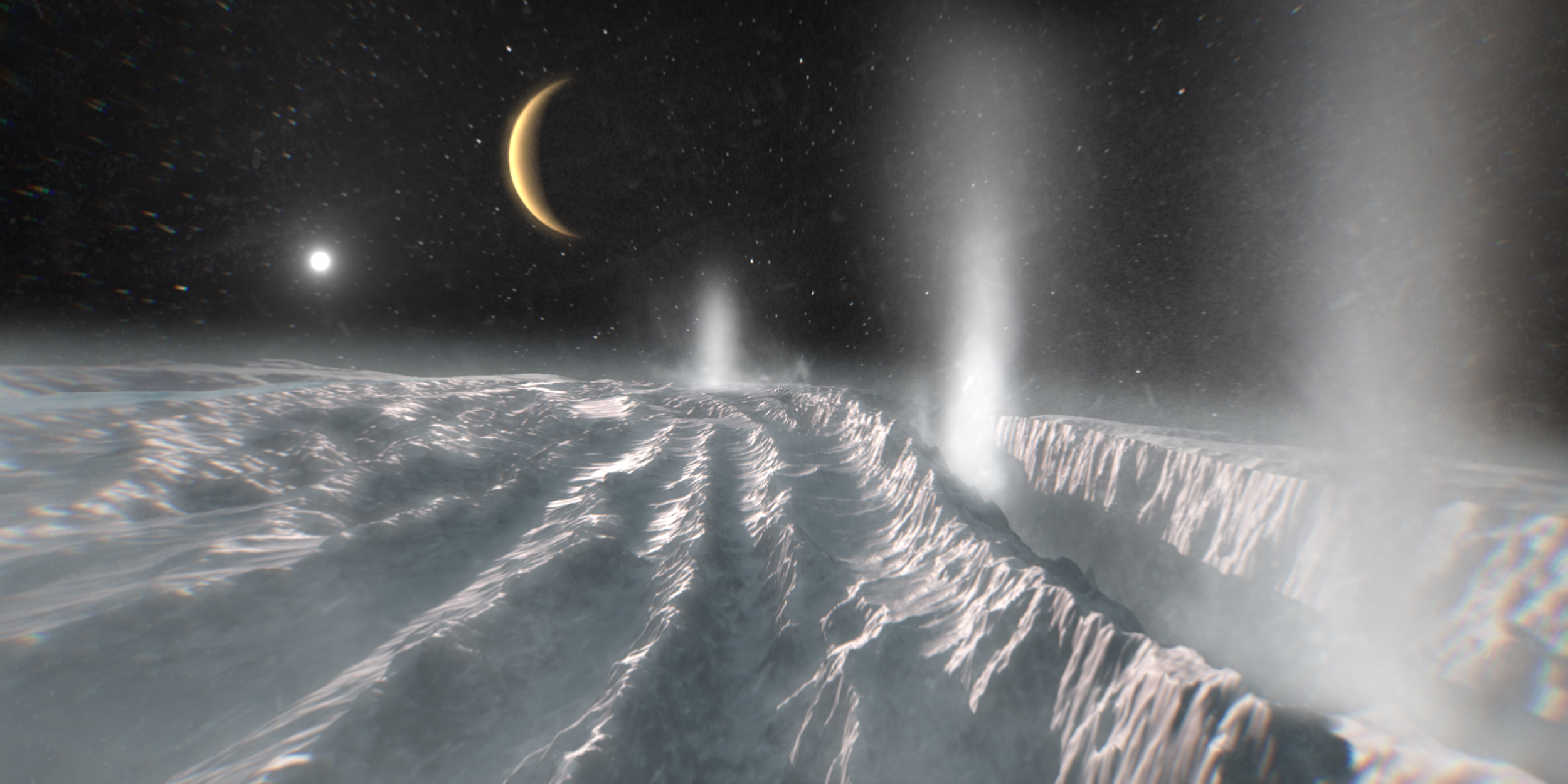
Rows of canyons and peaks stretch vertically across the surface of a barren landscape. Plumes of white mist spew from the depths of the rightmost canyon. A crescent planet is scene in the dark, starry sky near upper left of center, with a small bright star shining to its lower left.

Scientists are turning to chemical modeling to determine whether icy moons in our solar system have what it takes to host life — microbial life, that is.

In general, chemistry models are crucial for understanding the conditions that could support life as we know it on other planets. This is achieved through modeling various factors, including climate, interstellar environments, biosignatures that are like life's fingerprints, and the overall chemical processes that might occur in these places. But what exactly are we looking for when it comes to "habitability?" A blue paradise — or, the bare minimum?

Sign up to read this article
Read news from 100's of titles, curated specifically for you.
Already a member? Sign in here
Related Stories
Top stories on inkl right now
One subscription that gives you access to news from hundreds of sites
Already a member? Sign in here
Our Picks
Fourteen days free
Download the app
One app. One membership.
100+ trusted global sources.







