
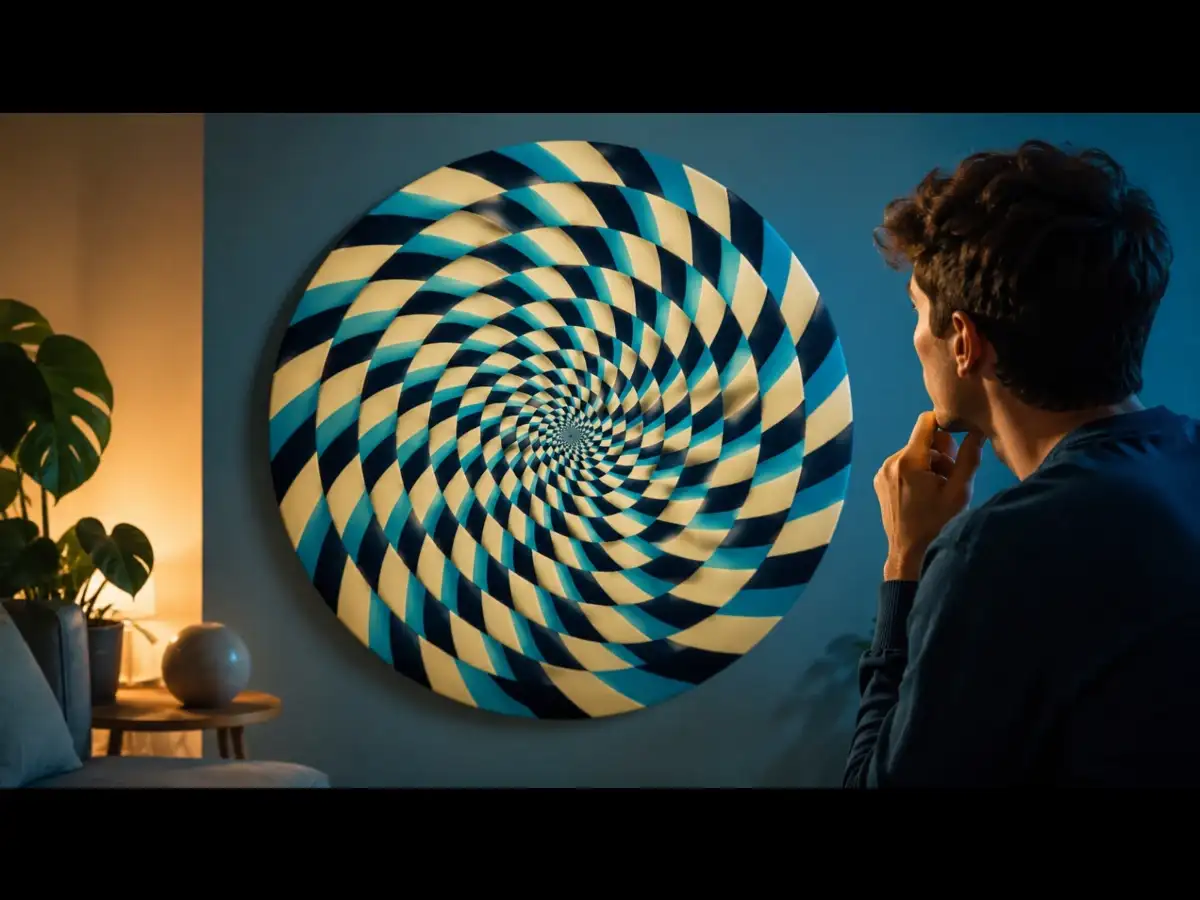
Look at certain black-and-white patterns long enough and something strange can happen: parts of the image appear to ripple, rotate or drift even though the picture itself has not moved.
This is not your eyes literally detecting motion that exists. Instead, it reveals something fundamental about visual perception: the brain does not passively record the world like a camera. It interprets patterns of light using information about contrast, timing, eye movements and previous experience.















