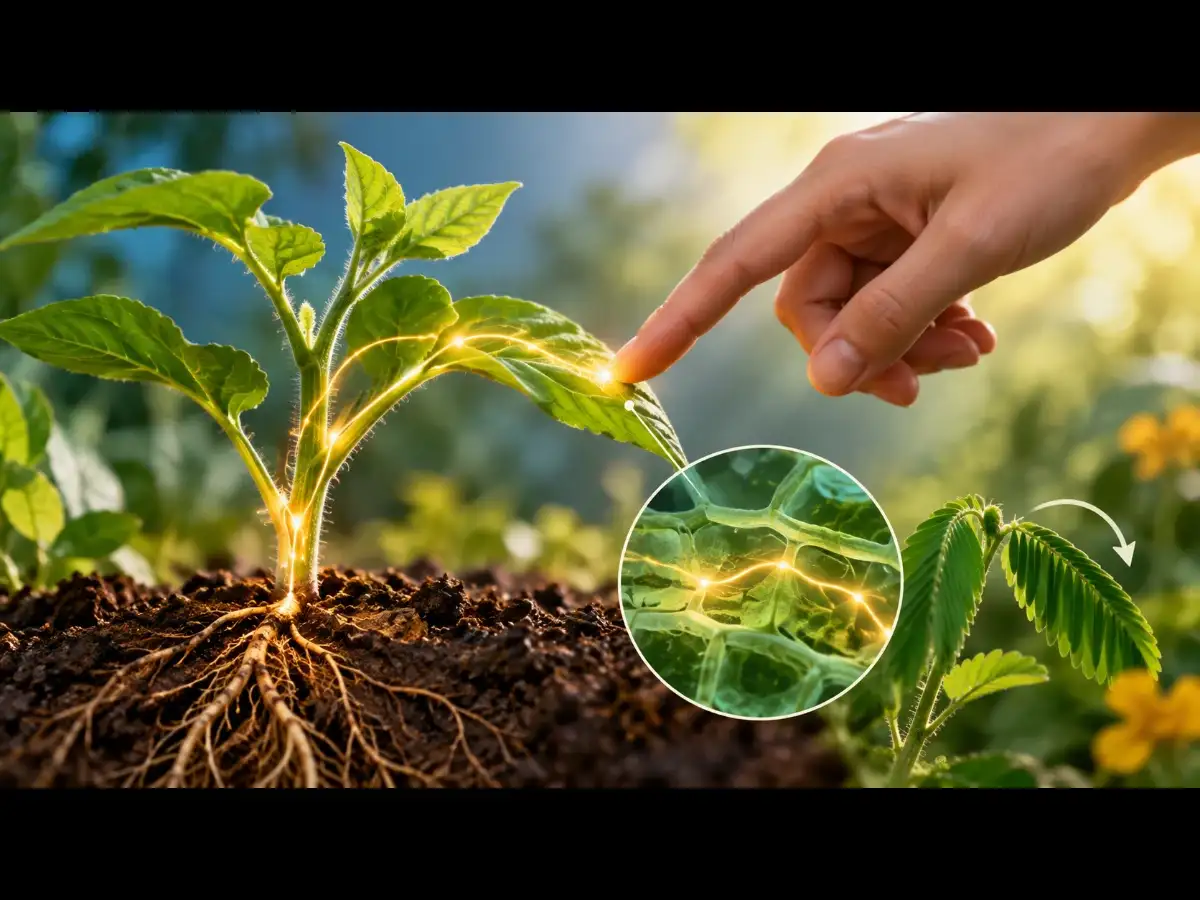
What happens when you brush a plant's leaves, bend its stem or repeatedly touch its growing tip? It does not simply sit there unchanged. Plants can detect mechanical stimuli such as touch, wind, rain and pressure, then translate those physical forces into biochemical signals that alter gene activity, hormones and growth.
Scientists call this ability mechanoperception or mechanosensing. One of its most visible long-term consequences is known as thigmomorphogenesis, the change in plant growth and architecture caused by mechanical stimulation.