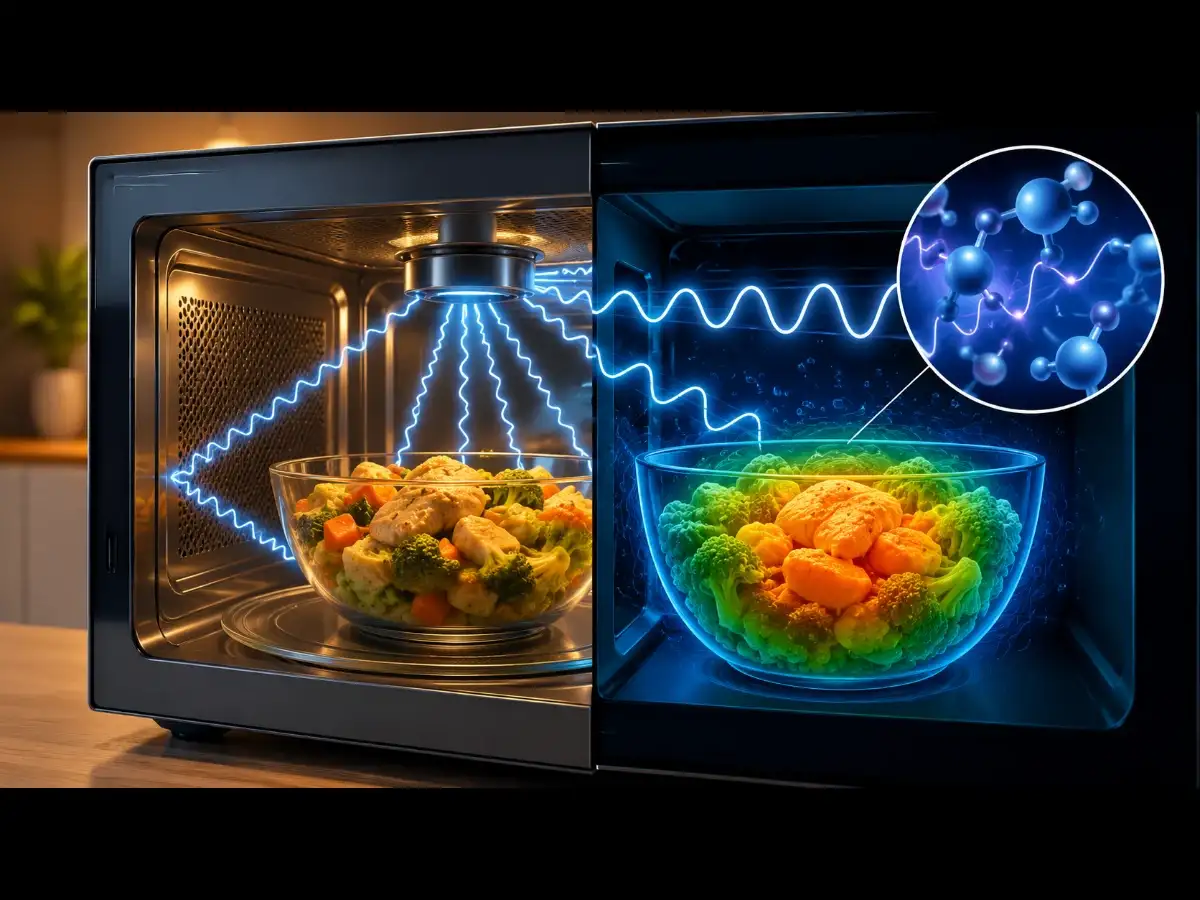
A microwave oven can make the middle of a bowl of food surprisingly hot while parts of the surface remain cool, creating the impression that it must be cooking from the inside out. But that familiar explanation is misleading. Microwaves do penetrate into food and deposit energy throughout a certain depth, unlike a conventional oven that primarily transfers heat from the outside surface inward. Yet a microwave does not have a magical heating source at the center of your food. The real process is governed by electromagnetic fields, dielectric heating, microwave penetration and ordinary heat conduction.
The result is a form of heating that can occur throughout the volume of food at once, but not necessarily uniformly.