
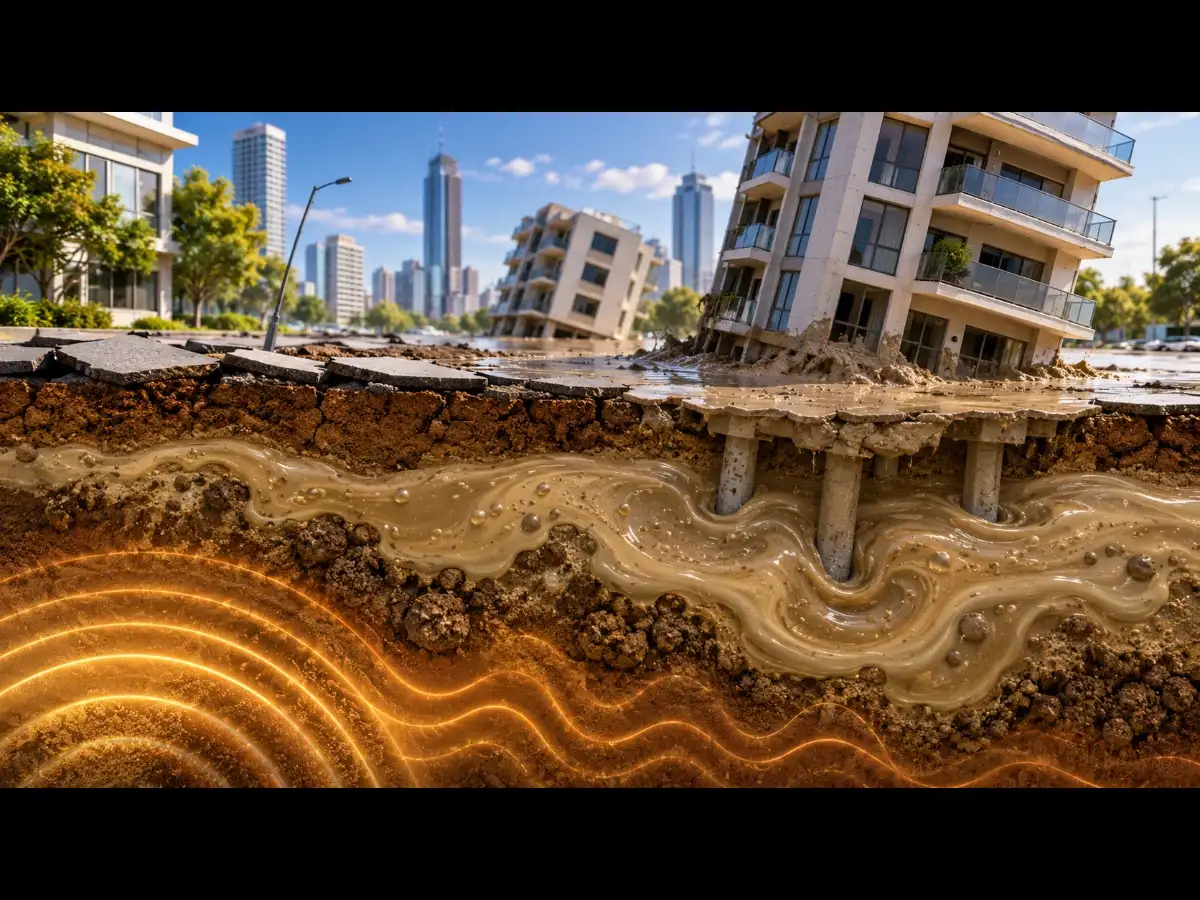
During a powerful earthquake, solid-looking ground can suddenly behave less like a stable foundation and more like a fluid. Buildings may tilt, roads can buckle, buried pipes can rise toward the surface and water mixed with sand can erupt through cracks.
This phenomenon is called soil liquefaction. Despite the name, the ground does not literally melt. Instead, intense shaking can cause loose, water-saturated sediments to lose much of their ability to support weight, temporarily behaving more like a liquid. The process is governed by a combination of pore-water pressure, effective stress and cyclic loading.














