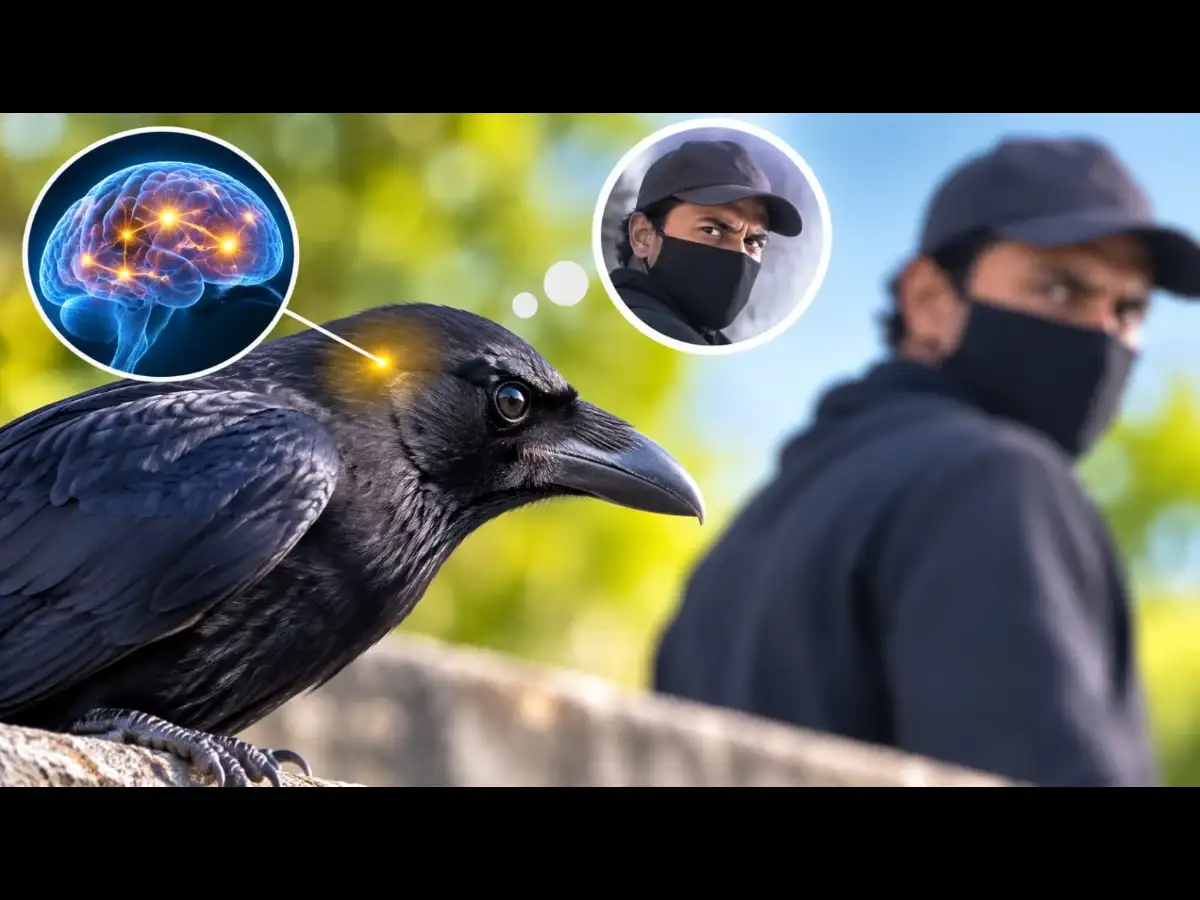
If a crow has a bad experience with a particular person, simply disappearing from its view may not be enough to make the encounter irrelevant. Research suggests that American crows can learn to recognize individual human faces and retain that information for years, using visual memory to distinguish people associated with danger from those associated with neutral or positive experiences. In one famous field experiment, researchers wearing a distinctive mask captured wild crows briefly and released them. When the same threatening face was later presented, the birds responded with alarm even though considerable time had passed. The finding offered striking evidence for long-term social memory in a nonhuman animal.
But the bigger scientific story is not simply that crows have good memories. Neuroscience research suggests their brains contain densely packed association circuits capable of supporting working memory, categorization, decision-making and flexible behavior despite lacking the layered neocortex characteristic of mammals.