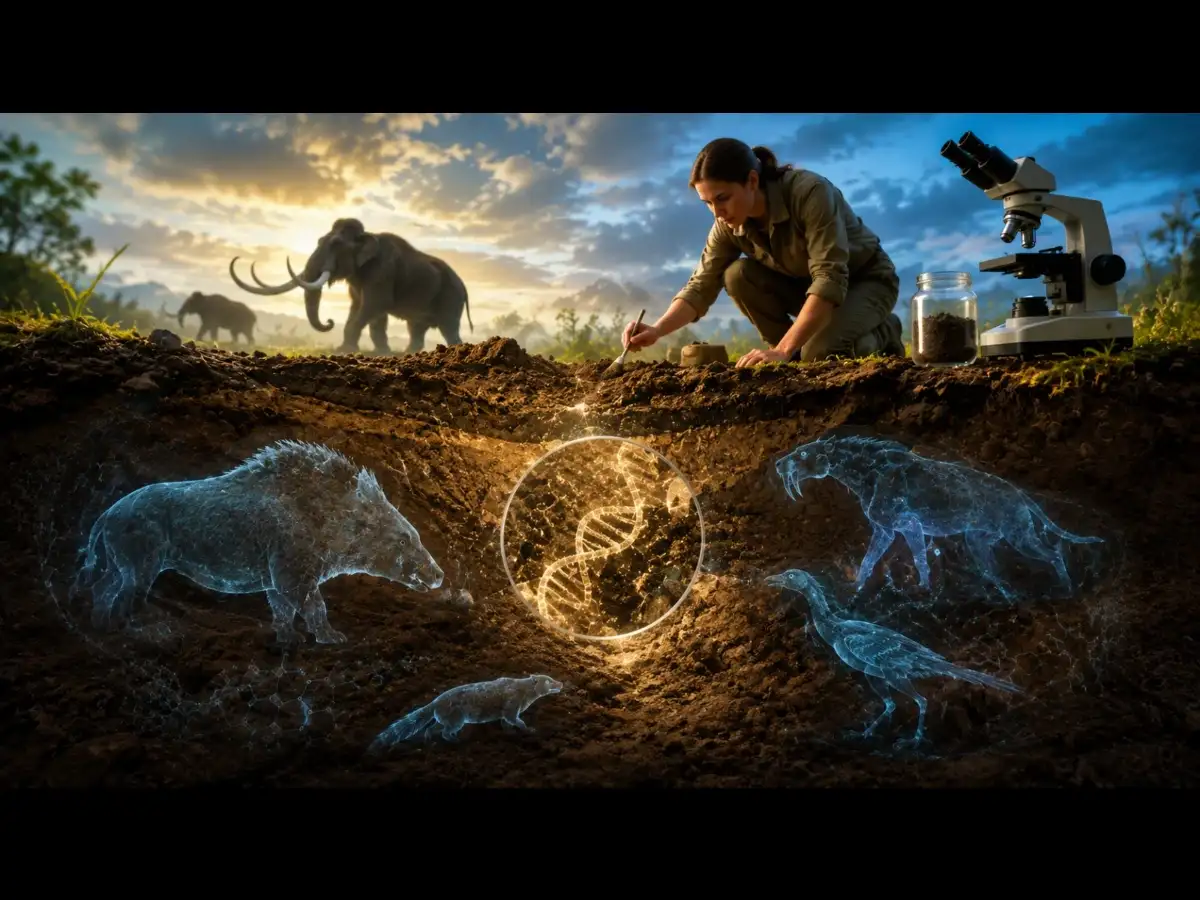
For centuries, reconstructing extinct animals largely depended on finding something physical: a tooth, a skull, a fragment of bone or another recognizable fossil. But scientists have discovered that the ground itself can preserve another kind of fossil record. Ancient sediment can contain fragments of DNA left behind by animals that lived, moved, fed or shed biological material in an environment thousands of years ago. Known as sedimentary ancient DNA, or sedaDNA, this genetic evidence can reveal species even when their physical remains are missing or too fragmentary to identify. Research at Denisova Cave in Siberia demonstrated just how powerful the approach can be, recovering ancient mammalian DNA from hundreds of sediment samples and reconstructing changes in animal communities across the Pleistocene.