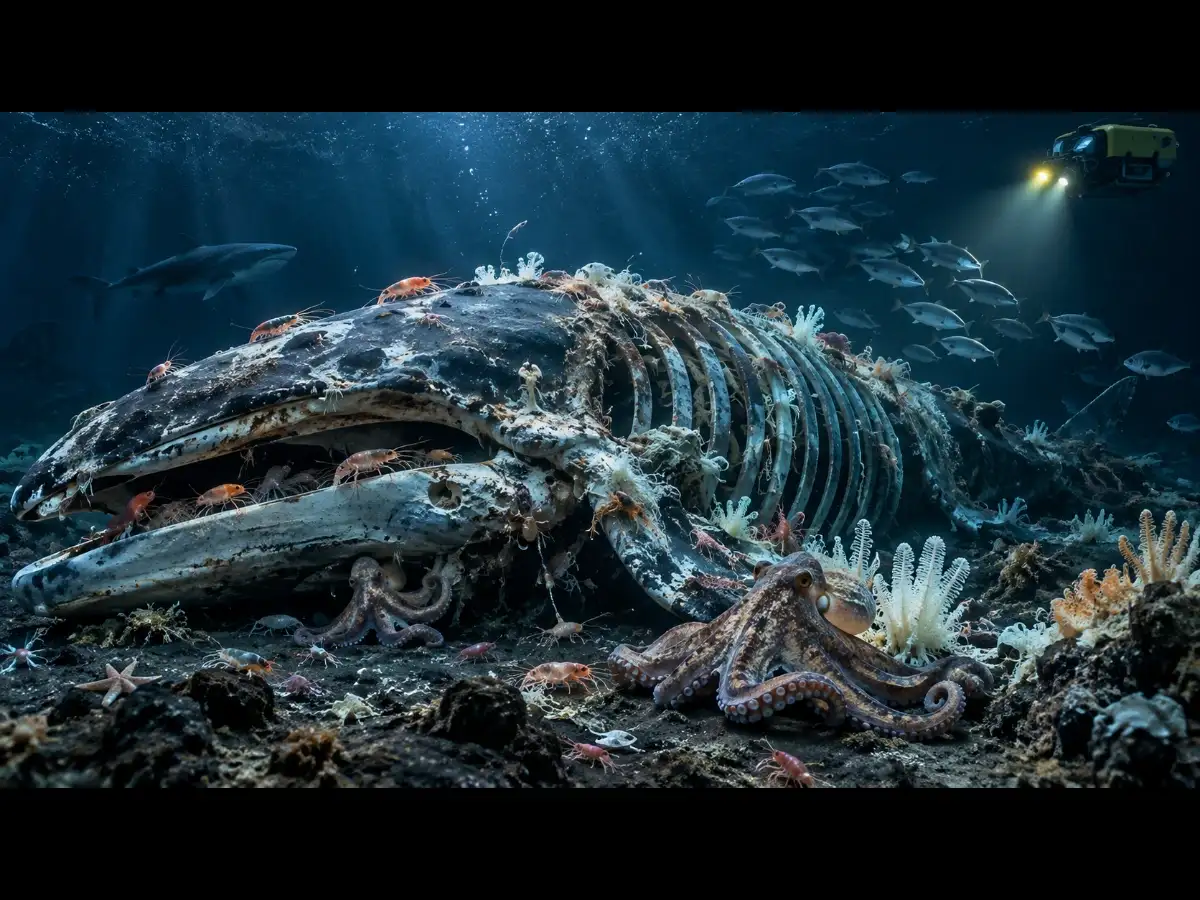
When a large whale dies and sinks into the deep ocean, its story does not necessarily end with decomposition. Thousands of feet below the surface, where food can be scarce, the enormous carcass suddenly delivers a concentrated package of fat, protein and other organic material. Scientists call this phenomenon a whale fall, and research shows that one carcass can become an ecological oasis, attracting scavengers, worms, microbes, mollusks and other organisms through a succession that can continue for years or even decades. Eventually, almost everything is consumed, including resources locked inside the whale's bones.