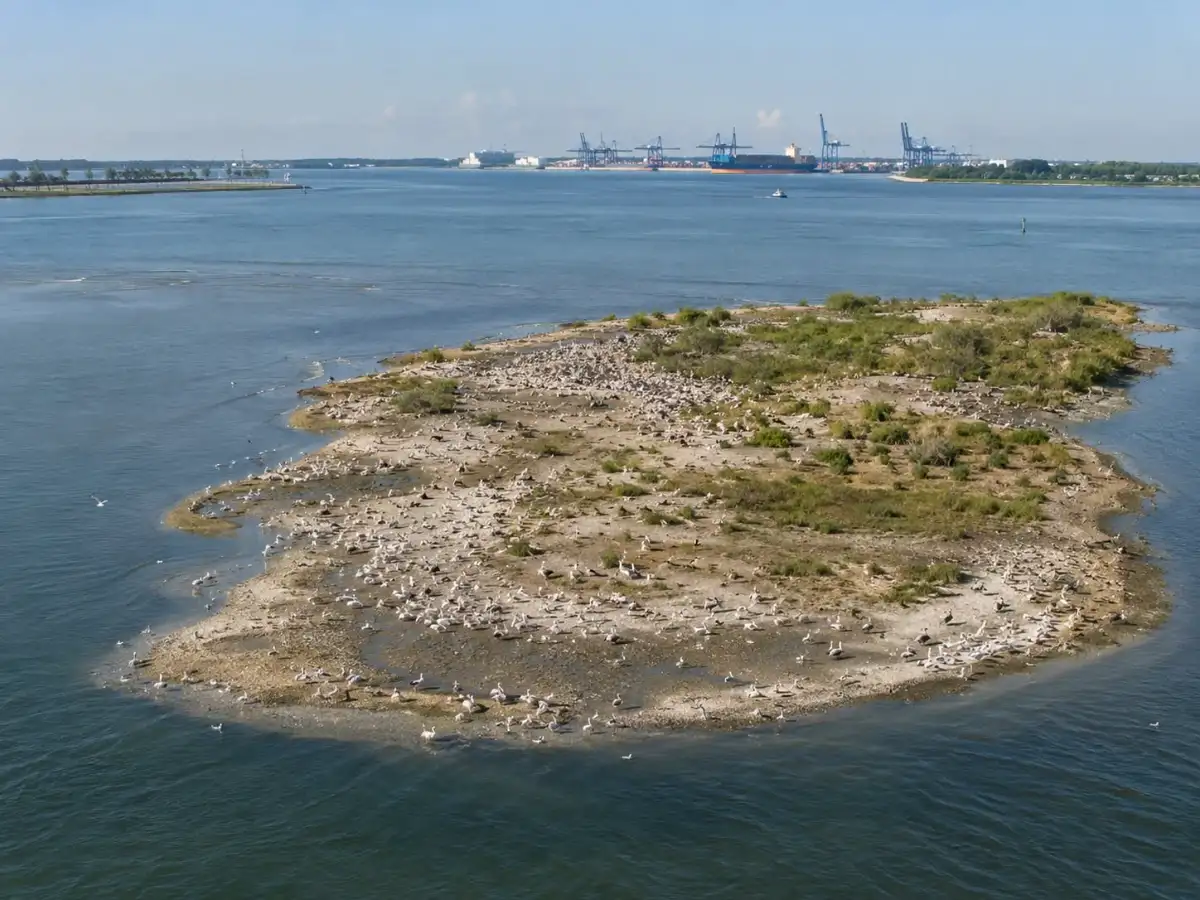
After years of being flattened by waves, a massive pile of harbor sludge, off the coast of Georgia, just became a home for over 300 bird families in one season. It happened at the Savannah Harbor, and it's a story that has stayed fairly under-the-radar given what it represents. The U.S. Army Corps of Engineers took 160,000 cubic yards of mud dredged out of the harbor and used it to build an eight-acre island. Birds arrived almost immediately.. It's a feel-good local news item, but it gets a different take when you realize the broader picture: in North America, nearly 3 billion breeding birds have vanished since 1970, a loss of 29 percent of the total, according to a 2019 study titled “Decline of the North American avifauna,” published in the journal Science by ornithologist Kenneth Rosenberg and colleagues. In that context, an artificial island made of harbour gunk is no longer a quirky engineering footnote; it's an actual, albeit minuscule, repair.
Why birds need a man-made island