Saudi Arabia's Defence Minister, Prince Khalid bin Salman, has held talks in Abu Dhabi with the UAE's top leadership, as Houthi attacks on the kingdom and threats to Red Sea shipping intensify.
On Sunday 18 October the prince was received at Al Bateen airport by UAE Vice-President Sheikh Mansour bin Zayed Al Nahyan, and later met UAE President Sheikh Mohamed bin Zayed Al Nahyan at Qasr Al Shatie.
Official readouts from the Saudi Press Agency (SPA) and the UAE news agency WAM said the two sides discussed bilateral relations and regional developments, and stressed closer cooperation to support regional security and stability. Neither government announced a new Yemen strategy or any agreement.
Some commentators have nonetheless read the visit as a possible sign of a Gulf realignment over Yemen. That interpretation comes from analysts and has not been confirmed by either government.
The visit was not the first of its kind. On 29 September, Sheikh Mansour travelled to Riyadh and met Crown Prince Mohammed bin Salman and Prince Khalid, in what analysts described as the most senior bilateral contact since the two countries fell out over Yemen late last year.
From partners to rivals
Saudi Arabia and the UAE were the two main members of the coalition that intervened in Yemen in 2015, but over time they backed different, sometimes competing, local forces.
The rift became public in December 2025, when the UAE-backed Southern Transitional Council (STC) swept across Hadramawt and Mahra provinces. Riyadh accused Abu Dhabi of pressing the separatists to carry out military operations near the Saudi border, which the UAE denied.
A Saudi-led coalition strike then hit a shipment at Mukalla port that Riyadh said carried weapons for the STC; the UAE said the vehicles were for its own forces. Yemen's presidential council, backed by Riyadh, cancelled its defence pact with the UAE and gave Emirati forces 24 hours to leave. The UAE announced it was withdrawing its remaining troops.
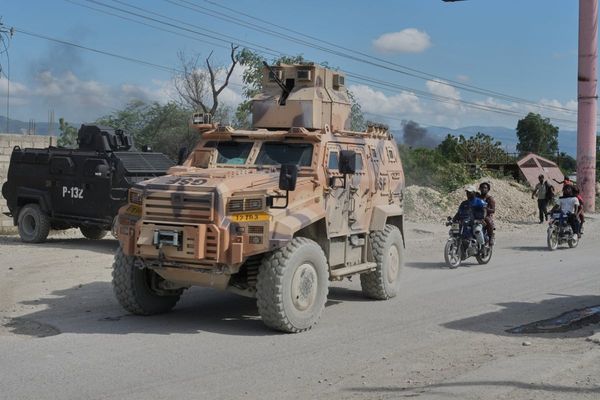
In September 2026 the Houthis seized the Red Sea port of Mokha and advanced towards the Bab al-Mandab Strait. Retreating government forces left armoured vehicles behind, and footage later showed US-made armoured carriers and Emirati-made patrol vehicles in Houthi hands. On 5 October the internationally recognised government launched Operation Dawn of Yemen, with Saudi air support, to retake lost ground.
'Iranian pressure'
Abduljalil al-Saeed, director of the Scandinavian Gulf Center for Studies, described the visit as "very important", particularly given that Prince Khalid was received by President Mohamed bin Zayed "at this specific moment".
Writing on X, Mr al-Saeed said the visit followed a period of "complicated" relations between the two countries, and came as the kingdom was under what he called "heavy Iranian pressure" exerted through the Houthis.
He added that Saudi Arabia, the UAE and Egypt together formed "the cornerstone of the region's security and stability", and that the visit "carries great political and strategic significance".
The extent of Iran's control over the Houthis is disputed. UN Panel of Experts reports have found weapons and components of Iranian origin in Houthi hands, in breach of a UN arms embargo; Iran denies arming the group. Many independent researchers describe the Houthis as an autonomous partner of Tehran rather than a proxy that takes direct orders.
'Pivotal role'
Political analyst Dr Yasser al-Yafei said on X that the UAE was "once again confirming its pivotal and positive role" in regional security, pointing to parallel diplomatic contacts by UAE Foreign Minister Sheikh Abdullah bin Zayed with several Arab counterparts.
Dr al-Yafei, a critic of Riyadh's handling of the war, argued that the decision to push the UAE out of Yemen had proved costly. He said that once the Houthis could threaten Bab al-Mandab and the Red Sea, the war was no longer a local crisis that could be contained, and suggested that regional alliances could shift as a result.
Emirati journalist Mohammed al-Hammadi described the president's welcome for Prince Khalid as "the finest Gulf scene", while journalist Mona Bousamra wrote that closer coordination between Abu Dhabi and Riyadh would strengthen the Gulf's ability "to take control of its future".
Differences remain
Independent analysts are more cautious about what the meetings can deliver.
"The Houthis are bringing Saudi Arabia and the UAE closer together," Anna Jacobs of the Arab Gulf States Institute in Washington told Middle East Eye after the September meeting. But she questioned whether the rapprochement could last, arguing that the two countries' rivalry is structural.
Joshua Yaphe of the Center for the National Interest, a former State Department Gulf analyst, told the same outlet that Abu Dhabi was unlikely to win its main demands from Riyadh, including acceptance of the STC and a break with Yemen's Islah party. He also questioned whether renewed Emirati support could change the course of the war.
Kristian Coates Ulrichsen of the Baker Institute wrote for the Arab Gulf States Institute that the thaw appears designed to present a united front against the Houthis. He judged it unlikely that the UAE would return to Yemen militarily, though it retains influence through local allies.
The two countries also remain on opposite sides in Sudan's civil war and disagree over Somaliland. Whether the latest contacts will turn into closer security coordination on Yemen remains to be seen.