
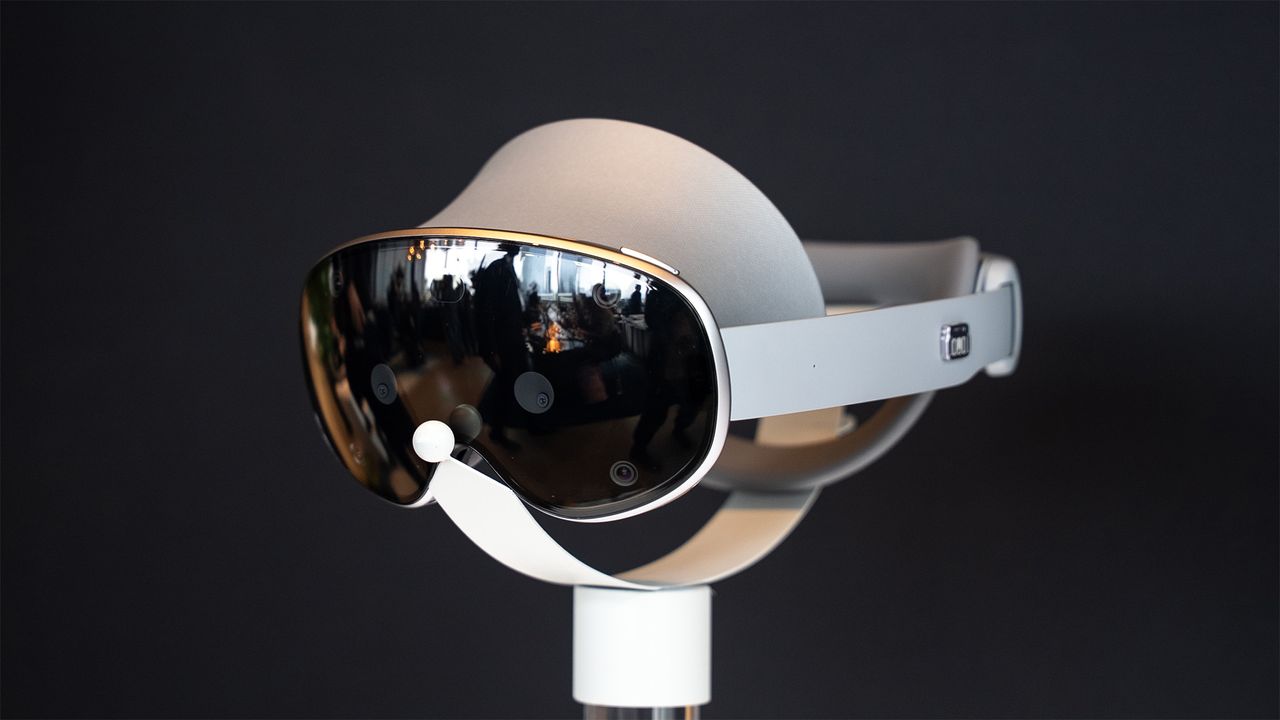
Samsung Galaxy XR
Better for most
Samsung's Galaxy XR is the more practical option of the pricey extended-reality headsets, with a price tag half that of Vision Pro. It still packs impressive specs, with micro-OLED displays and a 4K-per-eye resolution. While performance isn't quite as good, Galaxy XR has the software support advantage, with a full field of Android apps.
Pros
- Android XR platform brings support for a wide variety of Google Play Store apps
- Qualcomm Snapdragon XR2+ Gen 2 is enough to power the headset
- USB-C port for Ethernet connections, accessories, and PC VR use
Cons
- Game controllers aren't included in the box
- No outward-facing display
- Only 256GB of storage
- Still expensive
Apple Vision Pro
Impressive hardware
Apple's Vision Pro headset delivers the best performance available in an XR headset, whether you're using the M2 or M5 chips. It has a wide array of sensors, and includes an R1 coprocessor that handles all the inputs from those cameras and sensors. While it's technically impressive, app support is few and far between.
Pros
- Apple M5 chip delivers impressive speeds and enables 120Hz refresh rates
- R1 coprocessor handles input from Vision Pro's 12 cameras and more sensors
- Excellent integration with the Apple ecosystem, with features like Mac Virtual Display
- Up to 1TB storage options
Cons
- Double the price of Galaxy XR
- Weaker app ecosystem
- Heavy, often requires accessories to find a good fit
- FOV feels small with light seal on