
Everything you want
With the Samsung Galaxy S26 Plus, you get a slightly refreshed design, the latest hardware from Qualcomm or Samsung, faster wireless charging, a laundry list of AI-based features, and more.
Pros
- Better performance and thermal efficiency due to newer SoC
- Plethora of AI-powered features and years of OS & security updates
- Slightly faster wireless charging
Cons
- Same dated camera hardware despite the higher price
- Still no integrated magnets for proper Qi2 support
Everything you need
Despite being a bit old, the Samsung Galaxy S24 Plus continues to be a balanced flagship that features a gorgeous yet tough design, reliable performance, superb battery endurance, and more.
Pros
- Still powerful enough to handle demanding workflows
- Incredible battery life, even with resource-intensive tasks
- Likely to get significant discounts due to being a two-generation old model
Cons
- In-hand feel isn't exactly the best
- Camera struggles to capture moving objects

Samsung's top-of-the-line smartphones generally hold up quite well over time, and the Galaxy S24 Plus is no different. Even though it was launched in 2024, the middle member of the Galaxy S24 series remains a stellar option for anyone who wants a fully loaded device that checks all the right boxes.
While that's great, the newest Galaxy S26 line-up has finally been unveiled, which means that the Galaxy S26 Plus is here. As expected, the latest mid-level flagship from Samsung packs a few upgrades that'll entice many prospective consumers, particularly those who've been thinking of upgrading from a previous-generation model.
But, in a world where annual device launches no longer matter as much as they once used to, does the freshest South Korean flagship live up to the hype? Let's see how the Samsung Galaxy S26 Plus vs. Galaxy S24 Plus compare and find out!
Samsung Galaxy S26 Plus vs. Galaxy S24 Plus: Design, display, and hardware
While Samsung's top-tier smartphones have had a consistent visual identity over the last few generations, things are finally changing with the Galaxy S26 series, as the newest trio comes with minor cosmetic updates instead of being a dull copy-and-paste job from the last year(s).

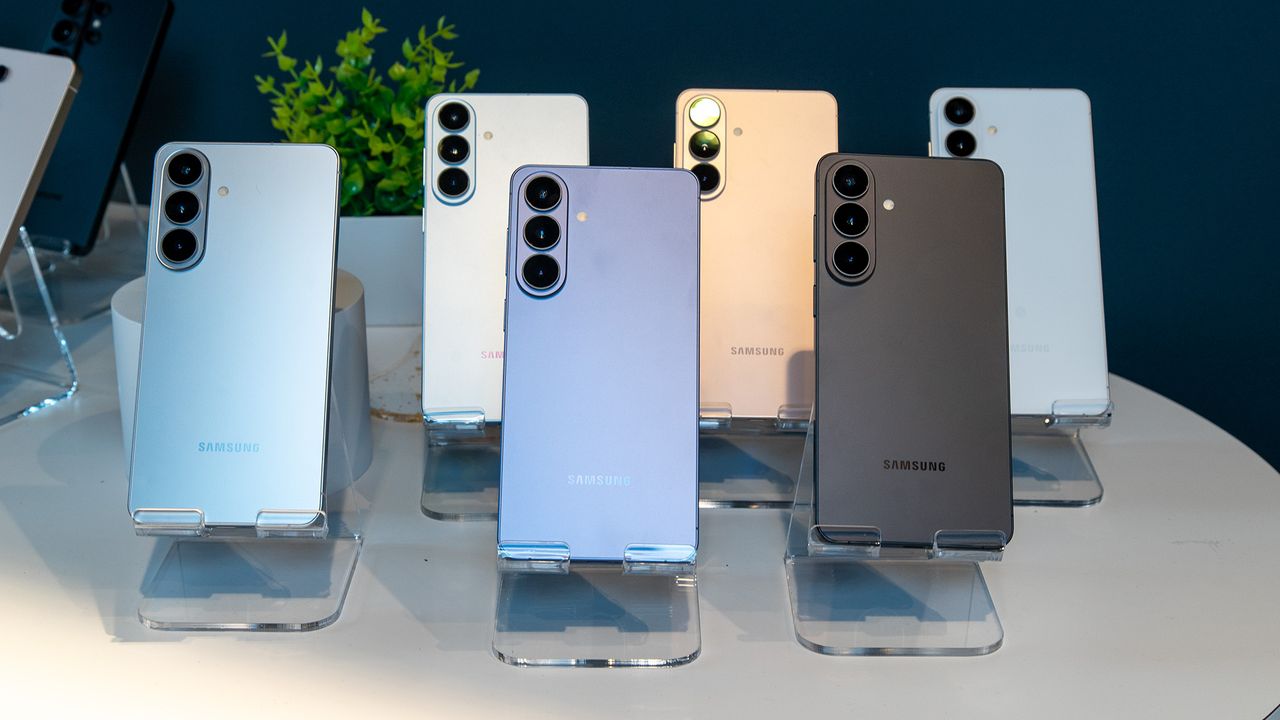
It appears the rumored CAD renders (via OnLeaks / Android Headlines) were on point, since the Galaxy S26 Plus (and the Galaxy S26) now feature their triple-lens rear camera systems stacked vertically inside a pill-shaped island, as opposed to the lenses being directly on the back panel like they are with the Galaxy 24 (and the Galaxy S25) devices. The same design update goes for the Galaxy S26 Ultra as well, although its fourth camera lens and laser AF module are still placed directly on the rear panel next to the island.
The visual refresh seems inspired by the Galaxy Z Fold 7 and the Galaxy S25 Edge, both of which have similar primary camera setups.

Flip over to the business end, and you're unlikely to find any changes. The Galaxy S26 Plus features a 6.7-inch Dynamic LTPO AMOLED panel with razor-thin bezels, super-high resolution, and a 120Hz adaptive refresh rate. It's the same screen that you'd find on the Galaxy S24 Plus, with vibrant colors and good brightness levels. However, with phones like the Motorola Razr Ultra 2025 having displays that can go up to a 165Hz, we can't help but feel Samsung could've done a bit better. You still get Gorilla Glass Victus 2 protection against scuffs and scratches, so that is a good thing.
Other than that, the Galaxy S26 Plus retains the boxy construction of the Galaxy S24 Plus (and the Galaxy S25 Plus), complete with flat aluminum side rails and an IP68 certification for dust and water resistance.
Category |
Samsung Galaxy S26 Plus |
Samsung Galaxy S24 Plus |
|---|---|---|
Dimensions |
158.4 x 75.8 x 7.3 mm (6.24 x 2.98 x 0.29 in) |
158.5 x 75.9 x 7.7 mm (6.24 x 2.99 x 0.30 in) |
Durability & Case Material(s) |
IP68 rating for dust and water resistance, Corning Gorilla Glass Victus 2 (front and back), Aluminum frame |
Weight |
190 g |
196 g |
Display |
6.7-inch Dynamic AMOLED (1440x3120 pixels resolution), LTPO, 120Hz variable refresh rate |
Chipset / SoC |
Qualcomm Snapdragon 8 Elite Gen 5 (for Galaxy) or Samsung Exynos 2600 |
Qualcomm Snapdragon 8 Gen 3 |
RAM |
12GB |
12GB |
Storage |
256GB/512GB |
256GB/512GB |
Sensors |
Under-display ultrasonic fingerprint sensor, Accelerometer, Gyroscope, Proximity sensor, Compass, and Barometer |
Wireless Connectivity |
Wi-Fi 7, 5G (mmWave and Sub-6), Bluetooth 6.0, GPS, NFC, UWB, and USB-C 3.2 (with DisplayPort) |
Wi-Fi 6e, 5G (mmWave and Sub-6), Bluetooth 5.3, GPS, NFC, UWB, and USB-C 3.2 (with DisplayPort) |
Other Features |
Samsung DeX (wired & wireless), Galaxy AI |
Battery & Charging |
4,900mAh (Li-Ion), 45W (wired) and 20W (wireless) charging, No Qi2 Support |
4,900mAh (Li-Ion), 45W (wired) and 15W (wireless) charging, No Qi2 Support |
Cameras (Rear) |
50MP wide-angle, 10MP telephoto (3x optical zoom), 12MP ultrawide | 8K video recording |
Camera (Front) |
12MP wide-angle | 4K video recording |
OS & Update Policy |
Android 16 with One UI 8.5 (preinstalled), seven years of OS and security updates |
Android 14 with One UI 6.1 (preinstalled), seven years of OS and security updates |
The Galaxy S24 Plus is driven by a Snapdragon 8 Gen 3, which was Qualcomm's top-tier SoC back in 2024. Add to that 12GB of RAM and 256GB/512GB of internal storage, and it shouldn't be any surprise that Android Central's Derrek Lee came away impressed with the smartphone's performance (both general and gaming) when he reviewed it. As a matter of fact, this hardware still makes the Galaxy S24 Plus capable of going against some of the best Android phones out there.

Now, the Galaxy S26 Plus comes with the same 12GB of RAM and 256GB/512GB of internal storage. However, in the typical S-series fashion, the newest smartphone is powered by Qualcomm's latest top-of-the-line chipset, the Snapdragon 8 Elite Gen 5. In selected markets around the world, the Galaxy S26 Plus will be available with the Exynos 2600, Samsung's own newest flagship silicon.
Although we can't say anything about the smartphone's real-world performance until we test it out, it stands to reason that the Galaxy S26 Plus will perform better in comparison to the Galaxy S24 Plus, especially when it comes to resource-heavy workflows like on-device AI processing. However, you're unlikely to notice a huge difference as far as everyday tasks like gaming, web browsing, and streaming are concerned.
The Galaxy S26 Plus comes with all the modern connectivity and I/O options (e.g., Wired/Wireless DeX, NFC, and USB Type-C 3.2) that the Galaxy S24 Plus also has, albeit with some incremental enhancements here and there.
Samsung Galaxy S26 Plus vs. Galaxy S24 Plus: Cameras, software, and battery
The Galaxy S24 Plus features a triple-lens primary camera system having a 50MP primary sensor, a 10MP telephoto module (capable of 3x optical zoom), and a 12MP wide-angle unit. As you'd expect, 8K video recording and optical image stabilization are also included. It's a versatile setup that works quite well, with photos from all three lenses having plenty of resolved detail and incredible color reproduction. However, this hardware has also gotten a little long in the tooth at this point, having remained the same since the Galaxy S22 Plus.

Sadly, Samsung seems to think otherwise, as the company has reused the same camera array on the Galaxy S26 Plus, yet again. While that's a little disappointing, improved processing should result in better photos and videos in comparison to what you get from the Galaxy S24 Plus, thus helping to make Samsung's newest Plus-sized model one of the best Android camera phones on the market. Even so, the older model still has it all to be your only all-purpose camera for everyday use.
Coming to software, the Galaxy S26 Plus (along with its siblings) runs One UI 8.5, the freshest version of its custom UI overlay, out of the box. Based on Android 16, the software has been out for a while and continues to get better, with the latest builds introducing Bixby updates and many other goodies. Apart from that, you can also expect improvements to Samsung's Galaxy AI suite, more customization options, and several other enhancements over time.
It goes without saying that most (if not all) of these features will be available for the Galaxy S24 Plus and other eligible devices in due course of time, all thanks to Samsung's industry-leading software support.

The Galaxy S24 Plus comes with a 4,900mAh battery that can effortlessly go a full day with moderate to heavy use. While some of the best budget Android phones do offer multi-day battery life, they also have less taxing hardware. The Galaxy S25 Plus managed to have an incredible endurance with the same exact battery size, and perhaps that's why Samsung decided to fit the new Galaxy S26 Plus with the same powerpack. We're expecting the phone to be able to last (at least) a full day, since the hardware is more power-efficient this time around. However, there's still no support for silicon-carbon tech, as Samsung refuses to get with the times and trails behind Chinese brands in adopting the new technology.
While the wired charging speed remains the same (45W) on both smartphones, you get slightly faster wireless charging on the Galaxy S26 Plus (20W) compared to the Galaxy S24 Plus (15W). As lackluster this "upgrade" is, perhaps what's even more disappointing is the lack of any integrated magnets for native Qi2 support. If you want that functionality, your only option is to get a magnetic case or go for an alternative flagship like the Google Pixel 10 Pro, which does support magnetic charging and a whole ecosystem of accessories.
Samsung Galaxy S26 Plus vs. Galaxy S24 Plus: Which should you go for?
Smartphones have matured to a level where buying the newest thing every year no longer makes any sense, and the Galaxy S26 Plus goes on to prove that. While it's true that it has a few upgrades (e.g., latest hardware, slightly quicker wireless charging), it's a still a rather incremental improvement over the Galaxy S24 Plus, a flagship that remains relevant despite being two years old at this point. You also have to consider the fact that the Galaxy S26 Plus has a starting price of $1,099.99 and will cost you quite a bit, even if you take advantage of pre-order deals. So, the question is, should you upgrade to the Galaxy S26 Plus from the Galaxy S24 Plus?

Our suggestion is simple! If you absolutely need things like slightly faster wireless charging, better hardware, and perhaps most importantly, can get a good trade-in discount towards your Galaxy S24 Plus, by all means, go ahead and upgrade to the Galaxy S26 Plus. You'll be getting a feature-laden smartphone that'll last you for years to come.
Conversely, if you're not obsessed with having the newest thing out there, don't care much about incremental overhauls, and your Galaxy S24 Plus already does everything that you need it to do, upgrading to the Galaxy S26 Plus just for the sake of it makes no sense. Hold on to the phone that you already have, as it's still going to be supported for a very long time. Unsurprisingly, the Galaxy S26 Plus is not that much of an improvement over the Galaxy S25 Plus either, so you can go for that last-gen model if you really must upgrade.
Latest and greatest
If you want a feature-laden smartphone and don't mind paying the extra cash, it might make sense buying the Galaxy S26 Plus. It packs top-of-the-line hardware, a refined design, better battery life, faster wireless charging, and more.
Old yet gold
It may be two generations old at this point, but the Galaxy S24 Plus still has got it all. It packs premium hardware, thoughtful software backed by years of software support, a reliable triple-lens camera system, and incredible battery life.