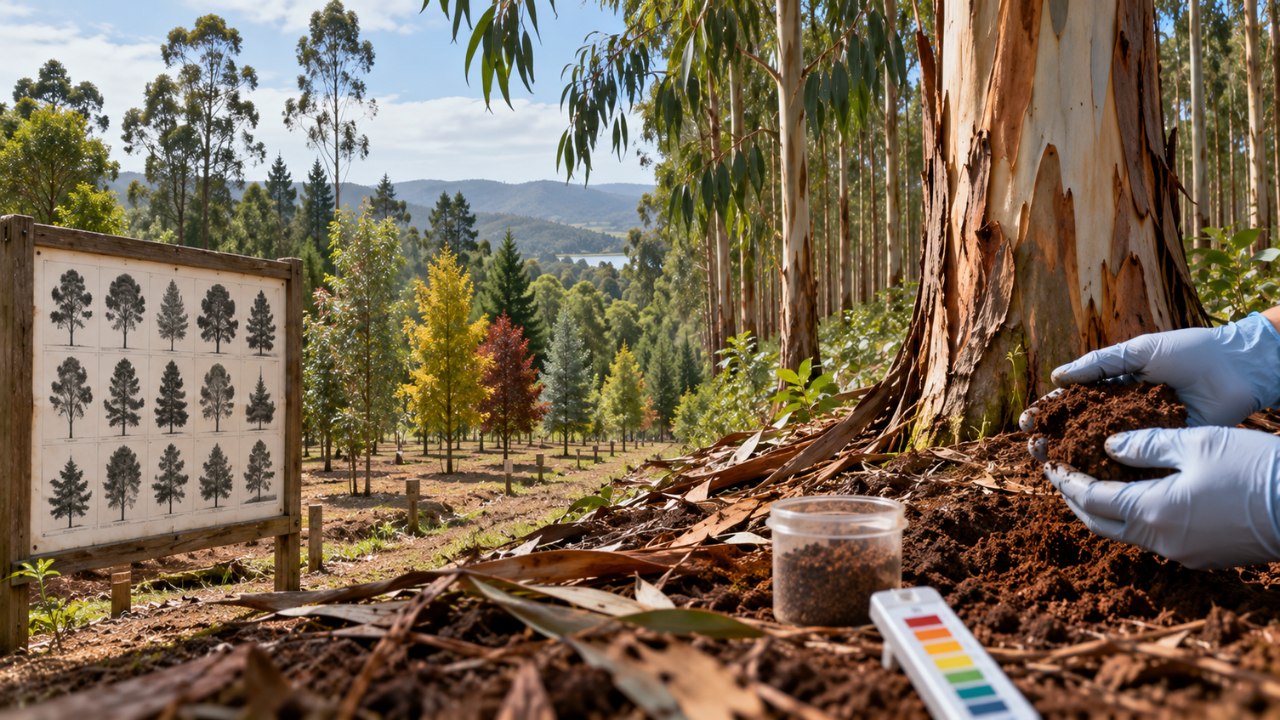
In Rwanda, an experiment with exotic trees grew into a much larger forestry programme, with eucalyptus eventually becoming the country’s dominant plantation tree. A 200-hectare arboretum was established at Ruhande in Butare to test exotic species, including 63 species of eucalyptus, as Rwanda prepared to expand plantation forestry. By the early 1970s, eucalyptus plantations in Rwanda had reached about 23,000 hectares, part of a wider 95,684-hectare area across several East African countries. The expansion also brought questions about what intensive eucalyptus planting could mean for the environment. Researchers have examined concerns ranging from nutrient removal and soil quality to water use. According to the study published in Springer Nature Link, titled ‘ Water use by short rotation Eucalyptus woodlots in southern Rwanda ’, eucalyptus has been described as taking up large amounts of nutrients, potentially leaving soils poorer for other uses. However, the available research does not establish a 90-year soil-acidification finding at Ruhande, and the study discussed here focuses primarily on eucalyptus water use in southern Rwanda.
Get breaking news anytime, anywhere. Download the TOI app now!